
The journey off the Queens Highway and into Nabukelevu Village, in the highlands of Serua, is not for the faint-hearted.
The road is steep, narrow and unforgiving, one of the roughest stretches many visitors will encounter.
Yet at the end of it lies a green paradise, where mist hangs low over the hills, fresh mountain air fills the lungs and nature itself becomes a classroom.
It was along this road that Minister for Environment and Climate Change Lynda Tabuya and the United Kingdom High Commissioner to Fiji, Kanbar Hossein-Borr, travelled recently to commemorate World Wetlands Day 2026 with students and teachers of Burenitu Village School.
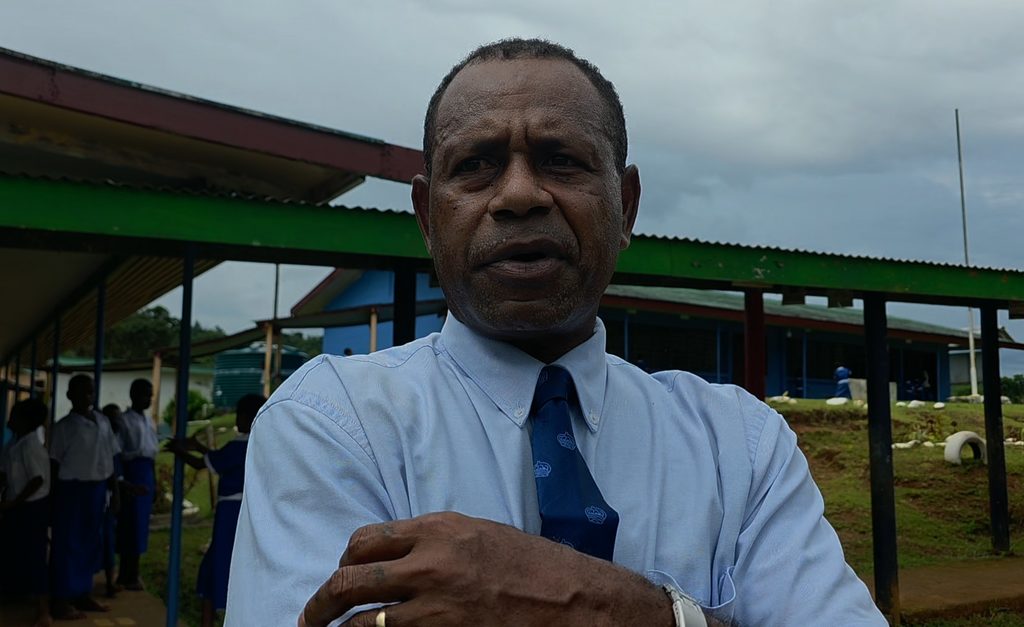
For the visibly moved, Head of School, Veleni Dakuwaqa, the visit carried deep emotional weight.
“I am very grateful to the Minister and His Excellency, the High Commissioner, for making the tough journey here to visit us,” he said.
“This school is located deep in the highlands of Serua and is the furthest village in the province.”
Mr Dakuwaqa, who hails from Dawasamu in Tailevu, was posted to Burenitu a year ago and has now served at the school for about a year and six months.
When he first arrived, the school roll stood at 72 students. Today, there are 65 primary students and 10 in kindergarten, a total of 75 young learners.
Numbers, however, tell only part of the story.
Surrounded by raw nature and far from urban distractions, Burenitu Village School offers an ideal learning environment for young minds.
But the isolation also brings daily challenges which range from limited resources to infrastructure constraints that tests both teachers and students.
“These bright and intelligent students do need access to modern educational resources to assist in their learning,” Mr Dakuwaqa said.
“While the teaching team gives 101 per cent, it is obvious we can do a whole lot more with targeted support.”
Like many schools in Fiji’s interior, Burenitu grapples with issues that are often taken for granted elsewhere.
Water is one of the most pressing and at present, the school has a single tank that holds purified, safe drinking water.
The rest of the taps draw water pumped directly from the river.
“In this regard, we have requested Rotary Water for Life to assist us with the establishment of a treatment plant to cater for the students, and hopefully the village as well,” Mr Dakuwaqa said.
Road access is another ongoing concern. A request for repairs was submitted to the Ministry of Finance last year, and some work has begun, however the main road leading into the school remains in urgent need of maintenance.
“We are hopeful the Government will continue to work towards this,” he said.
Despite these challenges, there are signs of steady progress. Mr Dakuwaqa noted that six months ago the school was in a particularly difficult situation.
Since then, support from parents and the wider vanua has helped improve facilities and standards, these improvements are reflected in student performance.
“We as teachers are determined to use the challenges as an opportunity to further our determination and drive, so that we give the best to the students,” he said.
“It takes a willing and loving heart, and a spirit of servitude, to deliver our utmost best.”
Connectivity, often elusive in remote areas, is one area where Burenitu counts itself fortunate.
The school has access to the Digicel network, which supports both teaching and learning in an increasingly digital world.
The recent World Wetlands Day commemoration added another layer of significance for students who grow up amid rivers, forests and wetlands, the messages delivered by the Minister and the High Commissioner resonated strongly.
“I am sure the advice given to the children will embolden them to continue to strive in their education and set greater goals for themselves,” Mr Dakuwaqa said.
Those goals are already taking shape in the lives of former students as a number of Burenitu alumni have gone on to university, while others are now serving as teachers and nurses.
One former student has even been appointed as a Roko Tui.
“So yes, I can say the efforts here at Burenitu have been, and are, bearing fruit,” Mr Dakuwaqa said.
This school at the heart of Serua, for the rest of us who sometimes take things for granted, is a quite reminder that quality, which in this case education, does not begin with convenience but with commitment from passionate educators who serve from the heart, communities that put their children first, and leaders who have the people interests at heart.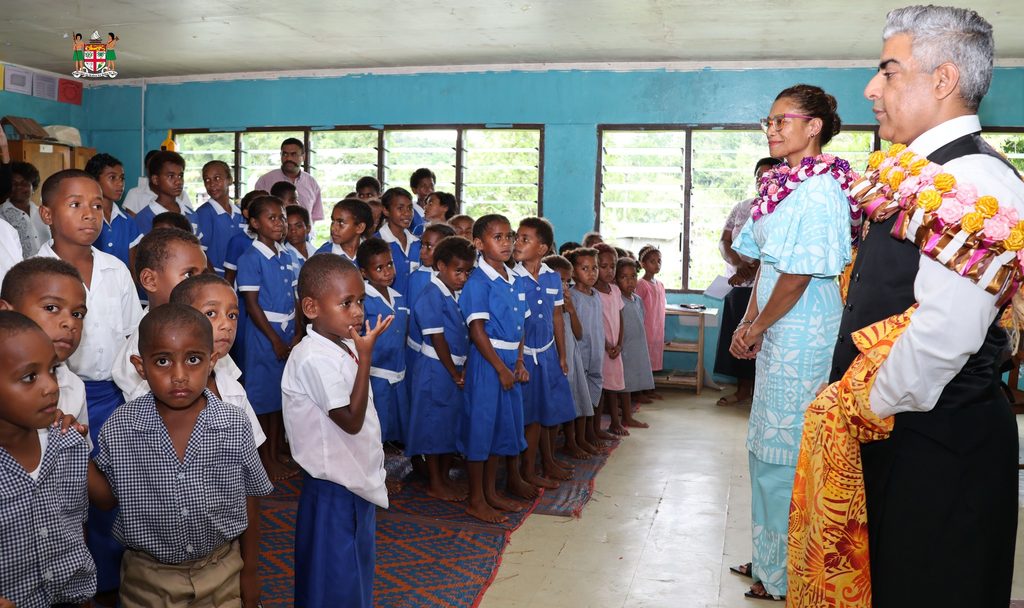
Above: UK High Commissioner, Hossein-Borr and Minister Lynda Tabuya are greeted by the students of Burenitu Village School. Picture: FIJI GOVERNMENT
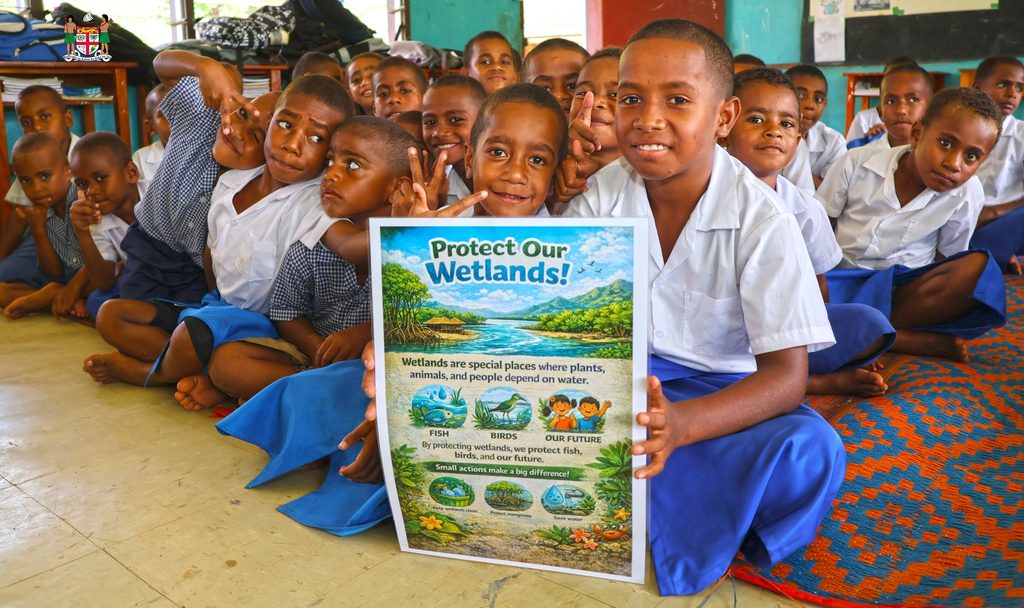
Students of Burenitu Village School commemorated World Wetlands Day 2026 with the central message of protection and conservation.
Picture: FIJI GOVERNMENT
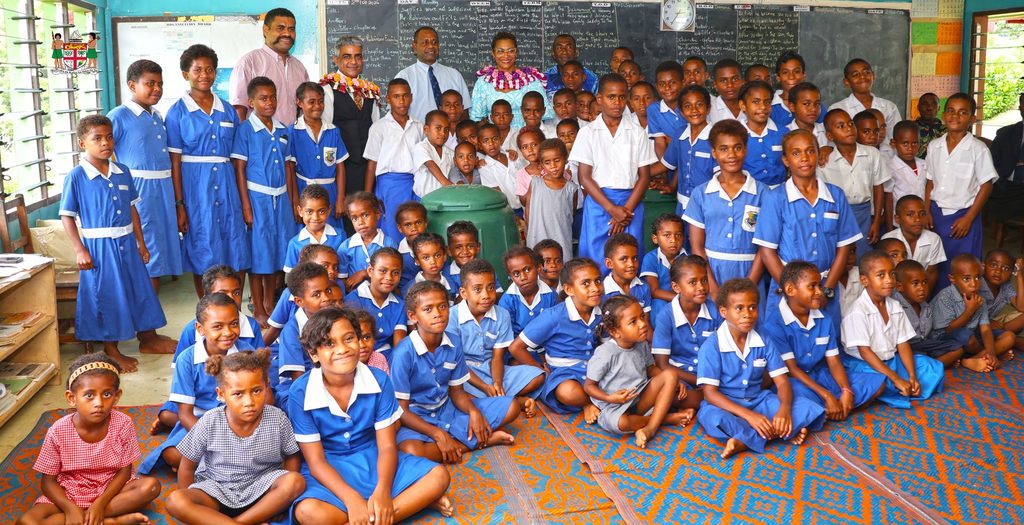
Students and teachers of Burenitu Village School with Mr Hossein-Borr and Minister Tabuya. Picture: FIJI GOVERNMENT

