
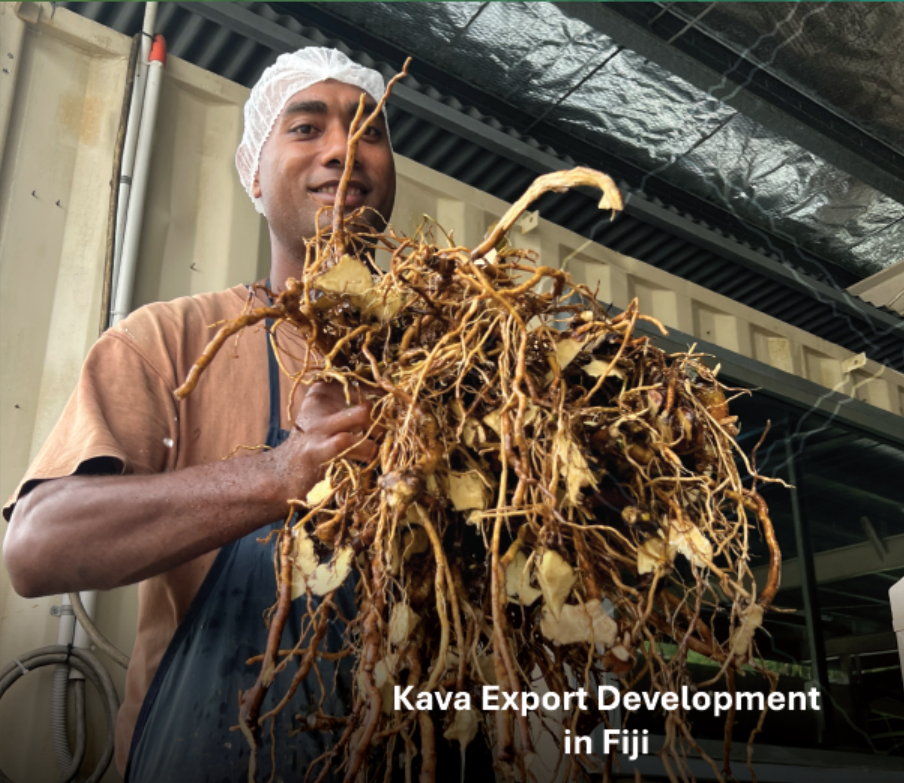
Fiji’s kava industry has undergone a dramatic transformation over the past 15 years, growing from a largely subsistence-based crop into the country’s most valuable agricultural export, with the broader sector now estimated to be worth more than $190 million.
According to figures linked to the PHAMA Plus performance story, kava exports were valued at under $4 million in 2008, near the start of the first phase of the Pacific Horticultural and Agricultural Market Access (PHAMA) Program.
By 2024, data from the Fiji Bureau of Statistics showed exports had increased more than tenfold to over $53 million.
When domestic consumption, processing and informal sales are included, the total value of the kava sector is now estimated to exceed FJD190 million, highlighting its growing importance to Fiji’s economy.
“What was once a largely subsistence crop with modest commercial value has now become Fiji’s most valuable agricultural export,” the PHAMA Plus performance story notes.
The industry now supports more than 14,500 farming households across the country, up from around 10,400 households in 2016, according to the Fiji Yaqona Farming Household Census 2024.
Major kava-growing regions include Kadavu, Bua, Cakaudrove, Naitasiri, and parts of Macuata and Lomaiviti.
For many rural communities, kava has become a critical and reliable source of income.
“For these communities, kava income now far exceeds subsistence returns and plays a vital role in sustaining rural economies, not only during boom periods but as a stable livelihood option,” the report states.
Fiji’s kava economy has experienced three major boom cycles.
The first was driven by exports to Europe, which collapsed in the early 2000s following an export ban linked to product safety concerns and inconsistent quality.
After years of recovery, production and trade stabilised, with steady growth in both domestic and export demand continuing until around 2012.
PHAMA Plus says improvements in market access, quality standards and industry coordination have been key drivers behind the sector’s resurgence, positioning kava as a cornerstone of Fiji’s agricultural and rural development story.

