
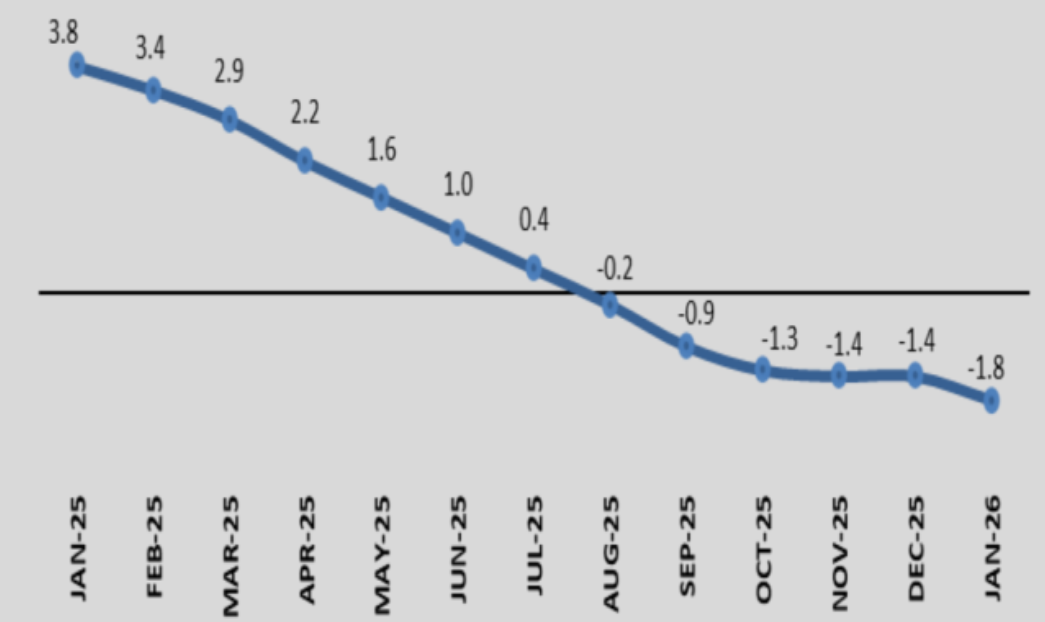
Fiji recorded continued deflation in January 2026, with the average annual inflation rate falling to –1.8 percent, according to the latest Consumer Price Index (CPI) release.
Figures show the average CPI for the 12 months from February 2025 to January 2026 declined compared with the previous 12-month period, while month-on-month inflation dropped by –2.5 percent compared with January 2025.
The CPI, compiled by the Fiji Bureau of Statistics, measures average changes in prices of goods and services purchased by households nationwide. Monthly price collections are carried out in urban centres including Suva, Lami, Nasinu, Nausori, Lautoka, Nadi, Ba and Labasa, with the index also used to represent rural price movements.
Despite the overall decline, price increases were recorded in several categories.
Alcoholic beverages, tobacco and narcotics rose 1.9 percent, driven by higher prices for spirits, beer, tobacco and yaqona
Transport increased 0.8 percent, reflecting higher fuel and lubricant prices
Furnishings and household equipment increased 0.3 percent
Clothing and footwear, communication, and recreation and culture each rose 0.1 percent
Significant price reductions were recorded in food and non-alcoholic beverages, down 3.2 percent, due to lower prices for oils and fats, vegetables, mineral water, soft drinks and fruit and vegetable juices.
Housing, water, electricity, gas and other fuels, down 0.5 percent, mainly from lower gas prices
Health, down 0.2 percent, reflecting lower pharmaceutical prices
The latest CPI figures point to easing cost pressures for households at the start of 2026, largely driven by falling food and fuel-related prices, despite selective increases across other consumer categories.

