
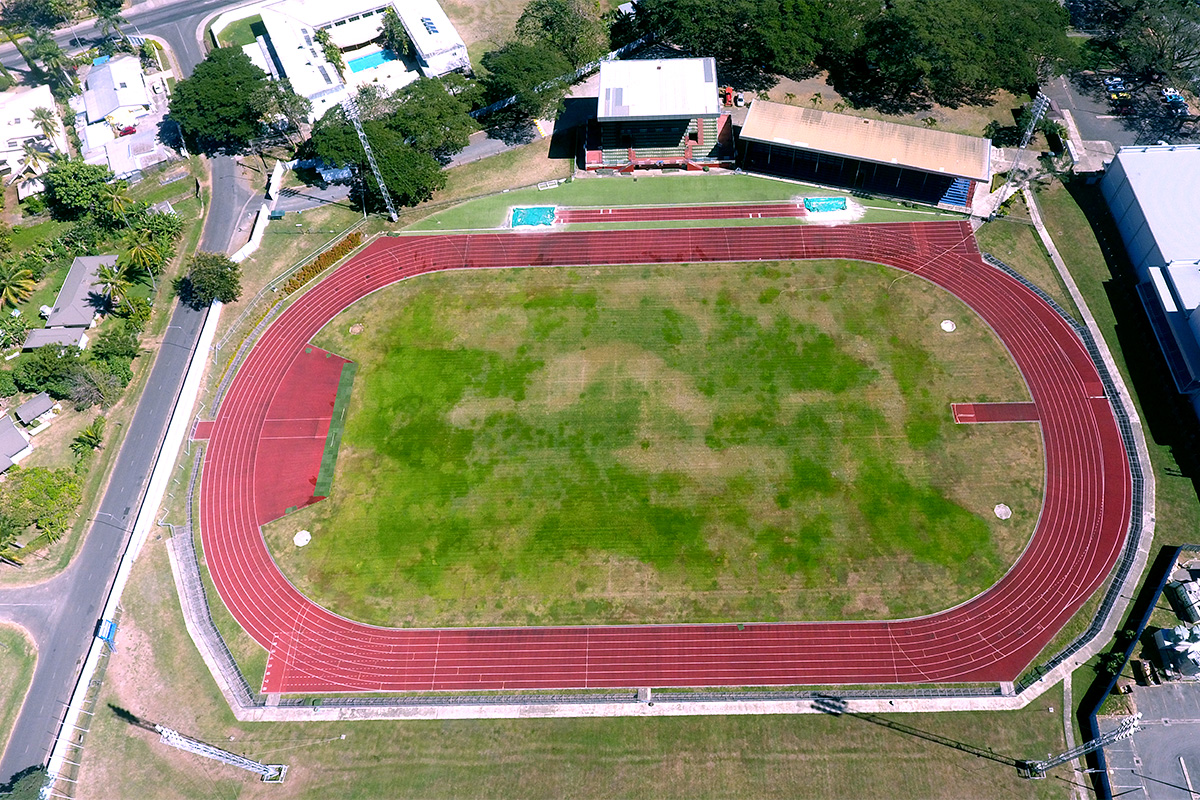
LAUTOKA’S iconic Churchill Park concrete pavilion today marks a proud milestone 50 years of history, resilience, and sporting glory.
From fierce cyclones and economic downturns to political change and social transformation, the concrete stadium has stood firm, becoming more than just a sporting venue.
Built at a time when Fiji was finding its feet as a nation, Churchill Park has hosted countless local, regional, and international sporting events. Today, it continues to draw massive crowds, especially as the home ground of the Swire Shipping Fijian Drua, where Super Rugby matches bring the nation together in blue and white.
Behind the vision of the concrete pavilion was a man determined to prove that Fiji could stand on its own Hari Punja, then Mayor of Lautoka and now one of Fiji’s most successful businessmen.
Punja became mayor in 1969, just a year before Fiji’s independence, a period filled with uncertainty but also hope.
“There was a lot of talk about the people of the country.
“I said we have to show the world that we are doing the right thing that we are doing well,” Punja recalled.
At the time, building a concrete stadium was no small task. It was bold, ambitious, and risky. But for Punja and his team, failure was not an option.
“That time, it was a big thing.
“The mood was that we should not fail. If we failed, it would be a laughingstock to the world,” he added.
Punja explained that Churchill Park symbolised something much bigger than sport it was about confidence and independence.
“We wanted to show that we can do it all without colonial help,” he said. “Before me, all the mayors were white Australians. But there was an atmosphere that we could run the country without the British.”
The stadium was built during a period of rapid national development. Major infrastructure projects were underway, the sugar industry was thriving, and Fiji’s economy was strong.
For Punja, the vision behind Churchill Park was part of a larger dream the development of the whole country, starting with strong, modern towns.
“The vision was to develop the whole country, and Lautoka is part of that,” he said. “There was a bit of competition between Lautoka and Suva who had the better stadium, the cleaner town.”
That competition pushed progress. Lautoka went on to win several cleanest town awards, reinforcing its reputation as a well-managed and forward-looking municipality.
“The vision was to have a modern town,” Punja said.
“There were improvement, progress, and progress. It was about making Lautoka a nice place to live in.”
One of the men closely involved in coordinating the stadium’s construction was Jack Raniga, who still remembers the pride and joy the stadium brought.
“My most memorable moments were sitting up there during major competitions,” Raniga said. “Watching the crowds enjoy what was built at that time just sitting there and taking it all in.”
Half a century on, Churchill Park remains a symbol of belief in local leadership, national pride and community spirit. From school games and club matches to international fixtures and Super Rugby showdowns, the stadium continues to unite people from all walks of life.
As Churchill Park turns 50, it stands not just as concrete and steel, but as a powerful reminder when Fiji dared to dream and proved to the world that it could succeed on its own terms.

