
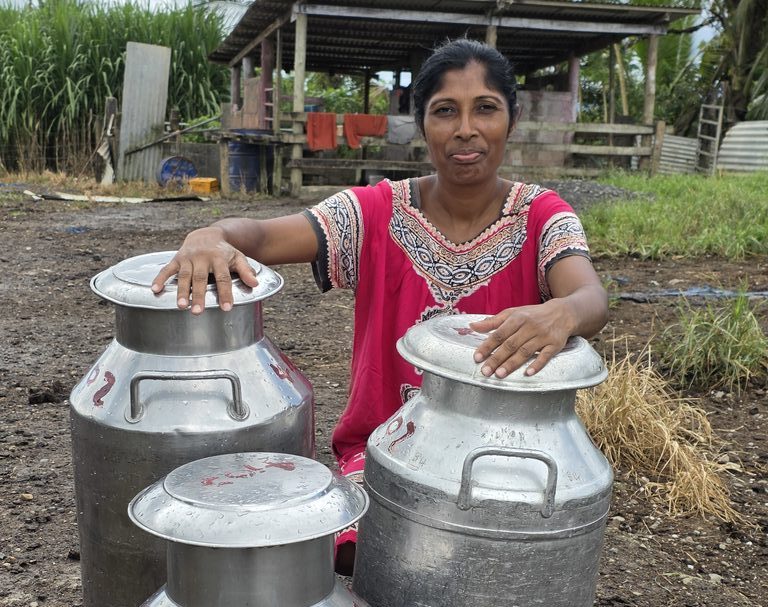
Before dawn breaks over Naduri Settlement near Viria Village in Naitasiri, Ashika Devi is already awake.
At 4.30am, while Fiji and most of her household is still asleep, she prepares breakfast and readies herself for another long day on the dairy farm that has shaped her family’s life for generations.
By 6am, Ashika is at the milking parlour, working the way her mother and father once did – by hand.
There are no automated clusters, no sensors, no robotics. Just cows, routine and resolve.
The scent of warm bouvine breath fills the air as each animal is gently secured, and milk is drawn using practiced hands hardened by years of repetition.
The callouses on her thumbs speak quietly of endurance and patience.
For many years, Ashika worked alongside her mother, Satya Wati, now 73, who married into a dairy-farming family decades ago.
When her father, Chandar Pal, passed away in 2003, her mum was left with five children, four daughters and one son, and a farm to keep afloat.
Today, the family manages around 50 cows across 104 acres of freehold land.
Ashika began milking cows in 2005.
“It was difficult at first. I was afraid of the cows and couldn’t even hold the teats properly,” she recalls.
“Now I am a professional and no more afraid of cows.”
The farm produces up to 110 litres of milk a day, seven days a week. After milking, the cows are released to graze, instinctively finding their way to water sources and returning again the next morning, guided by years of routine feeding.
Dairy farming is relentless work. Rising costs, financial pressure and environmental challenges have forced many family farms out of existence.
Support from Fiji Cooperative Dairy Company Ltd — through pasture assistance, feed grants and advice — has helped Ashika and her mother stay above water.
Despite the hardships, they press on.
Their days are long, the work unforgiving, but their determination remains unshaken — proof that resilience, passed from mother to daughter, can still sustain both family and farm.

