
For Komave families, the sea is not just a backdrop to village life, it is a daily provider.
Rosa Nakulanikoro, a young mother, is often out on the reef during low tide collecting clams, mussels and fish to sustain her family, while her husband works casual jobs.
Over the years, she has noticed a worrying change.
She shared that both the quantity and quality of the catch had greatly diminished, forcing families to spend longer hours at sea and, at times, return home with very little.
“We only came to realise what was really happening after the researchers came,” she said.
“We have great respect for our marine environment, and we were saddened to learn that what was happening was a result of poor practices carried out inland, especially by businesses.”
Fellow villager and fisherman, Kalaveti Delai shared similar concerns.
He said fish and seafood remained the main source of protein for coastal communities like Komave, with livestock and poultry usually reserved for special occasions and functions.
“When the fish disappear, it affects everything,” he said.
Following the science
Their lived experiences were later supported by scientific evidence.
A two-year study by the University of Fiji found a direct link between the decline of seagrass meadows, known locally as veivutia or mau, and dwindling fish populations in Komave’s fishing grounds.
“When seagrass disappears, so does the fish,” said lead researcher Lionel Joseph in the 2019 report.
“And when fish disappear, it threatens the food security of coastal communities like Komave.”
Researchers recorded nitrate concentrations as high as 362.8 milligrams per litre in some parts of Komave’s coastal waters which was more than ten times the safe limit.
These excess nutrients, often washed into the sea through agricultural runoff and domestic waste, fuel algal blooms that block sunlight and suffocate seagrass below.
“In areas where nitrate levels exceeded 300 milligrams per litre, there was zero seagrass cover,” the study found.
What happened in Komave?
Komave Village, situated along the Queen’s Highway in the Baravi area of Nadroga, has long depended on the sea for food and income.
While many families have moved into stable employment, fishing has remained deeply embedded in daily life.
Beneath the surface, however, a gradual but consequential change had been unfolding, one that villagers only fully understood once the research findings were shared.
Seagrass meadows play a critical role in marine ecosystems. They provide nursery grounds for juvenile fish, filter coastal waters and stabilise the seabed.
Globally, seagrass is disappearing at a rate of about seven per cent a year, and Komave is no exception.
Without seagrass, juvenile fish lose shelter, coral reefs struggle to thrive, and fishing yields decline.
A community response takes shape
Armed with new knowledge, Komave took action.
In 2019, the village established a marine protected area (MPA) with support from the University of Fiji and USAID’s Pacific-American Climate Fund (PACAM), marking a turning point in its response to seagrass decline.
Komave youth coordinator, Jone Druma said there had been a noticeable shift in how villagers viewed and protected their coastal environment.
“While challenges remain in terms of monitoring, we have taken it upon ourselves to stay vigilant and keep each other informed whenever we are out at sea,” he said.
“It’s encouraging to see fish spawning healthily, and the presence of bulubulu (young sharks) is a sign to us that the ecosystem is recovering.”
He said proposals raised during village meetings had been taken to provincial and district levels, calling for a coordinated approach among villages along Baravi to share knowledge and conservation efforts.
Traditional tabu (fishing ban) periods, he added, remained central to the village’s strategy and were strictly observed.
Passing knowledge to the next generation
Beyond formal protections, Komave has turned inward to strengthen traditional knowledge.
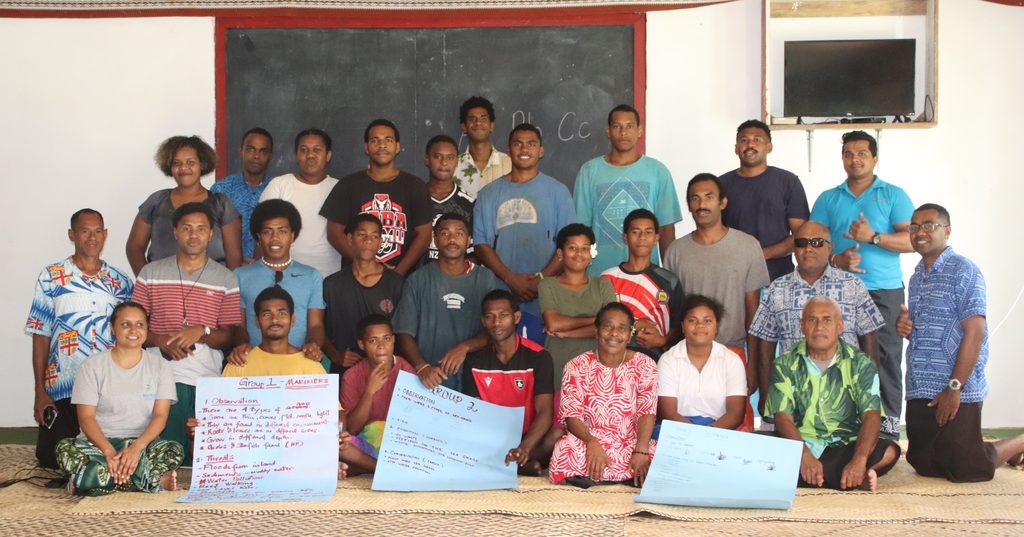
Elders have begun using weekly and monthly village meetings to teach youths about the importance of seagrass in supporting fish, crabs and octopus.
“Our culture already teaches us how to protect the sea and the environment around us,” said village elder, Atonio Erevatu.
“The issue now is passing that knowledge on to the next generation, so they understand its value and treasure it.”
Women have also taken on a leadership role.
Members of the Komave Womens Catholic League have been trained to identify areas showing signs of seagrass degradation and to practise fishing methods that do not damage existing meadows.
Merewairita Naulu said women fishers were now more conscious of where and how they harvested marine resources.
Ongoing threats and the way forward
Despite the progress, pressures on Komave’s marine environment persist.
Agricultural runoff, improper waste disposal, boat anchoring and coastal development continue to threaten fragile seagrass beds.
Climate change adds another layer of uncertainty, bringing warmer seas, stronger storms and rising sea levels.
The study recommends extending tabu periods, replanting mangroves to reduce runoff, improving waste management and installing fixed moorings to prevent anchor damage.
It notes that long-term success will depend on sustained community commitment and continued external support.
Moving forward
While Komave’s journey is still unfolding, its experience offers lessons for coastal communities across Fiji.
By blending scientific research with traditional knowledge, community leadership and youth involvement, the village is charting a path towards restoring its marine ecosystem and safeguarding its way of life.
Whether Komave’s seagrass meadows fully recover remains uncertain.
But the shift from awareness to action is becoming increasingly visible and shows that locally-driven, culturally-grounded solutions can help turn the tide for Fiji’s fragile coastal environments.
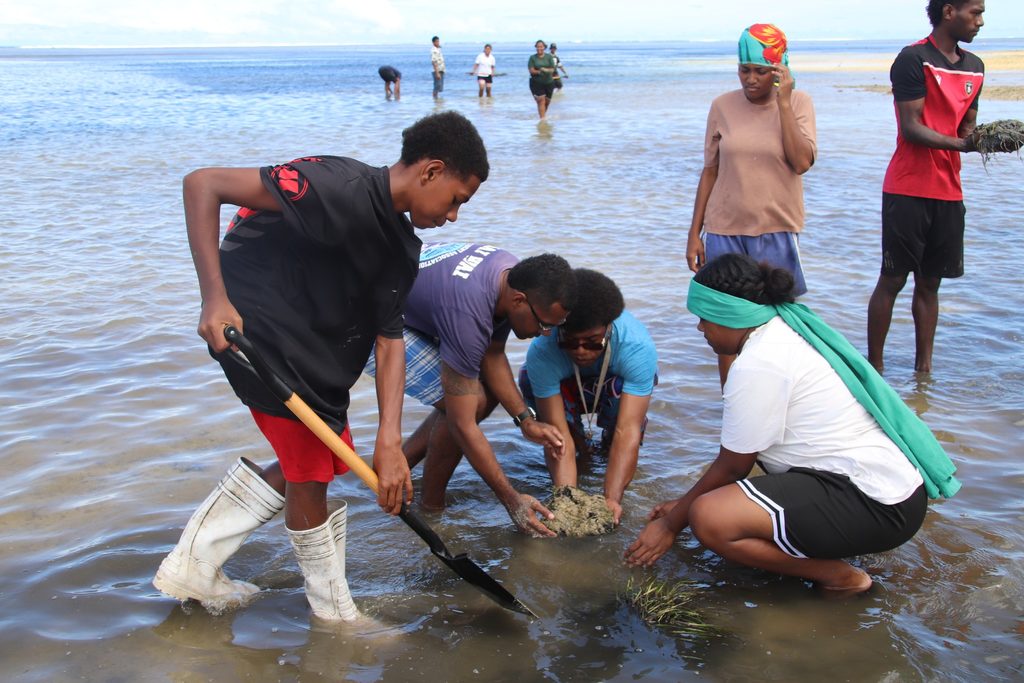
Komave youths hard at work replanting seagrass meadows. Picture: GIZ
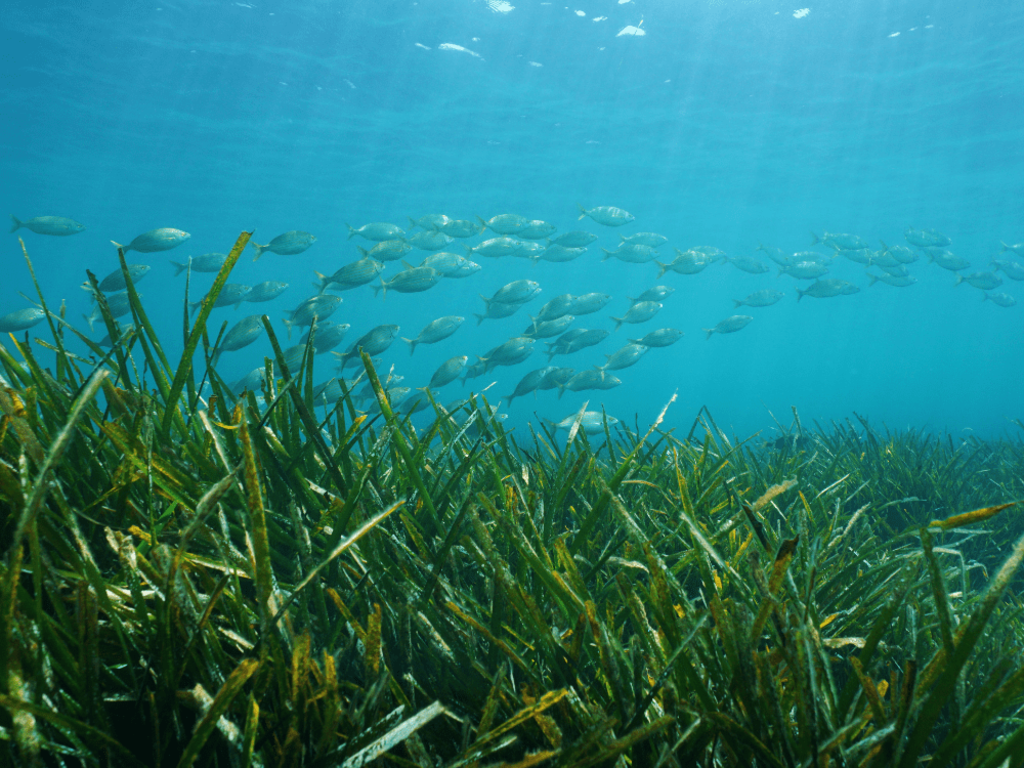
“When seagrass disappears, so does the fish,” says lead researcher Lionel Joseph in the 2019 report. Picture: SUPPLIED
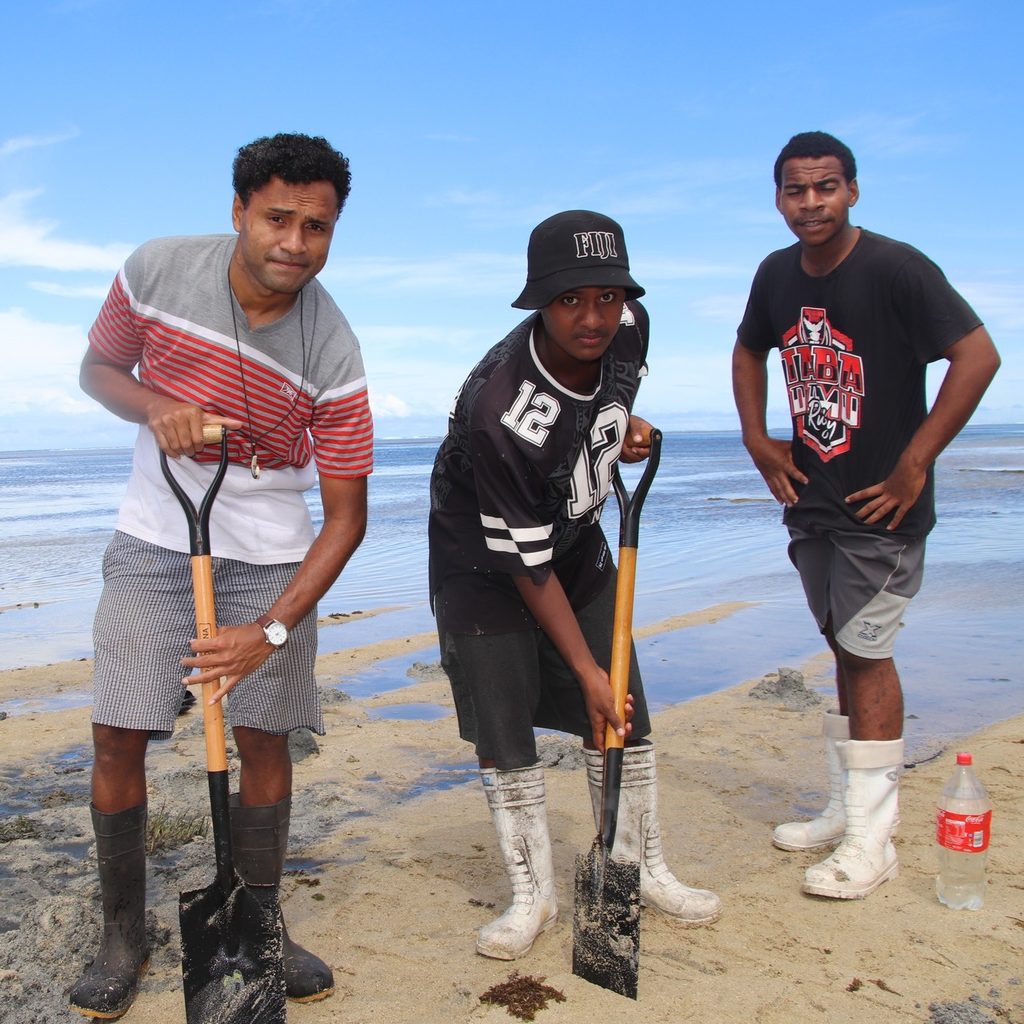
Komave youth coordinator, Jone Druma (left) with fellow youths during one of their routine seagrass restoration activities along Komave’s coastline. Picture: GIZ

