
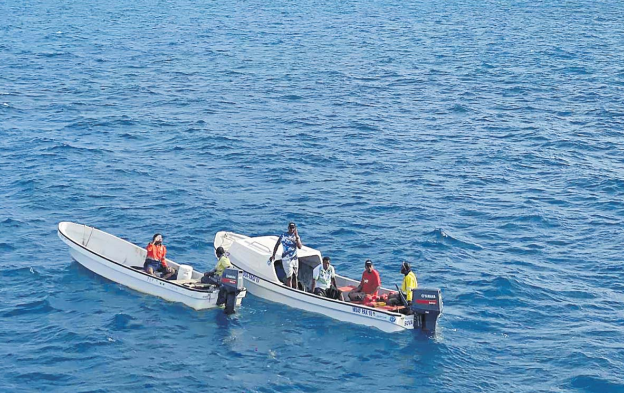
Fish thieves from Viti Levu are plundering the waters of Nakaseleka, Kadavu, threatening food security for local families.
Communities in the district said this as they raised the alarm over illegal fishing and exploitation of marine resources, warning that outsiders were threatening the sustainability of their qoliqoli and local livelihoods.
Mata ni Tikina Rovuama Walai said villagers are stepping up efforts to protect their waters, but the situation is becoming critical.
“We are working to get training done for the protection of our qoliqoli areas,” he said.
“Illegal fishers are coming into these areas and exploiting our resources. This is urgent as our food security and future depend on it.”
Mr Walai revealed that outsiders, some travelling all the way from Suva, are targeting Nakaseleka’s waters for profit.
“It is our common knowledge that fishers from Suva are stealing fish and taking it back to sell.”
He stressed the need for government and relevant agencies to step in, provide monitoring support, and enforce proper licensing.
“To be accessible only to the people of Kadavu, and more specifically to the people of Nakaseleka.”
He called for access to qoliqoli areas be restricted to locals and managed through legal channels.
Without stronger enforcement, Mr Walai warned, illegal fishing could undermine both the community’s food supply and the long-term sustainability of marine resources, threatening a way of life that generations have depended on.
District seeks local police post
THE absence of a police post in the Nakaseleka District of Kadavu is making timely law enforcement a major challenge, according to district representative Rovuama Walai.
“The nearest police station is in Vunisea,” he said.
“When complaints are lodged, it takes them about two weeks to come physically to the villages to get the investigations moving.
“Villagers are also wary when reports are lodged because there is no timeline when it will be actioned.”
Mr Walai said having a police post in the district was essential, and they were working with the relevant stakeholders to establish one.
He said complaints take up to two weeks to be attended to, allowing suspects to escape before investigations begin.
“A lot of times when reports are lodged it’s too late. By the time police come, the suspects have run away to Suva.”
He said police have maintained a strong presence in the area for the past six months.
He noted that theft and violent crimes are rare on the island.
“However, the major challenge right now is to do with marijuana cultivation which is ongoing.
“Uprooted plants from around Kadavu are brought here and stored until they are taken across to Suva.”
Despite the challenges, Mr Walai said villages have stepped up monitoring and action which has contributed to a decline in marijuana cases and said the situation will improve in the coming years.
Villagers demand environmental safeguards
RESIDENTS of Nakaseleka in Kadavu are raising growing concerns about the impacts of climate change and the need for careful consideration of development projects on the island.
Mata ni Tikina (district representative) Rovuama Walai said climate change is already affecting the local environment, prompting villagers to closely observe changes to the land, sea and weather patterns.
Mr Walai said climaterelated issues are regularly discussed during village meetings, where community members are encouraged to remain informed and vigilant.
He said during the most recent discussion, villagers stressed the importance of understanding the nature and purpose of development projects proposed for the area.
While acknowledging that development can bring benefits such as improved infrastructure and economic opportunities, Mr Walai said it is essential to consider how such projects may impact the island’s natural environment.
“Sometimes we are not fully aware of the long-term effects these projects may have,” he said.
“Although development often has positive outcomes, these must be carefully weighed against the negative impacts.”
Mr Walai said there are concerns that poorly planned developments could damage forests, coastal areas and marine resources that are central to the community’s way of life.
He acknowledged that climate change is a global challenge beyond the community’s direct control but said local actions could help reduce its impact.
“While we cannot control climate change globally, we can manage its effects in our backyard,” he said.
Mr Walai called for sustainable development approaches that prioritise the wellbeing of both people and the environment, adding that future projects should involve community consultation and thorough environmental assessments before any work begins.

