
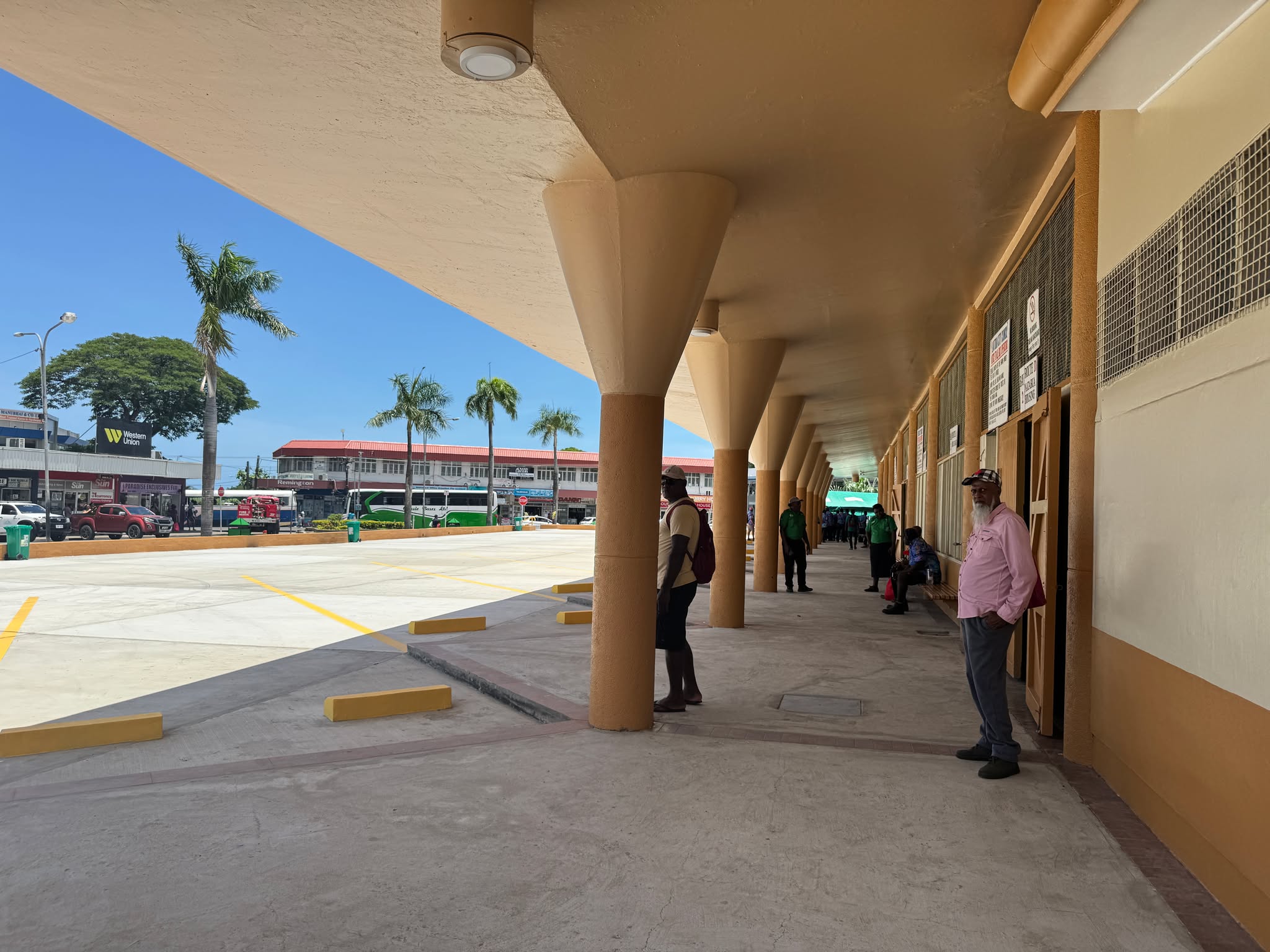
For the people
The Lautoka City Council administration has made a bold move by upgrading the city’s bus terminal at a cost of $F2.8m out of its own coffers. After four decades (42 years), the dream came to reality, when it was officially “opened” on Monday, 26/1/26. In my view, this is a very important and well managed municipal project, without over expenditure, on timeline and at the right time. And surprisingly, without a CEO. It had to be a reflection of meticulous administration, with proper leadership style. The LCC, in my view, has placed its service, at the expense of its residents. A local council’s governance, which has not been visualised, within the last 30 years.
What a testimony of a people-orient based leadership. Vinaka vakalevu Taitusi Rasoki, LCC administrator. Keep up the great effort. Fiji needs such leaders. SAMU SILATOLU Nakasi
Corporal punishment
The Fijian Teachers Association general secretary, Paula Manumanunitoga, has renewed his calls for corporal punishment to be reconsidered and I believe the FTA is suggesting how to implement it. The FTA general secretary definitely knows what he is talking about. The Fiji Teachers Union general secretary, Muniappa Goundar, says they don’t condone corporal punishment and offers advice to parents on spending quality time with their children and on teaching good manners and values at home. The FTU general secretary is likely trying to toe the line so as to be seen as aligning to the new normal. The thing is, what Goundar is saying is easier said than done. The Fiji Head Teachers Association president, Johnson Rura, says they are committed to abiding by the law. A perfect balancing act, but I like it. I’m sure most of the head teachers are silently wishing for the FTA’s wishes to come true, even at controlled levels. Donald Singh Nausori
Political will vs people’s will
Which one do you prefer as we head to elections. Which ever you prefer, I feel the people’s will is the deciding factor who will lead us after the next elections. Juki Fong Chew Nadawa, Nasinu
$200 assistance
The Ministry of Education is once again under heavy fire over delays in the $200 back-to-school assistance, with some parents claiming the disruption has left students unprepared and even forced to stay home. But why is the MOE copping all the flak? Every year, school dates are known well in advance. Yet for many parents, planning for their children’s education appears to be an afterthought, something to be dealt with only once the festivities are well over and the money has run out. For months, cash somehow finds its way to religious obligations, sporting events, social functions (soli), endless celebrations, grog sessions, alcohol, and cigarettes. But when it comes to school shoes, uniforms and stationery, suddenly the cupboard is bare – paisa khalas! A very common trait within certain communities. Once the hangovers fade and reality sets in, the blame game begins. Fingers are pointed at the ministry, pleas are made for handouts, and government assistance is treated not as support, but as an entitlement. Responsibility is outsourced, year after year, with remarkable consistency. Let’s be honest, this is less about a delayed $200 and more about chronic poor planning and deeply misplaced priorities. Education should not depend on whether a grant lands on time. If parents truly valued their children’s schooling, preparation would begin months earlier, not days before the bell rings. Until financial discipline and personal accountability replace this culture of last-minute panic and continuous dependency, the same excuses will resurface every January, and it will always be the children who pay the price. The freebies addiction must stop! Nishant Singh Lautoka
Temple sacrilege
Another incident of break-in and sacrilege has been reported at a temple in Sawani. In addition to structural damage, cash and several items, including a television, a fan, and the CCTV decoder, were stolen. The removal of the decoder has resulted in the loss of crucial footage, leaving no visual evidence of the perpetrators. There is growing concern within the community that such cases of temple sacrilege are not receiving the seriousness they warrant, as similar incidents reported since last year have seen few significant arrests or convictions. This raises an important question regarding the follow-up actions being undertaken by Sanatan organisations to safeguard places of worship and seek accountability. A collective and sustained response is now essential to restore public confidence and protect religious institutions from further violations. DINESH KUMAR Ba
Alternative measures
What would be the alternative measures where the parents lack values and proper behaviour? Mohammed Imraz Janif Natabua, Lautoka
New school year
Congratulations to all new students, continuing students, parents and teachers for another new school year. Juki Fong Chew Nadawa, Nasinu
Duo’s honorifics
Vice-Chancellor “Mrs” Nabobo-Baba as addressed by your paper (FT 26/1) ought more properly be called “Professor” or “Doctor”. Ex-Minister “Professor” Biman Prasad as “Doctor”, “MP” or “Mr”. Grading matters. Christopher Griffin Perth, Australia
Cooperation not discipline
“Other forms of discipline” is just another use of force on a defenceless child. There is such a thing as “natural consequences” that occur as a result of mischievous behaviour. Cooperation comes from mutual respect and a mutual friendly relationship. As long as there is an atmosphere of “us and them” and not a “we” that includes both students and teacher, there will be a need for control and discipline. Incidentally, “naming and shaming” is one of the worst forms of psychological punishment, much worse in its effects on learning than physical punishment. Fergus Garrett Vatuwaqa, Suva
Donated car
If I were the President of Fiji and the recipient of the Hongqi H9 car from the Chinese government, I would have taken the car to the top of a hill, looked down the valley below and asked the donors to take the car back in exchange for a bridge to enable the poor living in the remote part of the island to cross the river in all seasons to attend their schools and health centres. I would still have the privilege of the existing vehicle and also be a strong contender to be nominated as the Statesman of the decade. Ajai Kumar Nadi
Party advert
The other day NFP had placed a full-page advert in the newspaper to invite potential candidates for the coming general elections. It should put out more such adverts. It might improve its chance of getting some new candidate elected. The track record of the old ones who were part of the Rabuka gang in government is unlikely to see them return to Parliament. Of course I could be wrong. Rabuka got back in Parliament and even became PM again despite his rotten record! Rajend Naidu Sydney, Australia
Education, politics and bill
Matua program
What an amazing initiative for the older generation to have another chance at completing their education. This is how we bridge educational gaps and develop our population and our country, and grow together. Opportunities to learn must never cease. When we create opportunities for hopeful programs to exist, we create and motivate our population to rise above their challenges and setbacks. Every setback is an opportunity for a great come-back so let’s help drive these programs for great come-backs which will make significant contributions to our economy and community. Joan McGoon Bay Area, California
Without $200
If parents are unable to send their kids to school because they didn’t receive the $200 handouts, the real problem isn’t the handouts. The real problem is employment and savings. Parents who have a job should not be receiving those handouts. They should be expected to save throughout the year for their kids. Those who are unemployed should verify that they are registered with the National Employment Centre and are either actively seeking work or are unable to work. Let’s not reward those who choose not to work hard and save for their kids. Kiran Khatri Samabula, Suva
Fiji politics
In his illuminating article “Eroding trust in Fiji politics” (FT 28/1) journalism academic Shailendra Singh posed a pertinent question. He recalled that when FijiFirst was in power, appointments were not based on merit. Instead they tended to be made on the basis of favouritism, nepotism and cronyism. Singh notes: “This was rightly criticised ad nauseam by the Coalition when in opposition, with promise to address it once in power. But has it honoured its word, or are we just seeing more of the same?” The answer is plain for all clear thinking people to see. Once in power the Coalition become a caricature of the very things it constantly criticised FijiFirst for. There is therefore a perception that the Coalition failed to deliver on its promise of good governance with a ” people-centred” policy agenda. It became a self-serving gang in government just like the previous mob in power. Rajend Naidu Sydney, Australia
From the holy book!
I have said many times that I do not have a very high regard for people who quote from the holy books. The verses from these books are not there to promote their prejudiced personal agenda. I believe it is showing disrespect to the holy book to quote from it to suit your own agenda. It is simply not right. It is a way of deliberately misleading the readers and the listeners under the guise of pretending that it is the word of God to achieve one’s personal purpose. How many people get misled and conned by those shouting from the pulpits and on TV? To those politicians and pretend men and women of God, in this column and elsewhere, stop quoting from the holy book. hese quotes are not there for your personal purpose or your personal message. Do not disrespect the verses in the holy books. They are sacred. Jan Nissar Sydney, NSW, Australia
Water bill
I refer to the letter by Dewan Chand (FT 28/1) concerning the shocking inconsistencies in water billing by the Water Authority of Fiji. What is disturbing is not only the sudden jump in Mr Chand’s bill, but the growing pattern of unexplained charges being reported by domestic consumers. WAF now attributes billing accuracy to its newly introduced automatic meter reading system, yet automation does not equal infallibility. When a system produces erratic results, it demands scrutiny — not blind acceptance. My concerns are informed by earlier observations of WAF’s conduct during the Rewa River Water Scheme project prior to the COVID period, where environmental safeguards, landowner consultation, and indigenous rights appeared sidelined in favour of financial and project-driven objectives. That same mindset seems to persist today: efficiency and revenue first, accountability later. If a single-occupancy household can be charged $67.80 after previously receiving a bill of $1.50, then either the system is fundamentally flawed or consumers are being asked to subsidise institutional inefficiencies. Neither is acceptable. WAF is a public utility entrusted with an essential service. Its operations must be transparent, verifiable, and subject to independent oversight. I strongly support calls for the Consumer Council of Fiji to investigate these billing practices and make their findings public. Fijians should not be expected to pay first and question later. Trust in public institutions is built on accountability, not automation. Peceli Alistir Waitolu, Naitasiri

