
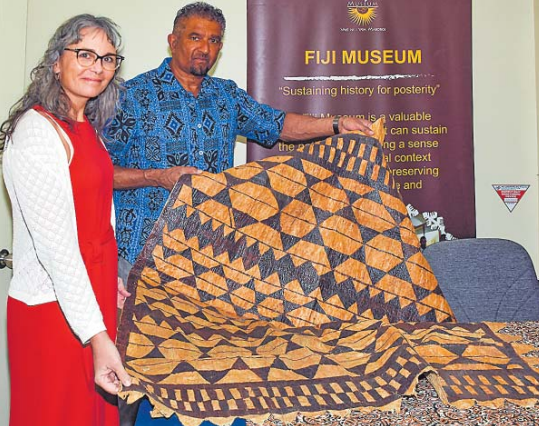
A RARE piece of Fiji’s cultural heritage has returned home after nearly 80 years overseas.
The tapa, which had been displayed at the Chatham Kent Museum in Canada since 1946, was formally handed over to the Fiji Museum yesterday, bringing with it a powerful reconnection to Fiji’s cultural past.
Fiji Museum matanivanua Ratu Jone Balenaivalu said the return went beyond the physical transfer of an artefact.
“This is not only the physical return of an object, but also the restoration of a cultural connection that transcends time and distance.” Ratu Jone said.
“In Fiji, tapa is more than a textile, it is a living expression of identity, ceremony and social relationships, through which history, status and values are communicated.”
The tapa was taken to Canada in the early 1900s by Edmund Tompkins Weber and later became part of the Chatham Kent Museum collection, where it remained for decades. Despite its long absence from Fiji, it was preserved in remarkably good condition.
“As the national custodian of Fiji’s movable heritage, the Museum is entrusted with ensuring that items like this are properly documented, conserved and interpreted, not only for the present generation, but for those yet to come.”
Fijian Honorary Consul Bobby Naicker, who helped facilitate the return, said bringing the tapa home was both challenging and deeply personal.
“I grew up in Fiji, so this country means a lot to me,” Mr Naicker said.
“The artefact I bring holds cultural meaning and significance to the South Pacific, and I’m really excited that I was able to deliver this.”
“It was difficult bringing it across customs and borders, but once they understood how important this artefact was to Fiji, we were able to bring it home.”
Mr Naicker said while the circumstances surrounding how the tapa was originally taken remained unclear, its return was what mattered most.
“We don’t know how it was taken or the journey it made, but it belongs to the people of the Pacific.”
Canadian High Commissioner to Fiji, HE Dr Jennifer Lalonde said returning the tapa was significant for both Fiji and Canada.
“Artifacts like this are part of your cultural identity and your history; it’s important that they are able to come home.” Dr Lalonde said.

