
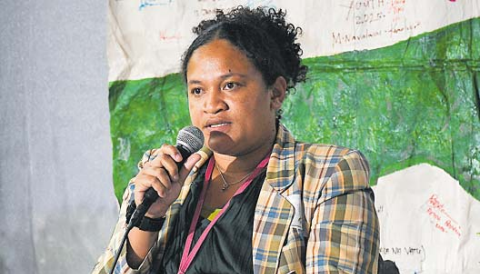
MANGROVES play a critical role in protecting Fiji’s coastlines, sustaining marine life and combating climate change, says a senior adaptation officer from the Ministry of Environment and Climate Change, Keresi Tuimanono.
During a panel discussion on “Integrating Traditional Ecological Knowledge and Science in Community Development Resilience in Fiji” held at the Fiji Museum in Suva on Monday, Ms Tuimanono described mangroves as vital nurseries for marine ecosystems.
“Mangrove is a nursery,” she said.
“That’s where fish come and have their babies. Apart from that there are some delicious and also culturally important species within the crustacean family which are crabs, mud lobster (mana), they all live in the mangroves swamp.”
She said mangroves serve multiple functions beyond supporting marine biodiversity, acting as a natural shield for coastal communities.
“Mangroves apart from protecting the shoreline, being the first defence against big waves from sea level rise, also hold the soil together minimising soil erosion on the coasts.
“They are so important to us and the marine life.”
Highlighting their role in climate mitigation, she said mangroves were a powerful tool in addressing global warming and were central to Fiji’s blue economy ambitions.
“When we talk about the blue economy, mangroves sequester bad gasses that cause global warming like carbon dioxide.
“They absorb it and they are seven times more powerful than the terrestrial big trees that we have on land. That’s why, they are important to be protected.”
Ms Tuimanono stressed that protecting mangroves required a sense of shared responsibility, which she described as “guardianship”.
“How can we preserve and protect mangroves? It’s through the guardianship.”
She raised concern about illegal cutting of mangroves, citing examples from the Rewa area.
“For example, in Rewa, people are coming in taxis to cut down mangroves, and some people just watch them doing that.
“They should stop them from doing that. They can take photos of them and post on social media because nobody should be cutting mangroves without permission.”
Ms Tuimanono said mangroves were essential not only for food security but also for reducing greenhouse gases in the atmosphere.
“They are protecting the shoreline, they are producing food for us and most importantly, they are taking away the greenhouse gases from the atmosphere so that we are not affected.”
She called on communities living near mangrove areas across the country to be proactive in protecting them.
“I hope that the people who are living beside the mangroves swamp, not only in Rewa but in other parts of our country where they have mangroves, would really care and tell the people who are cutting, not to do that without permission.”
Ms Tuimanono also linked mangrove conservation to opportunities in carbon trading.
“What is so important now for the Fijian communities is the blue economy. We have to go into carbon trading and people have to protect the mangroves in order for these partners to be interested in buying the carbon credits.
“Everybody has to take the ownership of protecting our mangroves. It’s not only the vanua or the iTaukei people living beside the mangroves, but everyone should play their part in protecting mangroves.
“It’s everybody’s business.”

