
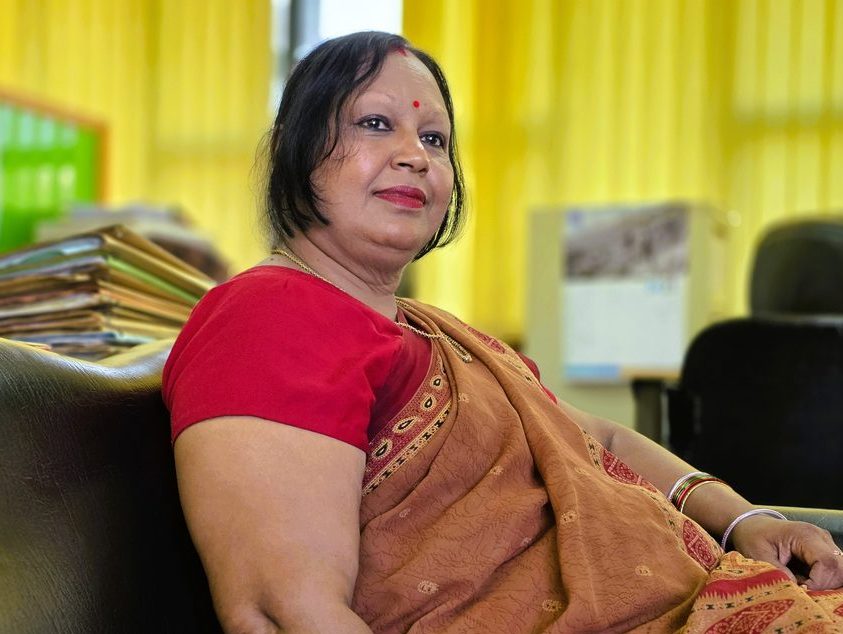
EVERY weekday morning at Suva’s busy bus stand, amid the bustle of commuters and the rush of city life, one figure stands out.
Not because she seeks attention, but because she quietly keeps to the tradition of her ancestors.
Draped neatly in a sari, Shaleeni Priya Singh heads to Suva’s Ro Lalablavu House, her place of work at the Ministry of Finance. She has spent nearly four decades as a public servant.
For many in the capital, she is a familiar and comforting sight, a symbol of consistency, culture and dedication in a rapidly changing world.
Born and bred in Suva, Mrs Singh’s life story is firmly embedded in service and pride for culture.
She grew up in the capital and completed her secondary education at Dudley High School, graduating in 1987.
Her parents, originally from Nausori and Vatuwaqa, settled at Laucala Beach Estate in 1980, where the family made their home.
After finishing school, Mrs Singh pursued further studies at the Fiji Institute of Technology before joining the Office of the Auditor-General in 1989 as an audit assistant. It was the beginning of a lifelong career in government service.
“I spent about 13 years at the Auditor-General’s Office,” she said.
“From 2000 to now, I’ve been with the Ministry of Finance.”
This March will mark 37 years of continuous service which no doubt is a milestone few can claim in today’s workforce, particularly in Fiji’s ever evolving civil service.
A public servant at heart
Now stationed at the pensions office within the Ministry of Finance, Mrs Singh describes herself first and foremost as a public servant.
“We are customer-orientated here.
“I look after government pensioners and also assist other members of the public who come in needing guidance or information.”
Her work goes beyond just paperwork.
It is about service, patience and ensuring people feel respected when they walk through the doors.
Over the years, she has watched generations of pensioners pass through the office, many of them familiar faces and takes pride in offering assistance with dignity and care.
“It has been very interesting, because there’s always something new to learn.”
Life beyond the office
Outside her professional role, Mrs Singh is a wife and mother.
She married at the age of 24 in 1995 and is the proud mother of two daughters, born in 1996 and 1999.
Balancing family life with a demanding career was not always easy, but she credits strong values instilled by her parents, particularly her mother, for shaping her path.
Her mother, a retired civil servant herself, would unknowingly influence one of Mrs Singh’s most defining personal choices.
Inspired by her mother
Mrs Singh’s daily sari routine is not merely a fashion choice but a deeply personal expression of identity and heritage.
“What inspired me was my mum.”
As a young girl, she would help pleat and pin her mother’s sari before work, admiring the elegance and discipline it represented.
“I always asked her why she wore saris every day. She told me it was how she was brought up, that women wore saris whenever they went out.”
That memory stayed with her.
“I told myself that once I got married, I would stick to wearing saris. And I kept my word.”
While she wore salwar kameez and western clothing when she was younger, marriage marked a turning point.
From then on, the sari became part of her everyday life, at work, on buses and on the bustling streets of Suva.
Wearing culture in a modern world
In a time when western clothing dominates office spaces and city streets, Mrs Singh’s commitment to traditional attire has not gone unnoticed.
She has received curious questions, practical concerns and unsolicited advice, particularly about the heat.
“People ask me if I feel hot. But whatever you wear, you will feel the weather.”
Bus drivers, taxi drivers and passers-by have also stopped to comment, often with admiration.
“Sometimes they stop me just to say, ‘Aunty, you look beautiful in your sari’. It takes me by surprise, but it’s very touching.”
She believes the sari carries a quiet dignity that transcends age, body type or appearance.
“No matter what, a sari makes an Indian woman look beautiful.”
Encouraging the next generation
Mrs Singh acknowledged that modern lifestyles and fast-paced routines have shifted clothing habits, especially among young Indo-Fijian women.
Today, saris are most commonly seen during religious festivals such as Diwali.
But she hopes younger women will consider embracing the garment more often, even occasionally.
“It doesn’t take long (to wear). It takes me three to five minutes every morning.”
She points out that modern designs, pre-pleated saris and online tutorials have made wearing a sari easier than ever.
“It’s all about practice. Once you make it a habit, it becomes natural.”
Neatness, she added, is key from properly arranged pleats to ensuring comfort and modesty.
“For me, it’s about elegance and respect.”
A love for colour and tradition
A proud “ex-Dudlean”, Mrs Singh’s favourite colour is purple, particularly what she fondly calls “Cadbury purple”.
For daily work, she prefers lightweight, wash-and-wear saris that suit public transport and Suva’s unpredictable weather.
Heavier silk saris are reserved for weddings and special occasions.
She also enjoys occasionally blending with other cultures, wearing salwar kameez during Eid or donning a sulu jaba during Christmas, gestures she believes reflect Fiji’s multicultural harmony.
Preserving culture through clothing
Traditional attire is more than just fabric you put on for a special occasion or ceremony. It is identity, respect and continuity.
“When you wear your traditional outfit, it shows your background and it keeps your culture alive.”
She delights in seeing iTaukei women adapt sari material into sulu jaba designs and believes cultural exchange strengthens, rather than diminishes, identity.
In a way, this is Shaleeni Priya Singh’s own unique way of ensuring the continuity of the Indian culture and heritage.
At the same time, it reminds us that progress does not have to come at the cost of tradition, sometimes the strongest statements and forms of expression are worn and made without words.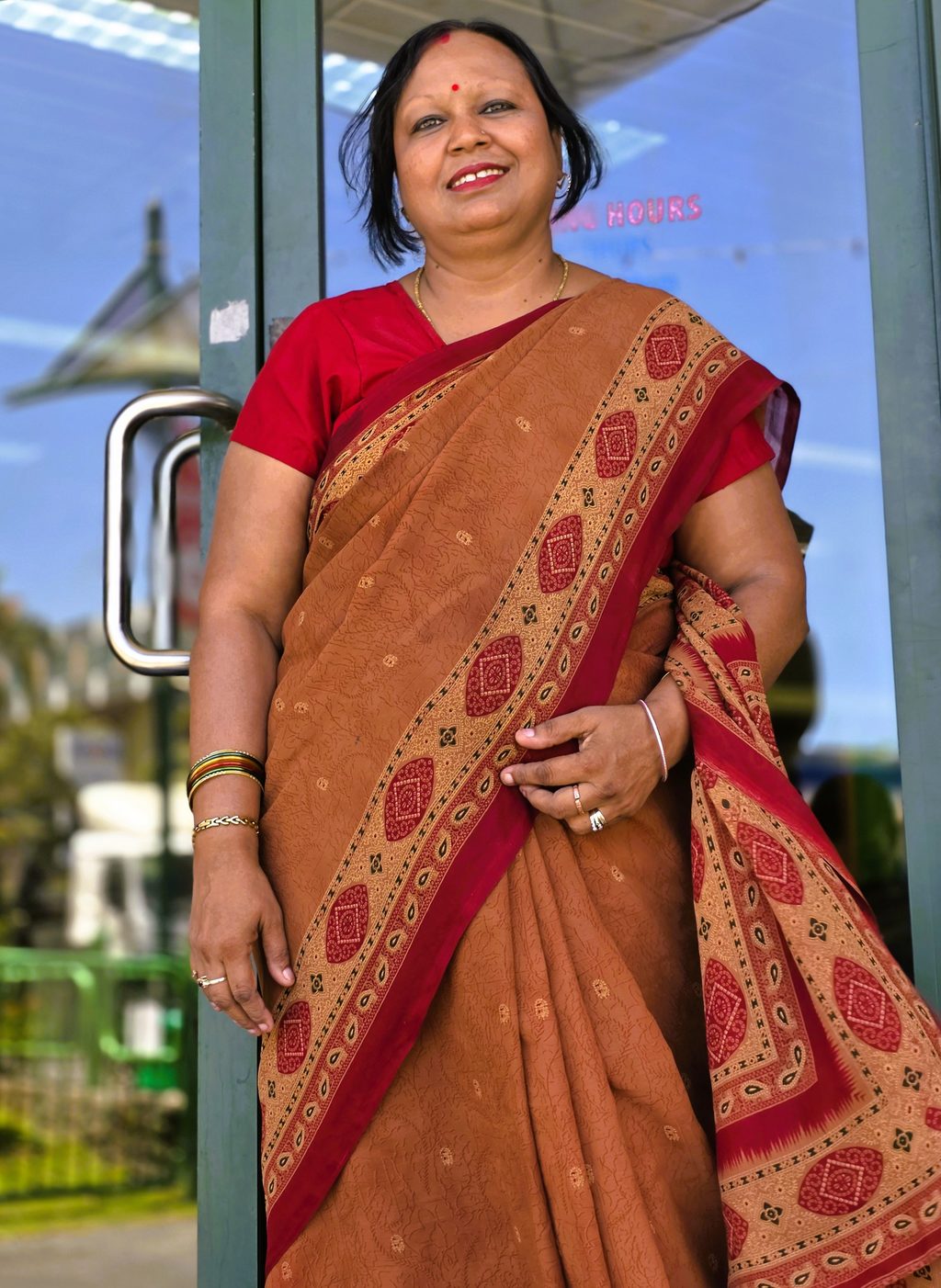
Mrs Singh believes the sari can make any woman look beautiful, no matter their physical features. Picture: ALIFERETI SAKIASI
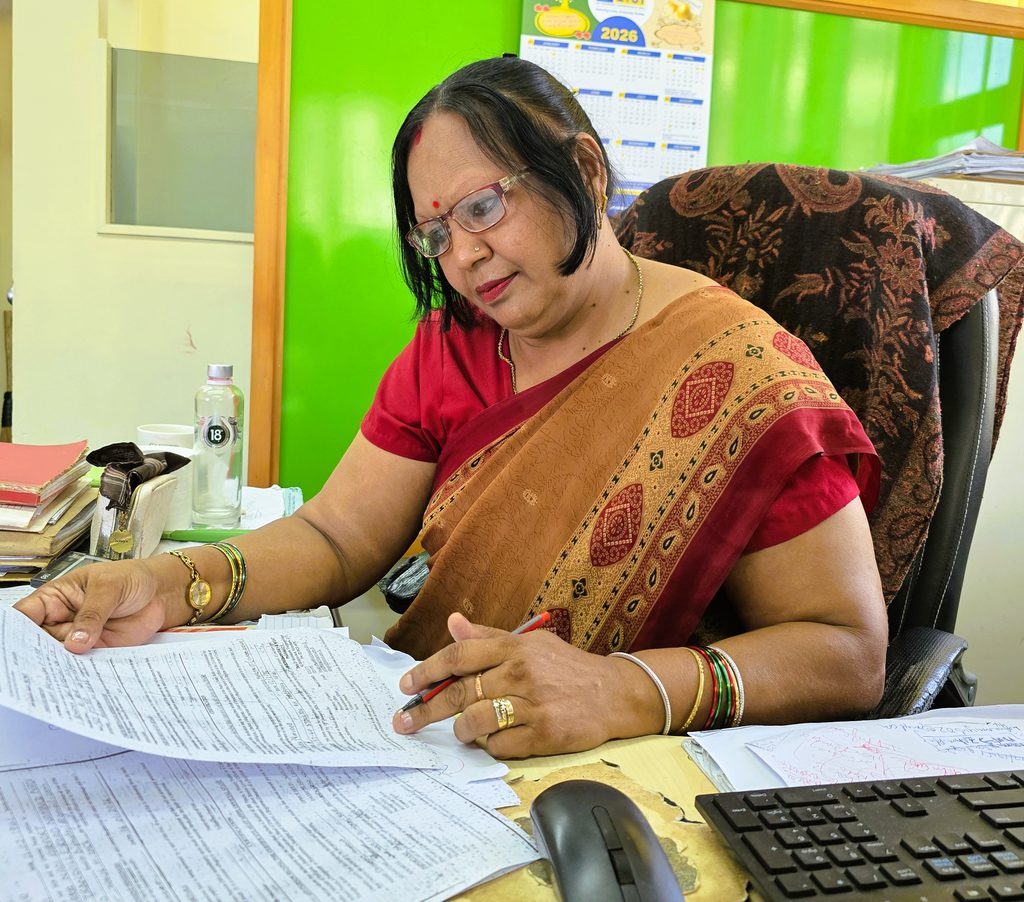
Shalini Priya Singh has spend nearly four decades as a public servant.
Picture: ALIFERETI SAKIASI

