
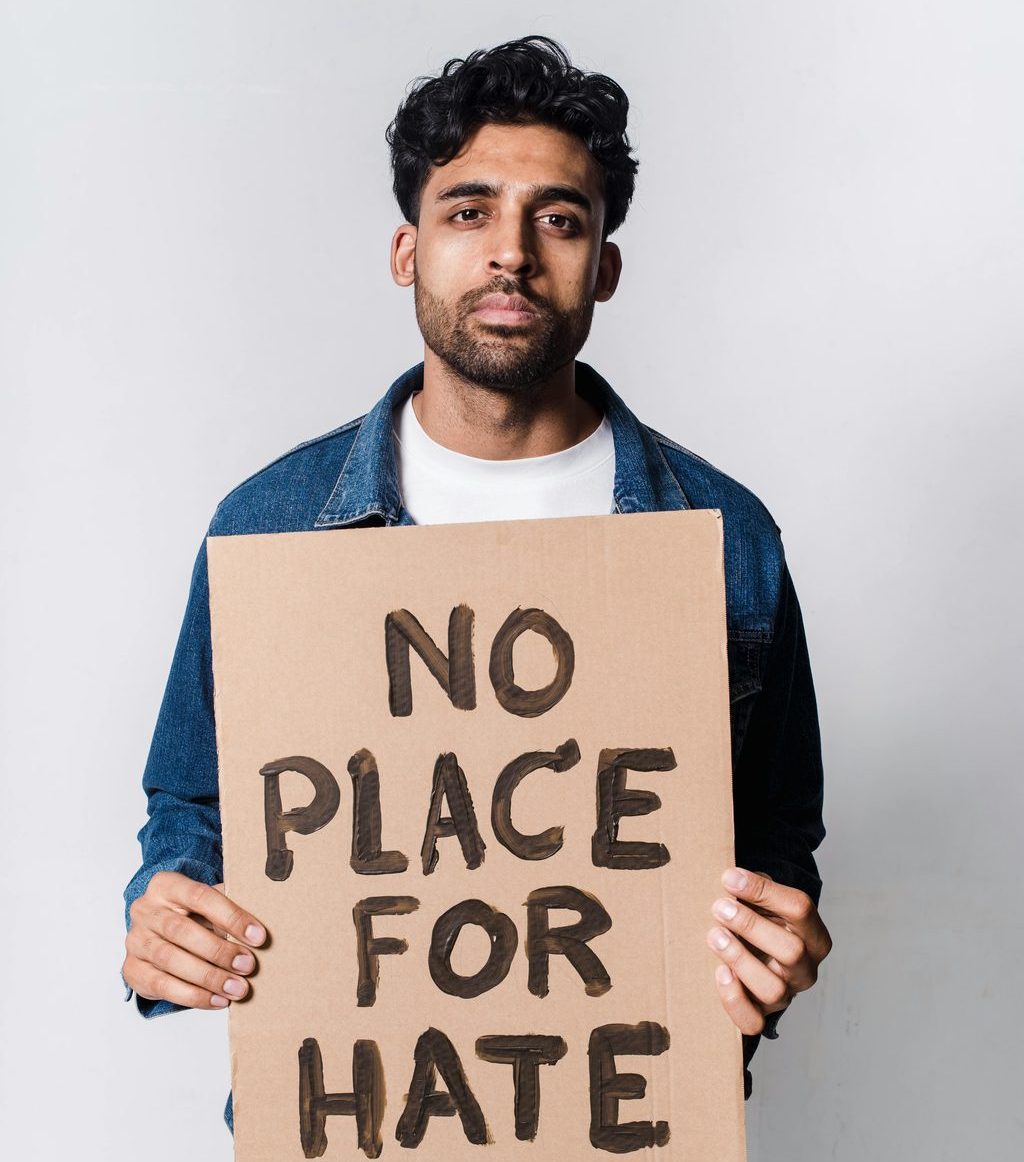
I was recently having a conversation with my five-year-old grandson about spiders and snakes when I casually blurted out, “I hate those things!”
He stopped me immediately.
“Grandad, please don’t say the word hate,” he said firmly. “It’s not a very nice word.”
I apologised without hesitation. He smiled and replied, “You’re welcome!”
In his young world, there’s not yet a clear distinction between hating something that frightens us and hating a human being. And that’s perfectly fine. He’ll eventually learn the difference as he grows.
But his innocent rebuke lingered with me. It prompted a deeper reflection on the word hate, a word that carries a tsunami of emotion and shifts its meaning depending on how and at whom, it’s directed at.
We all use the word loosely. We say we hate violence, abuse, injustice, drugs, or alcohol misuse. We may even say we hate the fear that wells up when we encounter a snake or a spider or, in my wife’s case, toads. Her fear dates back to a childhood experience growing up in Natewa Bay, and the phobia has stayed with her ever since.
In these contexts, “hate” is often shorthand for fear, aversion or moral rejection. But when hatred becomes an obsession with a person, a group, or an ethnicity, something far more troubling is at work. At that point, it’s worth asking not only what’s being hated, but why.
And perhaps the harder question: can hatred be unlearned?
When one group becomes fixated on another in an unhealthy way and it’s fuelled by suspicion, contempt and hostility, it reveals how hatred takes root with false beliefs and accusations. For some, hatred becomes an obsession and it strips people of individuality. It turns human beings into symbols and blame becomes a substitute for understanding.
This dynamic lies at the heart of one of the most uncomfortable questions of our time: why does hatred toward Jews persist in some Muslim communities?
It’s a difficult subject and has parallels even here in Fiji. But avoiding it only allows resentment to harden.
An essential distinction must be made at the outset. Muslims are not a single voice. The overwhelming majority reject antisemitism outright. Islam, like Judaism and Christianity, teaches moral responsibility, compassion and respect for life. Hatred isn’t an article of faith.
So where does it come from?
The roots lie less in religion than in history, politics and manipulation. Over time, political conflicts, particularly in the Middle East, have been reframed as religious wars. Complex disputes have been reduced to crude binaries of “us versus them,” where Jews are portrayed not as individuals but as a collective enemy. And the tragedy is that children as young as my grandson are taught to hate Jews from an early age that it becomes an obsession bordering on a psychological disorder. And to be honest, it’s also child abuse.
But tragically, it’s how obsession is manufactured and indoctrinated into vulnerable innocent children.
When societies experience hardship, hatred offers an easy culprit. It relieves people of the burden of nuance. Political failure, economic frustration and social despair are redirected toward a convenient target. When resentment is wrapped in religious language or moral outrage, it becomes self-justifying and harder to challenge.
History offers a sobering reminder that antisemitism is not unique to Islam. It flourished in Christian Europe, under secular ideologies and within totalitarian regimes. Jews have been blamed for plagues, wars, financial crises and cultural decline – often accused simultaneously of wielding secret power while being portrayed as inferior or corrupt. Nazi Germany is a classic case study resulting in the heinous holocaust.
Hatred does not require logic. Only repetition.
Yet hatred is neither inevitable nor irreversible.
The real challenge is not identifying who hates whom, but how hatred can be dismantled.
Education is the first defence. Young people must learn to separate governments from civilians, politics from people. Criticism of any state is legitimate. However, the demonisation of an entire people simply based on ethnicity, is not.
The second requirement is moral courage. Silence allows extremism to grow. Religious leaders, educators, parents and public figures must be willing to openly and courageously say clearly: this hatred does not represent us. We abhor it!
Third, there must be human encounter. Hatred thrives at a distance. It weakens when people meet, speak and listen to one another’s stories. It’s far harder to hate someone whose humanity you’ve come to recognise, even respect and admire.
Finally, there must be accountability. Social media and political rhetoric have turned obsession into an industry. Lies repeated often enough begin to feel like truth. Challenging them calmly and consistently is no longer optional.
Tolerance does not mean erasing differences. It means refusing to weaponise them.
In a world increasingly fractured by identity and grievance, the measure of our humanity is simple: can we choose understanding over obsession and compassion over contempt?
Because when hatred is passed on unchallenged, it poisons not only its targets but the future of generations yet unborn.
We have a moral responsibility to stamp out the evils of racism and hatred so future generations can have a chance to live in peace with each other.
COLIN DEOKI lives in Melbourne, Australia and is a regular contributor to this newspaper. The views expressed in this article are his and not necessarily of this newspaper.

