
MEN Empowerment Network (MEN) founder, Paul Morrell, argues that controversies surrounding local peagants run far deeper, exposing what he describes as a normalised system of exploitation disguised as empowerment.
In an interview with The Sunday Times, Mr Morrell offered a candid assessment of beauty pageants which he believed, were not an anomaly, but rather the inevitable outcome of a structure that had gone largely unquestioned for decades.
“We have normalised it over the years,” he said.
“We grew up with these festivals. Now we’ve come to a stage where we’ve just rationalised it.”
Modern expression of an old idea
Mr Morrell placed contemporary beauty pageants within a longer historical narrative, linking them to ancient practices where women were paraded before kings and elites, groomed and presented for selection.
“That concept is carried on today, but under the guise of a beauty pageant.
“The sad thing is participants and their families become victims without even realising it.”
He firmly believes that the problem is not limited to the final outcome of a crown, title, or public acclaim, but lies in the process itself.
Contestants are given topics to speak on, items to perform, attire to wear, and then placed before the public for judgement.
He argues that the spectacle extends beyond the stage, placing pressure not only on contestants but on women across the country who are implicitly told that beauty has a single, acceptable form.
“What we are indirectly saying to the public is that this is what a beautiful person should look like.
Toxicity by design
The pressure to meet pageantry requirements and remodelling the body according to required standards could be daunting and toxic.
For Mr Morrell, however, this was not surprising.
“It’s been toxic all along.
“Now it’s just exploded.”
He argues that the recent pageant’s public outrage reflects not a sudden failure of the system, but a rare moment when its inner workings have become visible.
For years, the “nitty gritty” which includes the rules, expectations and behind-the-scenes pressures, remained largely hidden, allowing pageants to be defended as platforms for women’s empowerment.
“When you talk to people, they will defend it.
“‘Oh no, this is women’s empowerment.’ But when you go into the details, that’s when you see what they really want these women to do, and what not to do.”
Silence and power
One of Mr Morrell’s sharpest criticisms was directed at the silence of institutions and organisations that might otherwise be expected to speak out.
“My question is, why?.
“Why are you not standing there, commenting, trying to protect these women?”
He attributed this silence to financial interests, suggesting that corporate sponsorship has replaced the kings and elites of ancient times as the true power behind pageants.
“Now we have business houses.”
“They’re the ones at the back. These are the ones that shut people’s mouths up.”
In this framing, pageants have become less about cultural celebration and more about economic leverage, with money shaping not only the event itself but also who feels able or unable to criticise it.
Rethinking empowerment
If beauty pageants no longer serve their stated purpose, what should replace them?
Mr Morrell rejects the idea that empowerment must be competitive or hierarchical.
“At MEN, we teach women and men to value themselves first.
“No matter your size, shape, religion or ethnicity, value yourself.”
He suggests that Fiji could retain festivals and celebrations without crowning queens or kings, shifting the focus instead to conversations about values centered on family, dignity, respect, and the roles of men and women in society.
“We can have a festival without the crowns.
“Just have a festival where people come and speak about values throughout the week.”
A message to young women
For young women watching the recent pageant controversy unfold, Mr Morrell urges caution.
He was also unequivocal in commending various pageant contestants past and present for their courage.
“They need to be commended because it’s not easy to stand in front of a crowd.
“This is not their fault whatsoever. This is the system.”
He encouraged women to continue speaking out, even when it comes at a personal cost.
“When you stand for the truth, you stand alone,” he said, quoting reggae artist Lucky Dube.
His strongest warning, however, was directed at the lure of fame and money.
“Don’t be bought by money or fame.
“It’s better to keep your dignity and live in poverty than to sell your soul and suffer at the end of the day.”
While eventually our current pageant controversy may fade from the daily news headlines, Mr Morrell believes it has forced an overdue reckoning with deeply embedded cultural practices.
He believes that at its core, the debate is not about pageants alone, but about how Fiji defines individual self-worth, the concept of beauty and real women empowerment.
“Is it really worth celebrating?.
“What do these things really mean to us?”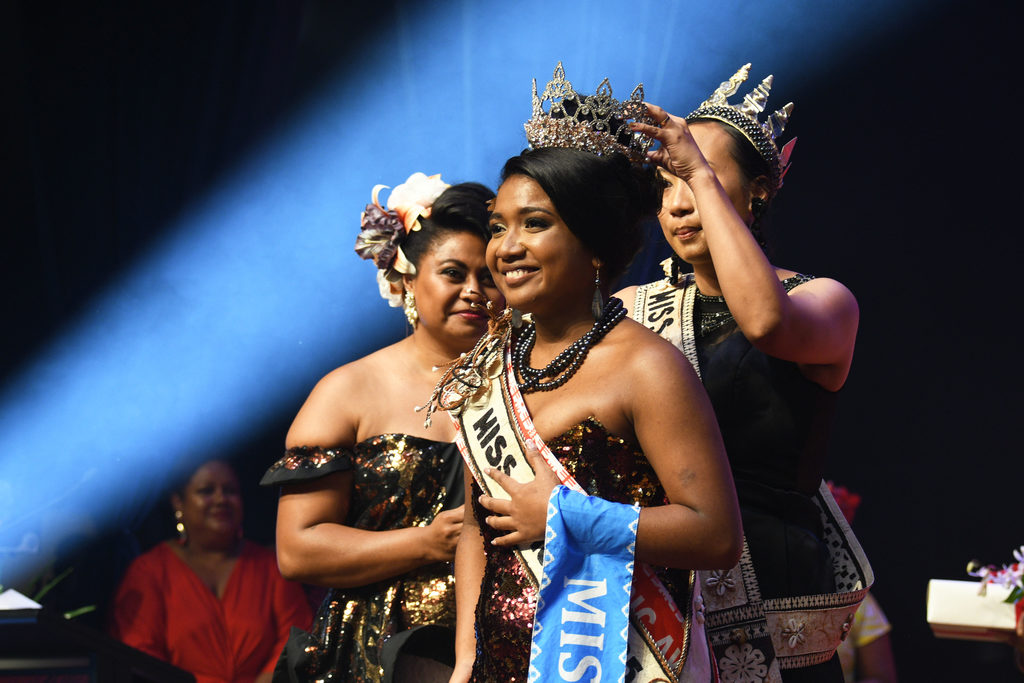
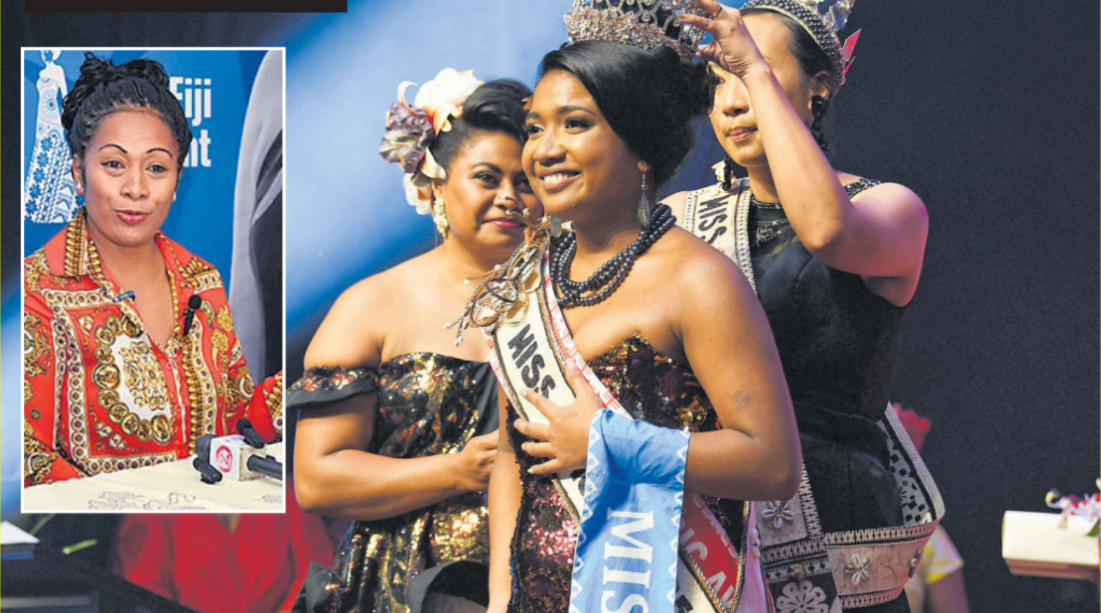
Crowning of Miss Fiji 2025 Dr Peggy Ravusiro at the Suva Civic Centre last month. Picture: LITIA RITOVA
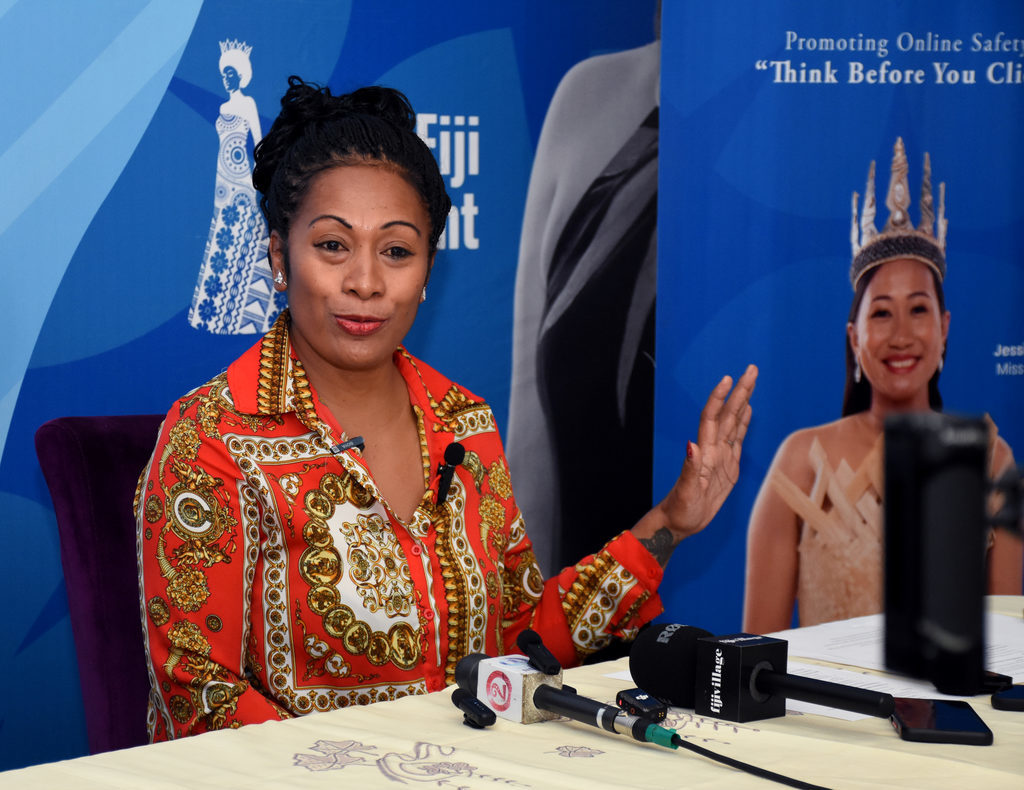
Inset: Miss Fiji Pageant director Ana
Tuiketei speaks to the press
Picture: KATA KOLI

