
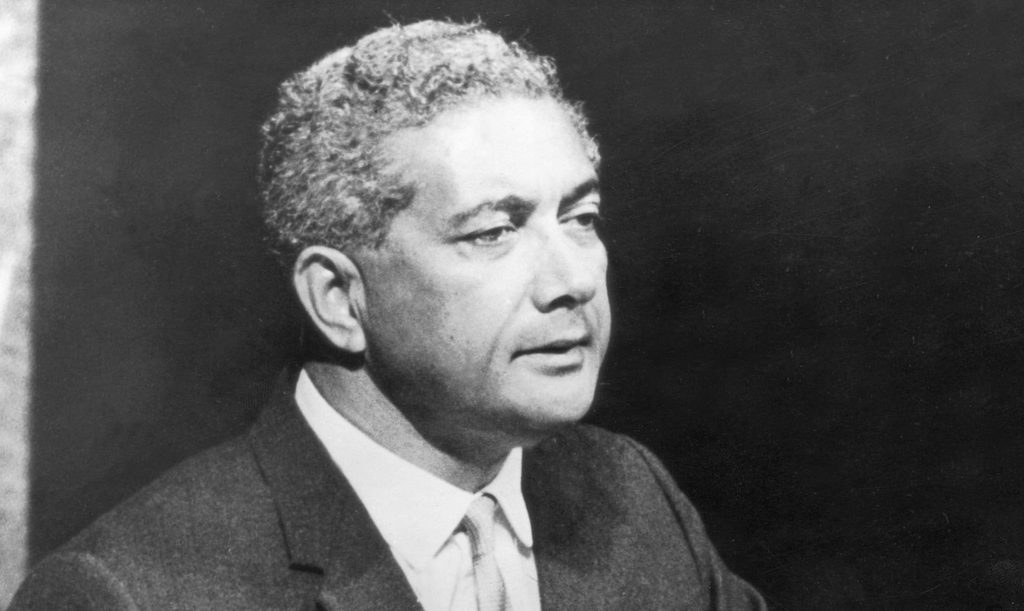
FIJI’S towering former Prime Minister and Tui Nayau, Ratu Sir Kamisese Mara, once strode to the lectern at a Commonwealth seminar titled ‘Challenges to Cane Sugar in the 1980s’.
A mesmerising orator with a commanding presence, he immediately drew the attention of the room. Yet it was not only his stature that mattered, but the enduring substance of his words.
The address took place against the backdrop of major global shifts. Britain had formally joined the European Economic Community, now the European Union, and the Commonwealth Sugar Agreement had been replaced by the Sugar Protocol under the now-defunct Lomé Convention.
These developments carried enormous implications for small sugar-producing nations such as Fiji.
At the heart of Ratu Mara’s speech were four central pillars, which he described as essential to the survival of a vibrant and efficient sugar industry.
He stressed unity and partnership across the entire sector, reaffirmed sugar as an economic lifeline rather than a mere commodity, rejected the notion of trading sugar quotas for aid, and urged caution in calls for diversification without secure markets.
Sugar, he argued, was not simply an export crop but a cornerstone of Fiji’s social and economic stability.
At the time, 90 per cent of Fiji’s sugar production was exported, with Britain and Europe serving as critical markets.
He passionately opposed proposals to sell quotas on the world market in exchange for compensation, insisting that developing countries like Fiji deserved dignity and economic autonomy.
On diversification, while acknowledging its importance, he warned against abandoning sugar without viable alternatives, famously stating that diversification without secure markets risked compounding economic insecurity.
Today, Fiji’s sugar industry is only a shadow of its former self. Farmers are increasingly disillusioned by government policy, mills are plagued by ageing and crumbling infrastructure, land tenure issues remain largely unresolved, and the Fiji Sugar Corporation (FSC) continues to rely heavily on state funding for survival.
Yet rereading Ratu Mara’s speech decades later, it becomes strikingly clear that his words, delivered thousands of miles away from Fiji, articulated the foundational principles that once ensured the industry’s stability and growth here at home.
The golden age of the 1970s
The 1970s marked a defining chapter in the remarkable history of Fiji’s sugar industry. Following independence in 1970, the newly formed government under Ratu Sir Kamisese Mara moved decisively to nationalise the industry.
The Fiji Sugar Corporation was established through an Act of Parliament in 1972 and officially began operations on April 1, 1973, taking over sugar milling from the Colonial Sugar Refining Company after the government acquired CSR’s interests for $10 million.
CSR’s withdrawal followed a period of intense industrial unrest, culminating in the landmark 1969 arbitration led by Lord Alfred Denning, which ruled in favour of the farmers.
The Denning Award introduced a legally binding formula for the fair distribution of sugar proceeds and remains one of the most significant victories for growers in Fiji’s history.
It provided farmers with greater equality, dignity and justice, thanks largely to the efforts of leaders such as the late AD Patel, founder of the National Federation Party, and his successor, Fiji’s first Leader of the Opposition, the late Siddiq Moidin Koya.
What followed nationalisation was a period that can rightly be described as a golden age. From independence through to the late 1970s, Fiji consistently produced around two million tonnes of cane annually, peaking at four million tonnes in 1980. This success was driven by industry stabilisation after nationalisation and the benefits of preferential pricing under the Lomé Convention.
Strong leadership also played a crucial role. Alongside Ratu Mara, figures such as the late Douglas Walkden-Brown, Minister for Agriculture, and the late Sir Vijay Raghubar Singh, who held key economic portfolios, provided steady and effective guidance during this period of growth.
Decline from the 1990s onwards
The dramatic reconfiguration of Fiji’s political landscape following the 1987 coups had a profoundly damaging impact on the sugar industry, the effects of which persist today.
Similar damage followed the overthrow of the Labour Government in 2000 and the removal of Laisenia Qarase’s SDL Government in 2006. Each disruption of democratic rule weakened state institutions and eroded the economic lifelines upon which ordinary Fijians depended, with sugar chief among them.
By the late 1990s, the industry had entered a steady decline, triggered primarily by the expiration of agricultural land leases from 1997 onwards. The era of indigenous political moderation gave way to hardline ethno-nationalism, with land once again weaponised as a source of fear and division.
Under the Agricultural Landlord and Tenant Act, many 30-year leases expired, and in numerous cases were not renewed. This led to the displacement of thousands of experienced Indo-Fijian farmers. Between 1994 and 2018, the number of registered farmers fell from approximately 22,800 to fewer than 12,000, a devastating contraction.
At the same time, Fiji’s long-standing advantage of guaranteed sugar prices under the EU’s Lomé and later Cotonou agreements began to unravel.
These arrangements, negotiated under Ratu Mara’s leadership, had offered prices up to three times higher than world market rates. EU reforms beginning in 2006 resulted in a 36 per cent price reduction by 2009 and the eventual end of preferential quotas in 2017.
Military coups further compounded the industry’s decline by driving skilled labour overseas, deterring investment and politicising management.
The 2006 coup, in particular, led to the withdrawal of substantial EU aid earmarked for restructuring the industry.
A generational exodus has since taken hold, as children of farming families increasingly pursue education and white-collar employment, viewing cane farming as physically demanding and economically unrewarding.
Lessons from a giant of the industry
Revisiting Ratu Mara’s speech from the 1980s, the relevance of his four themes becomes unmistakable. The solutions to Fiji’s sugar crisis do not lie in simplistic fixes but in consensus, bipartisanship and sustained dialogue.
Unity and partnership must replace fragmentation and mistrust. Rather than relying solely on government directives, the industry must function as a shared commercial enterprise in which farmers, millers, transport operators and regulators see themselves as partners with common goals.
Trade, not aid, must again become the guiding principle. The industry’s survival depends on creating value and profitability rather than indefinite subsidies.
This requires moving beyond raw sugar exports towards value-added products such as ethanol, biofuels, electricity generation from bagasse and organic fertilisers, while ensuring pricing structures that allow farmers to earn a viable income.
Efficiency and adaptation are equally critical. Mechanisation, smart farming technologies, improved logistics and climate-resilient practices are no longer optional but essential if the industry is to withstand labour shortages and environmental threats.
Finally, dialogue must prevail over conflict. Transparent communication, inclusive planning and genuine consultation with landowners, farmers and institutions such as the iTaukei Land Trust Board are necessary to rebuild trust and secure long-term land tenure arrangements that encourage investment and stability.
Decades later, the late Tui Nayau’s words remain less a historical artifact in The Fiji Times archives and has become more of a blueprint waiting to be rediscovered, the tragedy however is not that the solutions are unknown, but that they have long been ignored.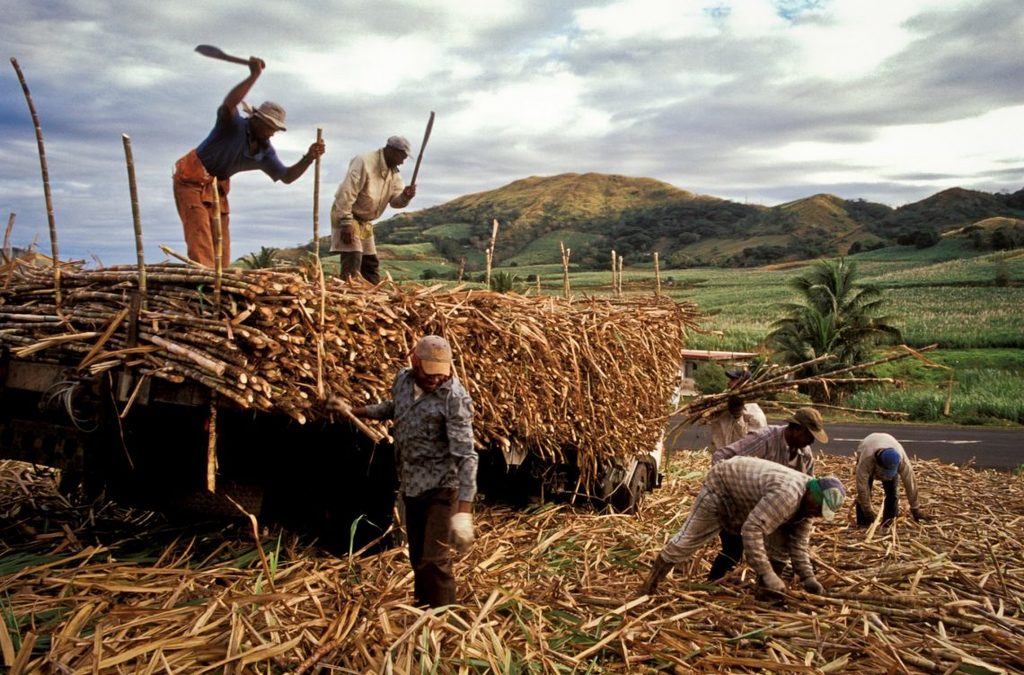
The sugar industry will only survive and thrive through dialogue, consensus and goodwill. Picture: DEVPOLICY BLOG

