
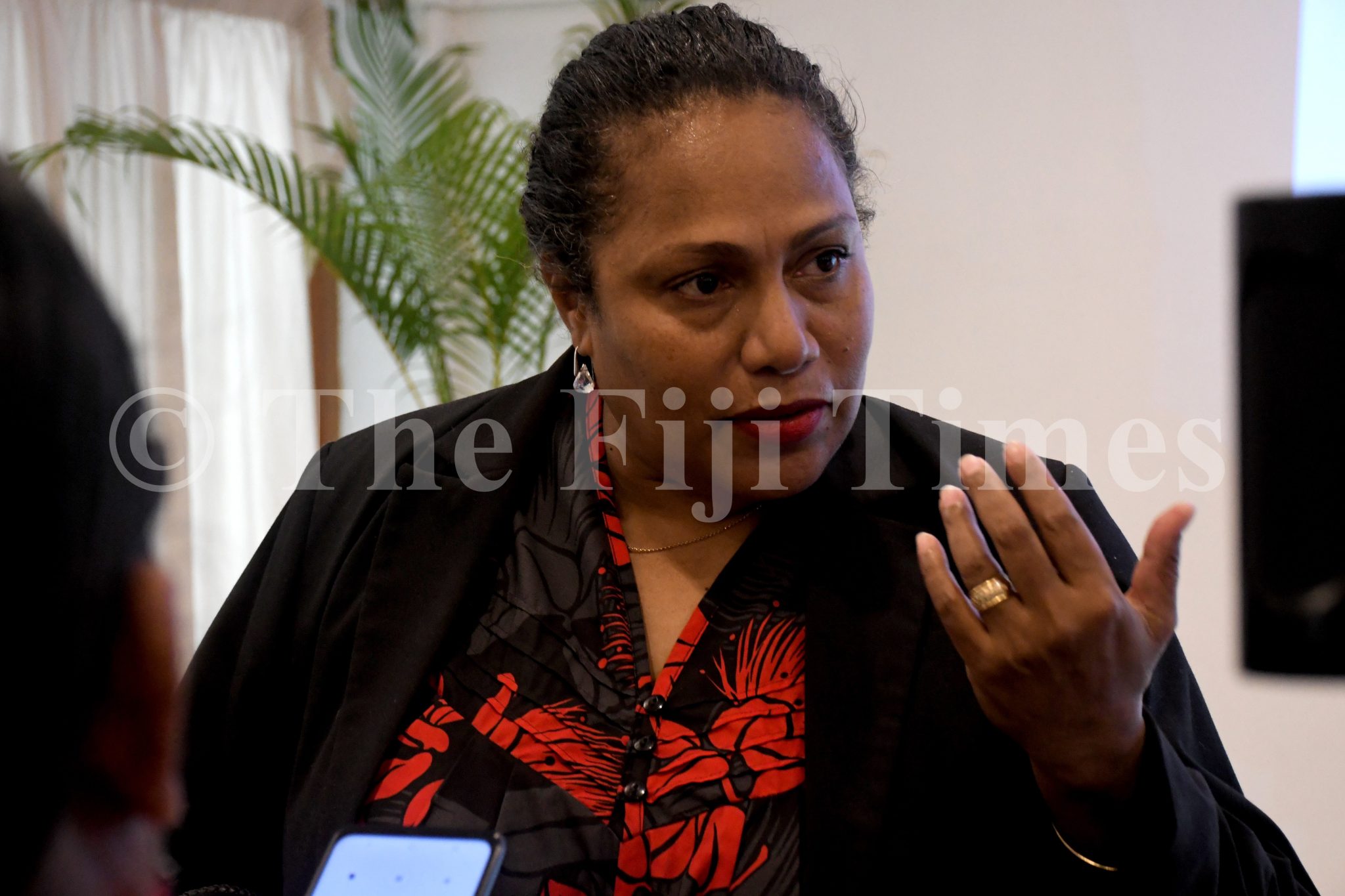
Former FICAC Commissioner and legal practitioner Barbara Malimali has publicly commended the Office of the Director of Public Prosecutions for what she described as a rigorous, independent review process of the Police files related to the Commission of Inquiry.
In a social media post, Ms Malimali said she acknowledged the efforts of the Acting Director of Public Prosecutions and her senior management team for appointing senior state prosecutors who had no prior involvement with her.
She said the investigation files were assessed at multiple levels before being sent for independent review to Ian Lloyd KC, whose credentials she strongly defended.
“That’s the calibre of Mr Lloyd KC,” she said, noting his service as a judge of the Court of Appeal in Qarase v Bainimarama and his appointment as King’s Counsel in 1989.
She also highlighted his role as the first General Counsel of the New South Wales Independent Commission Against Corruption.
“So please, people — you can’t pit a KC with decades of experience as a prosecutor, defence counsel and judge in multiple jurisdictions against unknowns of dubious legal background,” Ms Malimali said.
Turning to broader issues, Ms Malimali said recent developments should prompt the public to re-examine prevailing assumptions.
“The narrative has been: Malimali was appointed to protect politicians,” she said, before urging the public to “flip the narrative” and ask who benefits from her absence at the Fiji Independent Commission Against Corruption (FICAC), and from what she described as an under-utilised commission.
She posed a series of questions on social media, including who benefits when FICAC focuses mainly on politicians, junior civil servants, or is weakened in its capacity.
“Would corruption and the laundering of drug money and drug running have reached epidemic proportions if we had a properly utilised FICAC?” she asked.
Ms Malimali said the answers lie in identifying who benefits most from a weakened anti-corruption institution, adding that recent events had helped reveal deeper systemic issues.

