
TAKINGS from accommodation, sales of food, liquor, telephone and other miscellaneous charges totalled $501.4 million in the September quarter of last year.
That accounted for a 7.5 per cent increase against the same period last year of $466.6m.
According to the Fiji Bureau of Statistics’ findings from the September quarter 2025 survey of licensed hotels, resorts and lodging houses, the number of rooms sold increased by 0.9 per cent (5217) and the number of beds sold also increased by 0.4 per cent (4490).
The number of rooms generated $589,904 over $584,687 recorded in the same quarter in 2024; and the beds sold generated $1,277,054 against $1,272,564 recorded in 2024.
The Bureau also stated the room occupancy rate increased by 0.1 percentage points to 62.2 per cent, and the bed occupancy rate increased by 0.1 percentage points to 60.7 per cent.
It stated the rooms occupancy rates for the September 2025 quarter increased in the Nadi, Lautoka and Coral Coast areas; and the third quarter data showed a decrease in room occupancy in the Suva, Northern Division, the Mamanuca and Yasawa group, and other areas.
“Nadi, Coral Coast and Mamanuca and Yasawa group areas recorded a huge number of visitors from Australia. A large number of visitors from United States of America stayed in the Northern (Division) and other areas,” the Bureau stated.
“September quarter data shows that Suva also recorded a large number of visitors from other countries, of whom majority were from Japan and Pacific Island countries.”
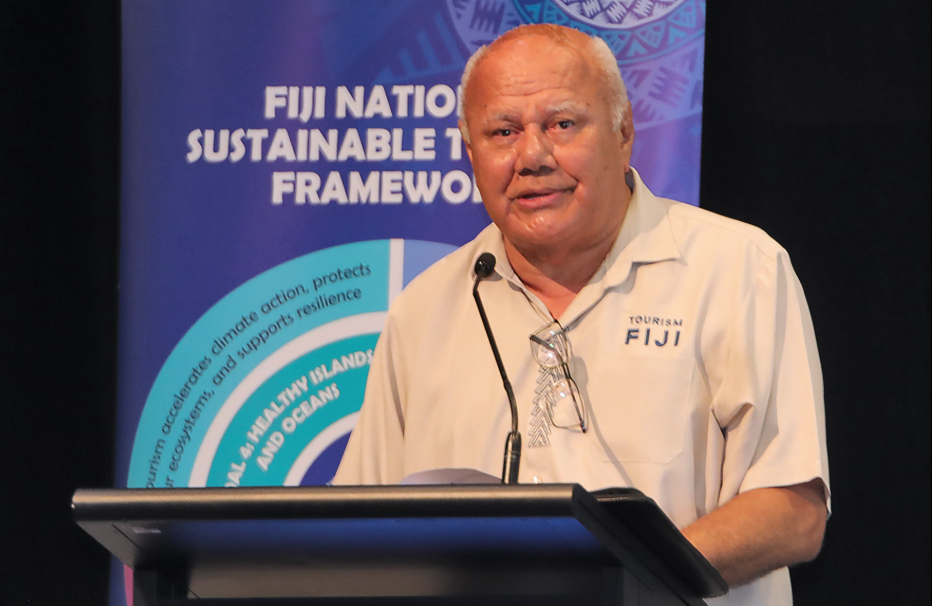
Deputy Prime Minister and Tourism Minister Viliame Gavoka said Fiji continued to record growth in visitor arrivals, having surpassed its 2023 record of 929,740 visitors, reaching 986,367 visitors in 2025, alongside 57,420 cruise passengers recorded in the first three quarters of the year.
Placing Fiji’s performance in a global context, he said international tourism reached 1.52 billion arrivals in 2025, underscoring the importance of positioning Fiji to remain competitive while ensuring growth was sustainable and inclusive.
“We are no longer measuring success purely by visitor numbers or growth alone. Our focus has shifted, rightly toward how tourism grows, who participates in that growth, and how resilient the sector remains over the long term,” Mr Gavoka said in his address at the Third Fiji Tourism Convention in Nadi on Thursday.
He said though tourism remained central to Fiji’s economy, the environment in which it operated today was more complex than ever before.
“Global travel patterns are changing, visitor expectations are evolving, communities are more engaged and rightly seek a stronger voice, and climate and economic pressures continue to test the resilience of our systems,” he said.

