
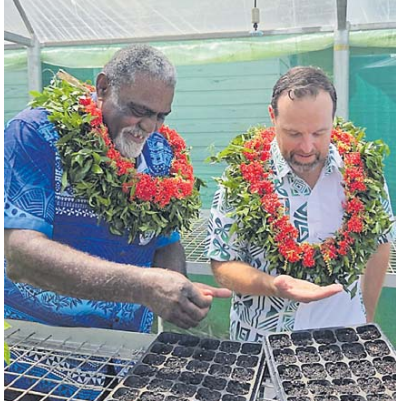
A $50,000 Grow Plus greenhouse, equipped with automated irrigation, a water tank, and a pressure pump, was officially opened yesterday at Kavala, Kadavu, marking the first of its kind on the island and the fifth across Fiji.
The greenhouse, a British American Tobacco (BAT) Fiji initiative in partnership with the Ministry of Agriculture, produces vegetable seedlings free of charge to local farmers.
With the capacity to produce 5000 seedlings monthly and 50,000 seedlings annually, the facility supports local farmers with high quality eggplant, chilli, and tomato seedlings, chosen for their strong yields and low mortality rates.
BAT Fiji general manager James Goldring said the Grow Plus program, launched in 2022, had already delivered about 2.6 million seedlings nationwide, with plans for another million this year.
“Our operations provide support to farmers from the beginning to the end of the crop season each year, including educating and upskilling farmers on the best agricultural practices,” he said.
“We believe this has the potential to make a significant impact on the agriculture sector.”
Minister for Agriculture Tomasi Tunabuna emphasised the wider impact of the project.
“This greenhouse directly supports the government’s objectives of import substitution, market-driven agriculture, and climate innovation,” he said.
He added Grow Plus complements the ministry’s 10-year non-sugar agriculture policy, helping farmers diversify their income beyond sugarcane.
“When utilised correctly, the Grow Plus greenhouse has the potential to help farmers grow consistent, high-quality seedlings regardless of the climate. This will, in turn, improve crop quality, reduce infestation pressure and have the potential to stabilise production throughout the season.”
He said to ensure its sustainability, proper checks and balances would be carried out.
“Robust monitoring and evaluation will allow the ministry to understand the impact such a project is having on the ground and farmers.”
Mr Tunabuna encouraged the farmers to make the most of the initiative to enhance food security, create income opportunities, and explore potential export ventures.

