
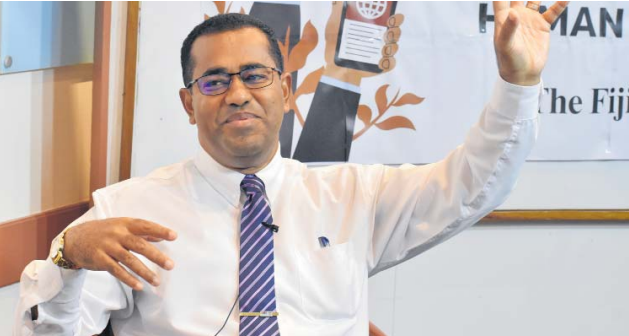
ACTING Prime Minister Filimoni Vosarogo has defended the Coalition Government against criticism of its handling of the sugar industry, citing record cane payments and increased production over the past three years as evidence of its impact.
Responding to Opposition MP Jone Usamate, Mr Vosarogo said 1.48 million tonnes of sugar cane were harvested during the 2025 crushing season, despite major disruptions including an accidental fire at the Rarawai mill in Ba, labour shortages and logistical challenges.
He said the Government had delivered the highest cane payments in Fiji’s history, with growers receiving $91.38 per tonne in 2022, $105.08 per tonne in 2023 and $101.13 per tonne in 2024, alongside new incentives and harvesting support programs, lease premium subsidies, enhanced farmer assistance schemes and investments in mechanisation and modernisation.
“These are measurable outcomes, not rhetoric, something Hon Usamate and his FijiFirst government did not even dare to do,” he said.
Mr Vosarogo rejected claims that standing cane was the result of ministerial neglect, saying the issue arose from a convergence of accidental, operational and external factors.
He said the 2025 season was unprecedented, yet mills processed more cane than last year’s 1.33 million tonnes.
Government interventions included extended crushing periods, a $15 per tonne transport subsidy, continued manual labour support through the Fiji Correction Services and the strategic deployment of mechanical harvesters.
He said standover cane was an annual occurrence, even during periods when the Opposition was in government, and acknowledged ongoing challenges posed by ageing mill infrastructure, noting that mills had continued operating at financial loss to support growers.
“It is also a fact that mills have incurred significant costs due to inconsistent cane supply, have remained open beyond scheduled closure dates at financial loss to accommodate growers, and have continued operating even during periods of very poor TCTS, beyond 25 tonnes,” he said.

