
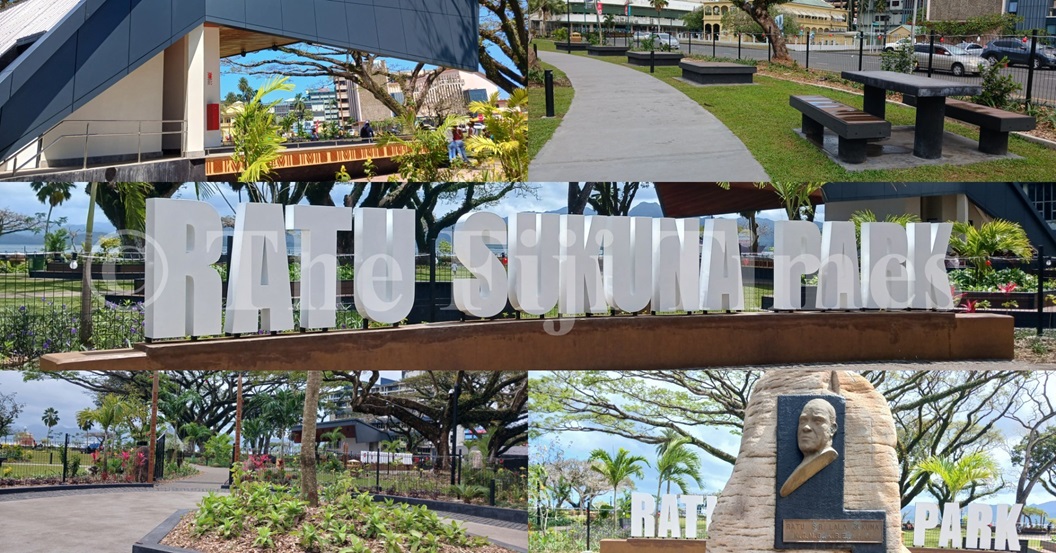
We would all understand it if Marshall Narayan feels frustrated every day. Who wouldn’t, when you reflect on his story?
Before office workers sip their first coffees and joggers lace up their shoes, Mr Narayan is already at Sukuna Park in Suva, broom in hand, clearing away the rubbish left behind the day before.
By the time dawn breaks, the park looks presentable again. But by the next morning, the rubbish has returned, wrappers, bottles, containers, carelessly discarded as if the space belongs to no one.
And that, sadly, is a daily reality.
For the past year, the Suva City Council worker, who has served the city faithfully for 21 years, has been tasked with cleaning Sukuna Park every day. What he encounters is a troubling reflection of how casually some people treat public spaces.
“No matter how clean we leave it, when we come back the next morning it’s the same,” Mr Narayan says.
Contrary to a common excuse often raised, this is not a problem of missing rubbish bins. According to Mr Narayan, bins are provided by the council and placed around the park. The issue is simpler and troubling.
“But they are not utilised,” he says.
Much of the rubbish is left exactly where people sit to eat, rest or socialise. Imagine that. People buy food, unwrap it, enjoy their meal, and then just stand up and walk away, leaving their wrappers behind as though someone else is obligated to clean up after them.
Mr Narayan collects fast-food packaging from nearby restaurants, empty bottles, containers and other litter scattered across gardens, footpaths and seating areas.
“People just leave it there and go,” he says.
To him, this behaviour signals a decline in civic responsibility.
“We have our own way of thinking about how we use things that are provided to us. Most people are lazy. They leave it where they are sitting.”
He believes the situation has worsened over the past year, with fewer people willing to take responsibility for their surroundings. The solution, he insists, is not complicated.
“If everyone just picked up after themselves, this place would stay clean.”
Now think about that. If only people picked up after they ate. So what really is the matter here? Is it laziness? A lack of concern? Ignorance? A “no care” attitude? Or plain selfishness?
Are we really so careless that we give no thought at all to the environment we share? So indifferent that we spare not a moment for the effort of workers like Mr Narayan, who clean up after us day after day?
Under the Litter Act 2008, it is an offence to dispose of rubbish in or on any public place. It is also an offence to throw rubbish from a vehicle. These are not suggestions. That’s the law. Yet enforcement alone will never solve a problem rooted in attitude.
Mr Narayan’s daily struggle stands as quiet testimony to how far we still have to go. Clean parks should not depend on one man’s broom or endless public spending. They should depend on basic decency.
Perhaps it is time we stopped looking away. Perhaps it is time we called out littering when we see it, held offenders accountable, and yes, shamed behaviour that disrespects our shared spaces.

