
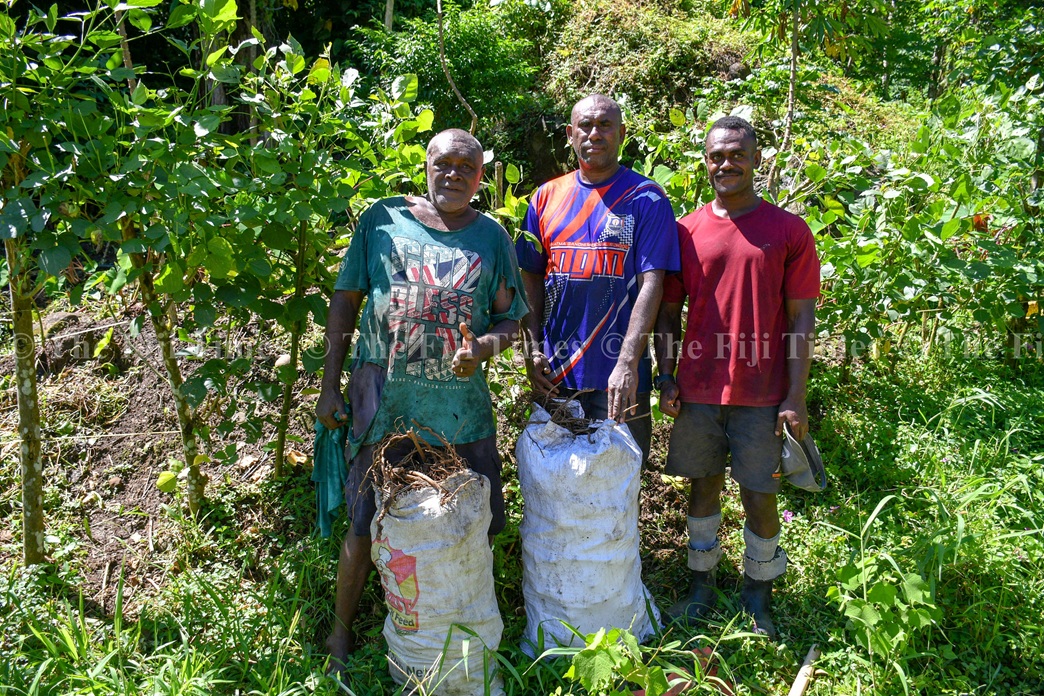
Before the sun rises over the highlands of Namosi, Paula Tawaketini is already at work on his farm in Navunibau.
The cool morning air carries the quiet rhythm of village life as he tends to his crops, building the strength that comes from the land.
At 55, Paula is strong and fit as a fiddle. This is testament to years of consistent farm work.
Like many farmers in Namosi, he prefers to begin his day early, finishing the hardest labour before the sun’s heat settles in.
His journey back to the village was not always certain. Years ago, Paula left home for Suva, hoping to earn a better living as a security officer.
But city life brought unexpected struggles. He worked hard but earned little.
“While working in Suva I realised that I was not earning enough as I would as a farmer in the village,” he said.
“When I saw that those in the village were earning more than me from yaqona farming, I quickly decided to return to the village.
“There are a lot of things to pay while living in the city like rent, electricity, water and food expenses.
“In the village you don’t necessarily have to pay for anything – you can grow your own food, you have a home, water is free and you can live without electricity.”
When a team from this newspaper met Paula, he was taking a well-earned break after harvesting yaqona. A sack of freshly harvested roots rested by the roadside.
“We have harvested $800 worth of yaqona today and are just waiting for it to be picked up.
“Now, most of us don’t have to go to the Navua market to try and sell our yaqona like before.
“We have buyers coming all the way to Namosi to buy yaqona from us. We don’t pay our fares anymore or try to find buyers. They just drive up to us now.”
Even as he waited, Paula did not stop working. He continued clearing his yaqona farm, knowing that when a buyer arrived, the reward would be immediate — $800 in cash, a clear contrast to city life, where eight-hour workdays often yielded little more than $100 a week.
Through yaqona farming, Paula has been able to support his family and meet village obligations with dignity and independence.
His farm is thriving, with more than 500 yaqona plants and an additional dalo plot to sustain him when yaqona is not ready for harvest.
“The yaqona I’ve planted by the road are mature and can be harvested now.
“I’ve harvested these side of the farm three times now, collecting $2200. This is just a small part of the farm space close to the road.
“I hope to expand my farm further after clearing this space.”
For Paula, farming represents freedom and a new way of life. Grounded in the soil of his ancestors, he is proof that prosperity does not always lie in the city.
He encourages Fijians, especially the younger generation, to return home, reconnect with their land and consider farming — particularly yaqona farming — as a path toward self-reliance and a better future.

