
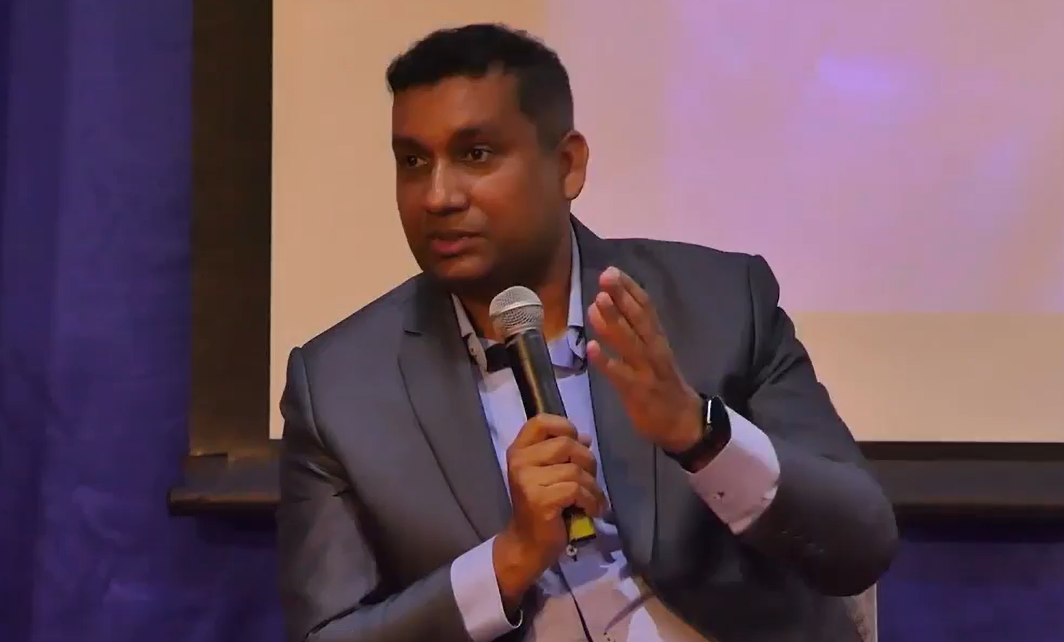
Dialogue Fiji executive director Nilesh Lal supports the Draft Education Bill 2025’s absolute ban on corporal punishment, urging Parliament to clearly define alternative disciplinary measures to ensure consistency and fairness across schools.
Mr Lal said this while appearing before the Parliamentary Standing Committee on Justice, Law, and Human Rights, for Dialogue Fiji’s submission on the Education Bill.
“For any sanction to be applied systematically, there has to be certainty,” Mr Lal said.
“There needs to be very clear guidelines detailing what sanctions would apply to different types of transgressions. This is also going to ensure consistency in how these sanctions are applied in various schools.”
Dialogue Fiji’s program manager Pooja Dutt, who delivered the organisation’s main submission, described the Bill as a “consequential reform” that would shape education governance in Fiji for decades.
Ms Dutt said Dialogue Fiji strongly welcomed Section 73 of the Bill, which mandates an absolute prohibition of corporal punishment.
She said the provision is comprehensive, prohibiting not only physical punishment but also cruel, inhumane, degrading, humiliating or disproportionate treatment, including emotional and psychological harm.
Ms Dutt said the provision aligns Fiji with international best practices, constitutional protections, and international child rights obligations, and should be retained without dilution.
However, she warned that several other provisions in the Bill risks undermining equity and legal certainty if left unclarified.
Ms Dutt raised particular concern over Section 76, which allows Government and government-aided schools to charge levies despite the constitutional right to free education.
“Our concern is that this provision risks hollowing out the concept of free education in practice.”
“In effect, the Bill risks entrenching a two-tier public education system, driven not by policy intent but by uneven community capacity.”
Dialogue Fiji said limits should be placed on school fundraising activities, warning that frequent fundraising could place sustained pressure on families and lead to fundraising fatigue, even in the absence of coercion.
Ms Dutt said Section 10 of the Bill establishes compulsory education backed by court orders and criminal penalties, while leaving the compulsory age range to be prescribed by the minister.
She said parents could be exposed to fines or imprisonment without clear statutory notice of their obligations, an approach she said is inconsistent with basic principles of legality.
Dialogue Fiji cautioned that the prohibition of school zoning could lead to popular schools becoming oversubscribed, while less-resourced schools struggle to attract enrolment, potentially reinforcing inequality.
The organisation raised concerns about Section 67, saying the lack of guiding principles for late admissions approvals could result in inconsistent decision-making.
Ms Dutt praised Section 34 on religious instruction, saying it appropriately balances freedom of religion, individual autonomy, and Fiji’s constitutional commitment to secular governance through consent safeguards.
Dialogue Fiji said regulatory flexibility under Section 68, suggesting staggered school start times — including a possible 9am start in Greater Suva — could help address urban congestion and student wellbeing.

