
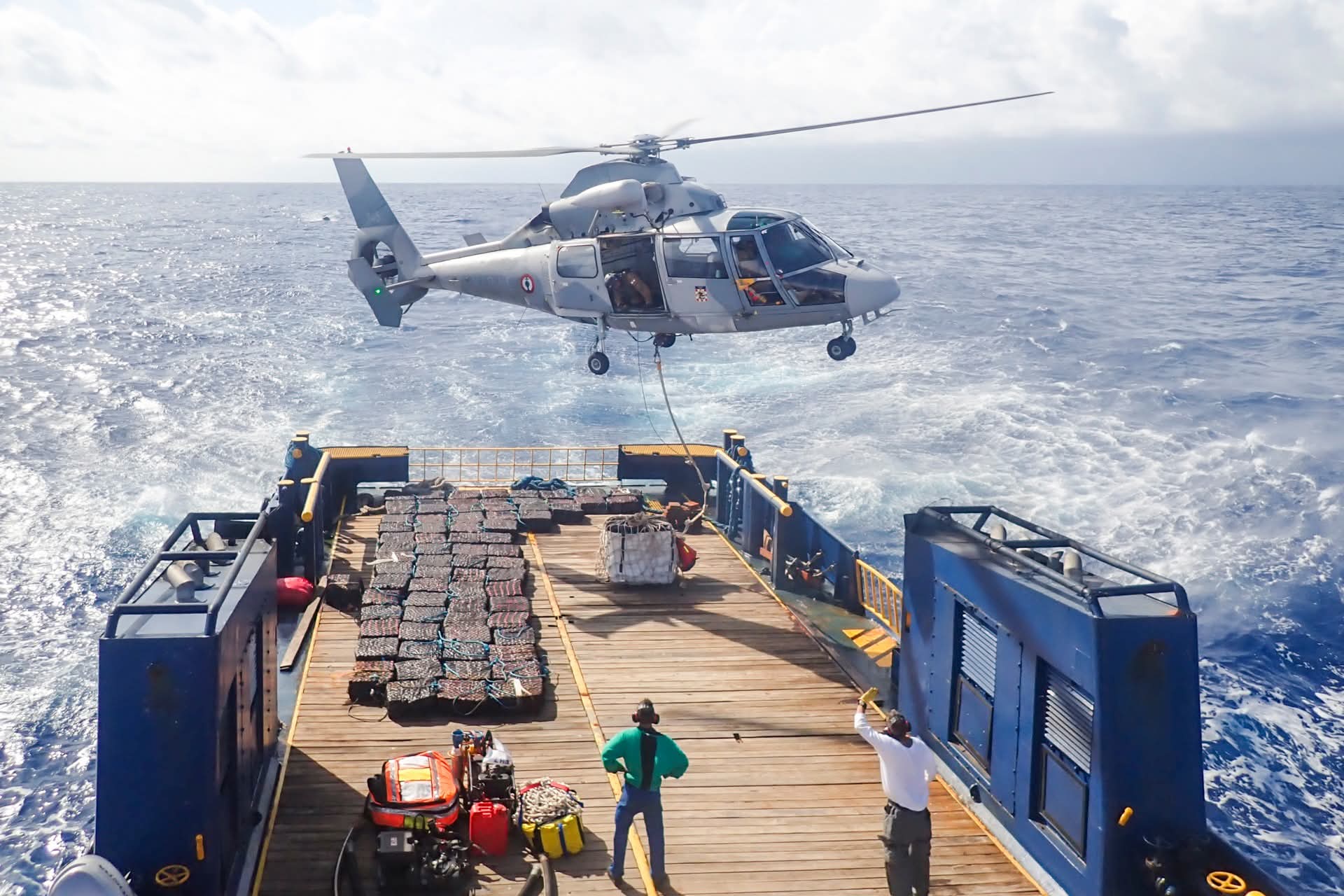
Last Friday was a pivotal day in the Pacific’s fight against transnational drug trafficking, after authorities in French Polynesia and Fiji intercepted large quantities of suspected cocaine in separate but closely timed operations.
In French Polynesia, French authorities announced the seizure of 4.87 tonnes of cocaine after a National Navy vessel intercepted a suspicious ship within the territory’s maritime zone.
A search of the vessel uncovered 96 bales of cocaine, marking the largest drug seizure ever recorded in the territory.
French officials said the shipment originated in Central America and was transiting through the Pacific towards the southwest Pacific region.
While the drugs were not intended for French Polynesia, authorities noted the territory has become a key transit point along an increasingly active international drug trafficking route.
Thousands of kilometres away, and on the same day, Fijian police conducted a major drug operation at Vatia Wharf, seizing more than 100 bags of a white substance believed to be cocaine.
Six people were arrested, including four South American nationals and two Fijian citizens, during the early-morning raid.
The Fiji Police Force said specialist units from the Criminal Investigations Department, Serious Organised Crime and Intelligence Department, and the Western Division Taskforce were involved in the operation, which followed intelligence-led investigations.
Inquiries into the source, destination and scale of the seized drugs are ongoing.
While authorities in both countries have not formally linked the two cases, the timing of the seizures has drawn renewed attention to the Pacific Ocean as a major transit corridor for international drug syndicates moving cocaine from the Americas towards markets in Australia, New Zealand and beyond.
The dual interceptions highlight the evolving tactics of organised crime networks, which increasingly rely on long-range maritime routes, remote landing points and international crews to evade detection.

