
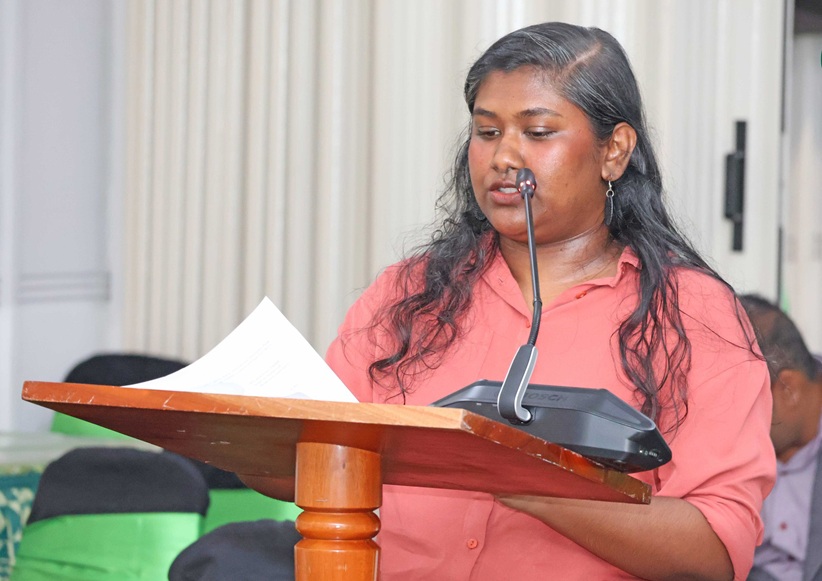
The Fiji Women’s Rights Movement has told the Parliamentary Standing Committee on Justice, Law, and Human Rights that provisions in the draft National Referendum Bill 2025 could criminalise advocacy and restrict public participation in democratic processes.
Making the submission yesterday, Gender and Transitional Justice Programme team leader Shayal Nand said the organisation is concerned that the Bill could limit freedom of expression and shrink civic space, particularly for women, youth, and other marginalised communities.
“Section 23 of the draft Bill effectively makes it a criminal offence to persuade anyone on how to vote,” Ms Nand said.
“This includes communication by word, message, writing or any other manner, with penalties of up to one year in prison.”
She said such a provision would criminalise ordinary advocacy and restrict the ability of individuals and organisations to engage in referendum-related discussions.
Ms Nand also raised concerns about Section 22, which bans the use of badges, symbols, and any visual referendum-related materials before, during and after a referendum.
“These restrictions would disproportionately affect women, youths and marginalised groups who rely on grassroots organising and community discussions to participate in civic life.”
“The law risks silencing voices, shrinking civic space and discouraging lawful participation in referendum discussions.”
Responding to comparisons — made by the Acting Attorney-General — with Singapore and Australia, Ms Nand said those jurisdictions impose narrower and more specific limits.
“In Singapore, campaign materials are restricted mainly on polling day and the day before to give voters a cooling-off period. In Australia, restrictions apply largely inside polling places on voting day to ensure a neutral environment.”
She said Fiji’s proposed Bill goes much further and could undermine democratic participation.
“Fijians must be able to freely discuss, debate and advocate on matters of national importance without fear of criminal sanction.”
FWRM is calling for the immediate redrafting of Sections 22 and 23, wider national consultations, and alignment of the Bill with international democratic standards.

