
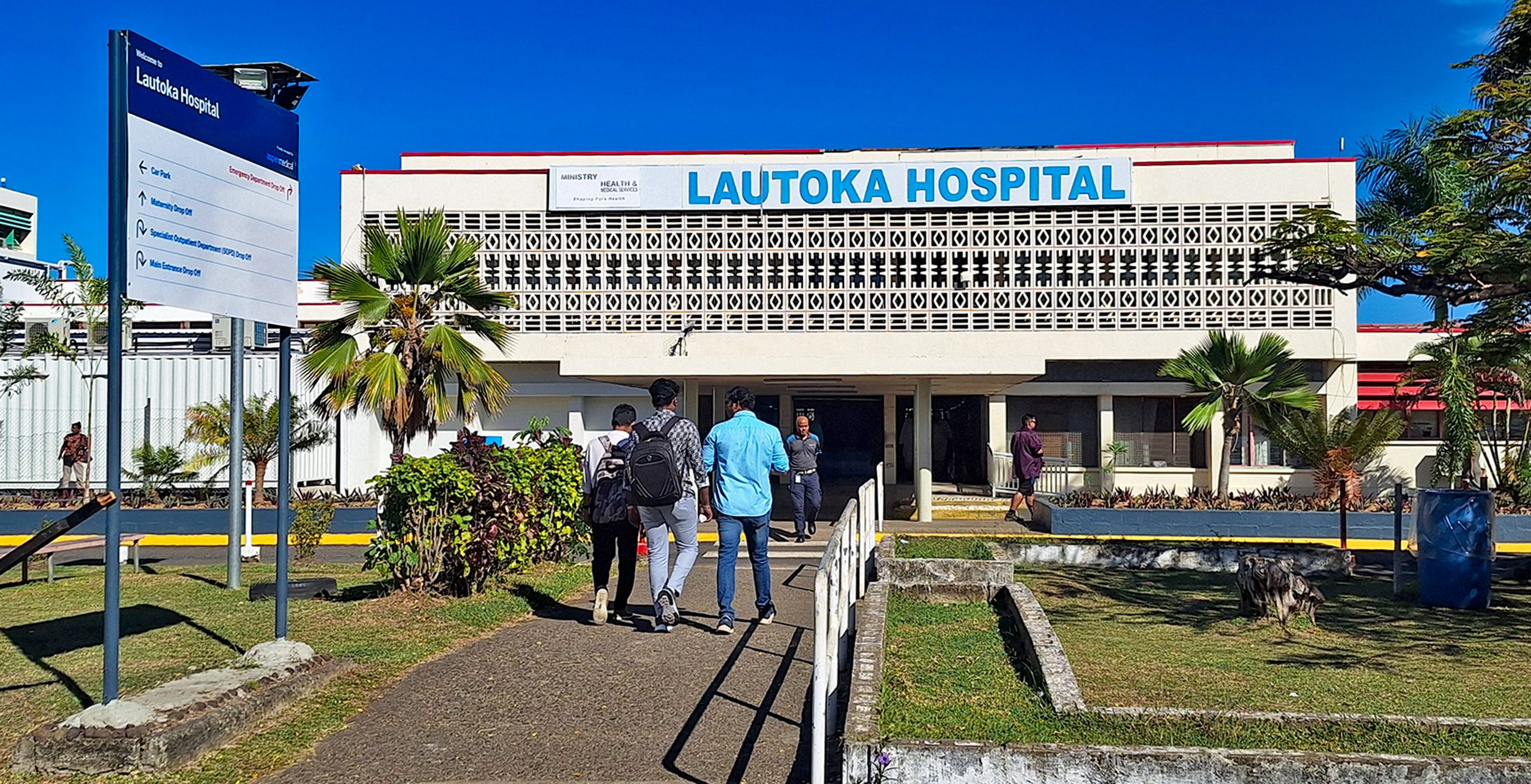
What a relief it must have been for Saheed Ahmad Khan, a 72-year-old resident of Korociri, when he received life-saving coronary stent treatment at Lautoka Hospital.
Not long ago, such a procedure would have almost certainly meant an urgent and expensive trip overseas, placing unbearable financial strain on families already grappling with fear and uncertainty.
For many Fijians, advanced cardiac care has long been synonymous with unaffordable costs, complex logistics, and the heartbreak of knowing help exists but remains out of reach.
Mr Khan’s story, however, signals a welcome and hopeful shift.
Doctors discovered a 70 per cent blockage in his coronary system, a serious condition that raised immediate concerns about the need for treatment abroad, most likely in New Zealand.
For a man of his age, time was critical. Yet instead of facing the prospect of overseas travel, he became one of the first beneficiaries of the new Intravascular Ultrasound (IVUS) technology now available at the Aspen Medical-managed Lautoka Hospital.
Thanks to the hospital’s newly established Cardiac Catheterisation (CATH) Lab, Mr Khan underwent the advanced procedure locally and was able to return home within 24 hours. Led by consultant cardiologist Dr Bharatvansh Bali, the surgical team used IVUS, a tiny camera placed inside the blood vessel, to guide precise and accurate stent placement. This approach represents a major leap forward for interventional cardiology in Fiji.
For Mr Khan, the outcome was nothing short of life-changing.
“It is like a blessing for the people because otherwise, they could not afford it,” he said, capturing the reality faced by countless patients. Without access to such services locally, many would be left with an impossible choice: raise an enormous sum of money or risk losing their lives.
Now resting at home in Korociri, Mr Khan has spoken out about the professionalism, efficiency, and care shown by hospital staff. His family, which includes several medical professionals, has also expressed relief and satisfaction at the successful outcome.
Their gratitude reflects a victory for the health system.
This procedure highlights the growing capacity of local hospitals to deliver advanced, life-saving cardiac care. It reduces dependence on costly overseas treatment and demonstrates that with the right investment, expertise, and technology, we can meet complex medical needs within our own borders.
And that is the direction we should be heading.
At a time when negative narratives often dominate discussions about our health system, stories like this should be promoted. They are empowering. They raise confidence. They showcase what is possible when systems work, professionals are supported, and patients are placed at the centre of care.
Such successes help build trust and faith in our healthcare sector. They reassure patients facing similar diagnoses that help may now be closer than they ever imagined.
The challenge now lies with those in positions of authority. Continued investment, policy support, and encouragement are important to sustain this momentum. Our medical professionals must be empowered to upskill, expand their expertise, and keep pace with global advancements, because when they do, the nation benefits.
For Mr Khan and his family, it was a day of great relief and gratitude. For Fiji, it should be a moment of reflection and resolve.
He has been given a second lease on life. Our health system, with stories like this, has been given renewed reason to believe in itself.

