
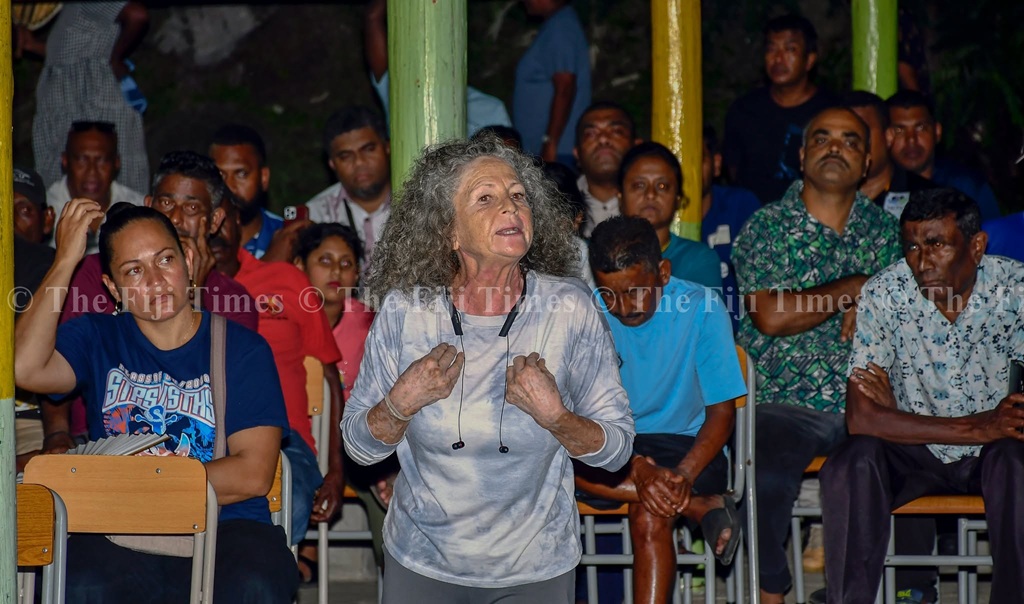
The proposed waste to energy power plant has been met with strong opposition following the first round of consultations in Lautoka this week.
A power plant, designed to supply 80MW of energy to the national grid, is headed by The Next Generation Holdings (Fiji) Pte Limited who’s leading investor Australian businessman Ian Malouf was criticised by residents for proposing a facility that could threaten their health and environment.
Pacific Recycling Foundation was among the organisations represented at the consultation where a heated exchange erupted between residents and Mr Malouf.
Foundation representative and Waste Recyclers Fiji Limited’s corporate relations manager Josaia Cava highlighted an important member of the community — the resource owners.
He said respect for the land and its people must be the starting point of any project.
“This foreign company needs to show more respect to the people of this land,” Mr Cava said during the consultation.
“You can have millions of dollars, but if there is no respect, then it shows you do not truly care about our people or our beautiful Fiji.”
WRFL’s Lautoka branch manager Zoheb Shah also addressed the consultation pointing to serious gaps in the process.
“A proper risk assessment was clearly not done, and house-to-house surveys were not carried out,” Mr Shah said.
“It would have been far better if all risks had been identified and mitigation plans presented to the community.
“Not a single question was answered fully or properly, and that created unnecessary confusion and frustration.”
Their concerns echoed earlier sentiments by PRF founder Amitesh Deo .
“As Fijians, we take strong exception to a foreign investor standing on our soil and allegedly labelling our systems and practices as a ‘disgrace’,” said Mr Deo.
“Waste management is a crisis in Fiji, and there are clear reasons why it has reached this point, but at no time have we ever called our people or our practices a disgrace, and it never should be.”
Mr Deo said Fiji’s waste challenges must be understood within the realities the country has faced over many years.
“Fiji has battled limited resources, competing national priorities, and factors well beyond our control that have contributed to this crisis.
“That context matters. You cannot erase decades of constraints and then shame a country for not looking like a developed economy overnight.”
The NGO strongly rejected direct comparisons between Fiji and countries with decades of investment, regulation, and enforcement already in place.
“Recycling is not yet embedded in our culture or upbringing in the same way it is in developed countries,” said Mr Deo.
“Comparing Fiji directly to countries that have had decades of systems, funding, and enforcement ignores reality and shows a lack of understanding of our journey.”
According to the developers, the proposed facility would require approximately 900,000 tonnes of waste annually to operate at full capacity with 200,000 tonnes sourced locally and the remaining 700,000 tonnes imported from overseas, including Australia.
This proposal raised alarm bells among residents and PRF.
“If you are proposing a project of this scale, you must be able to clearly explain the risks to the people who will live with the consequences,” Mr Deo said.
“When communities ask direct questions and are told ‘we will see later’, trust is immediately eroded.”
PRF’s main concern about the proposed project that under Fiji’s current waste management system, where waste was largely collected as mixed waste and transported directly to the landfill and dumpsites, there was an extremely high risk that recyclable materials would be diverted into the plant.
Consultations on the project were held in Saweni over three days.
Mr Deo reiterated that the process should not be confused with an awareness session.
“You do not invite people simply to listen and then speak down to them when they raise concerns. That is not engagement, and it is not acceptable.
“Fiji deserves partners who listen, respect our people, and work with us — not partners who lecture us or belittle our realities.”

