
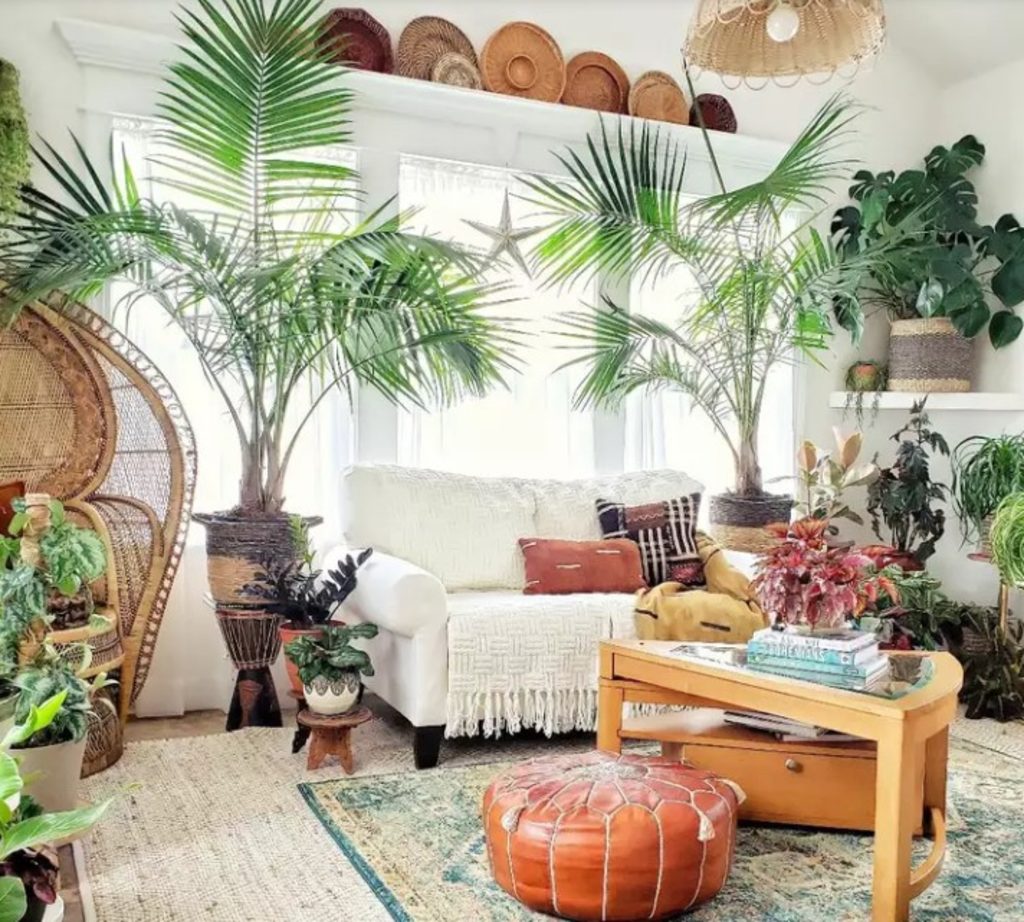
A well-designed living room benefits greatly from thoughtfully placed plants, which enhance mood and create a calm, inviting atmosphere.
Even without an extensive plant collection, careful curation and arrangement can make a significant impact.
According to www.thespruce.com, by selecting plants that complement the room’s style and positioning them strategically, you can elevate both the aesthetic and functionality of the space.
The goal is to ensure the plants feel purposeful, adding harmony rather than clutter. When integrated intentionally, lounge plants help create a cohesive, relaxing environment that feels balanced, stylish, and welcoming rather than chaotic or overwhelming.
Check out these practical tips for how to arrange plants in a living room to bring the space to life:
Keep in clusters (“the Rule of Three”);
Indoor plant enthusiasts often recommend the “rule of three” when arranging multiple plants. Single plants can feel sparse, while even-numbered groupings may appear too formal.
Grouping plants in threes or other odd numbers creates a more natural, harmonious look.
For greater visual impact, combine plants of varying heights and include a unifying element to tie the arrangement together.
Avoid grouping plants with identical textures, shapes, or colors, as they can visually blend together.
It’s also practical to group plants with similar care needs, especially humidity lovers, since clustered plants help maintain moisture and thrive together.
Experiment with texture, size, and shape;
Plants add essential texture and depth to interior design, preventing living rooms from feeling flat. Simple foliage balances boho spaces, while bold, elaborate plants suit minimalist decor.
Mixing contrasting textures and leaf weights enhances visual interest, and grouping an odd number of plants creates a more dynamic, well-balanced display.
Consider colour
Avoid a matchy-matchy look when styling plants and pots in your living room. Using a mix of colors and shades creates visual interest and a more natural feel. Explore varied green tones, bold foliage colours, or striking variegation, and choose hues that contrast with your walls.
Mixing different colours within plant groupings adds depth and character.
Create leading lines
Consider plant growth habits when styling your living room. Trailing or vining plants in hanging baskets or on shelves draw the eye upward and can make small spaces feel larger.
Tall, upright plants also add height and can highlight wall art, as long as they’re spaced well to avoid visual competition.
Fill the floor
Plants don’t need to stay on tables or shelves—use the floor to make a statement.
Tall plants or smaller ones on stands can fill empty corners, add height, and even divide spaces. Position them carefully so they enhance the room without blocking furniture or decor.
Select species that suit the space
Consider the light levels and window direction in your living room before choosing plants.
Match each plant to the conditions it prefers, avoiding sun- or moisture-sensitive species in unsuitable spots.
Group plants with similar light needs together, especially in low-light areas, to help them thrive and look cohesive.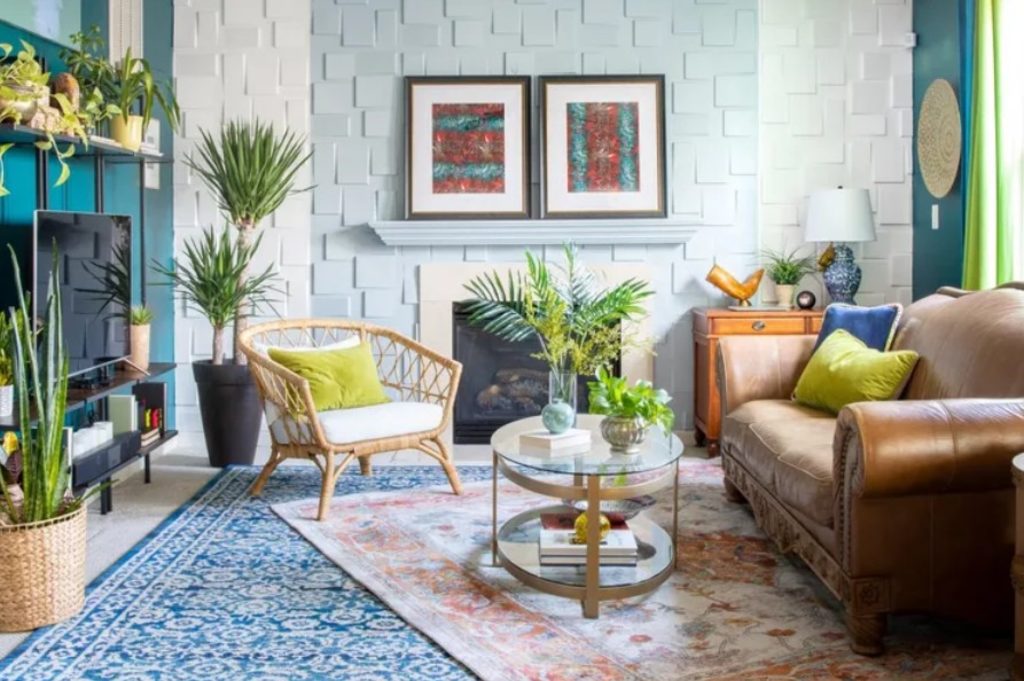
Trailing or vining plants in hanging baskets or on shelves draw the eye upward and can make small spaces feel larger. Picture: THESPRUCE
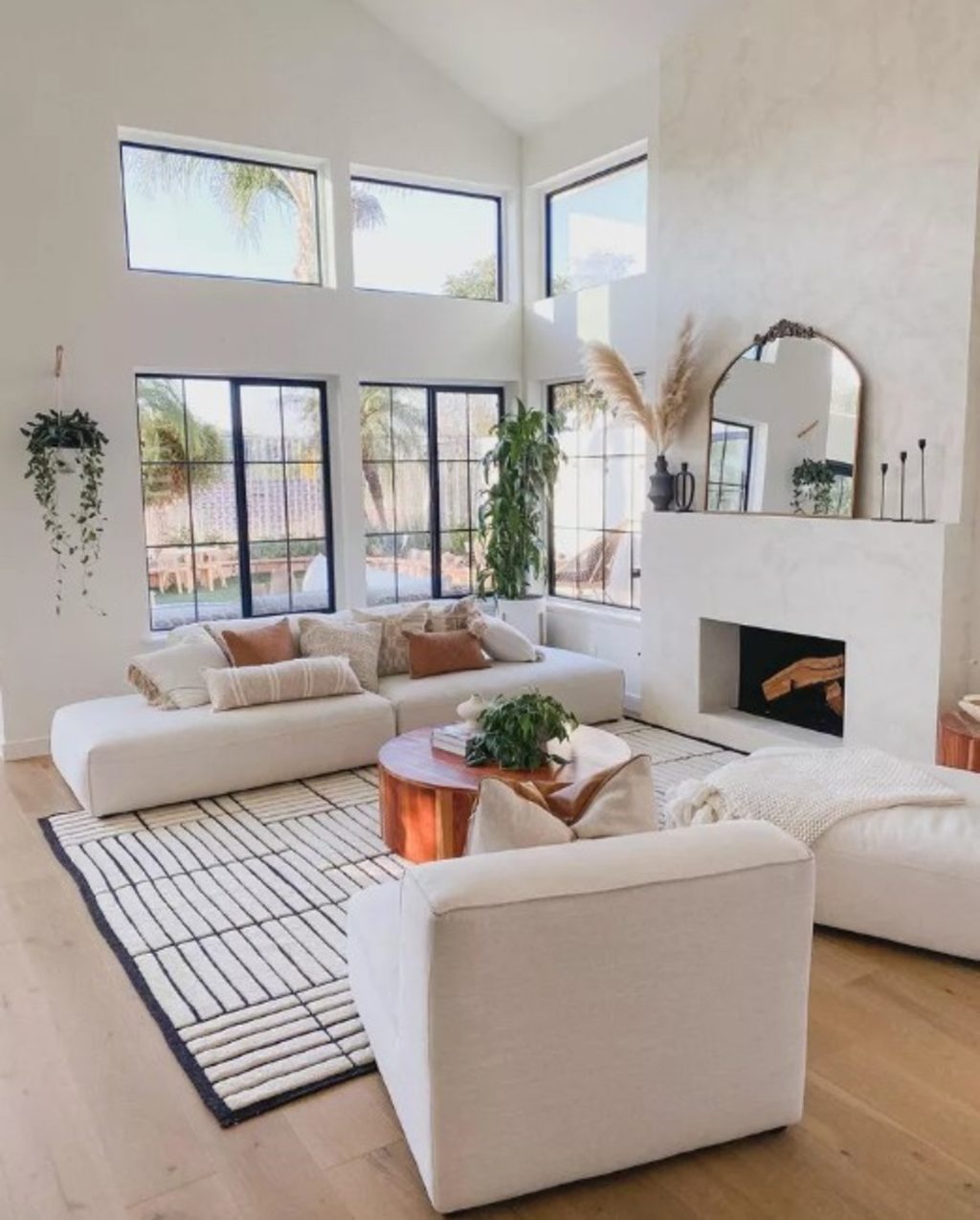
Plants don’t need to stay on tables or shelves—use the floor to make a statement. Picture: THESPRUCE
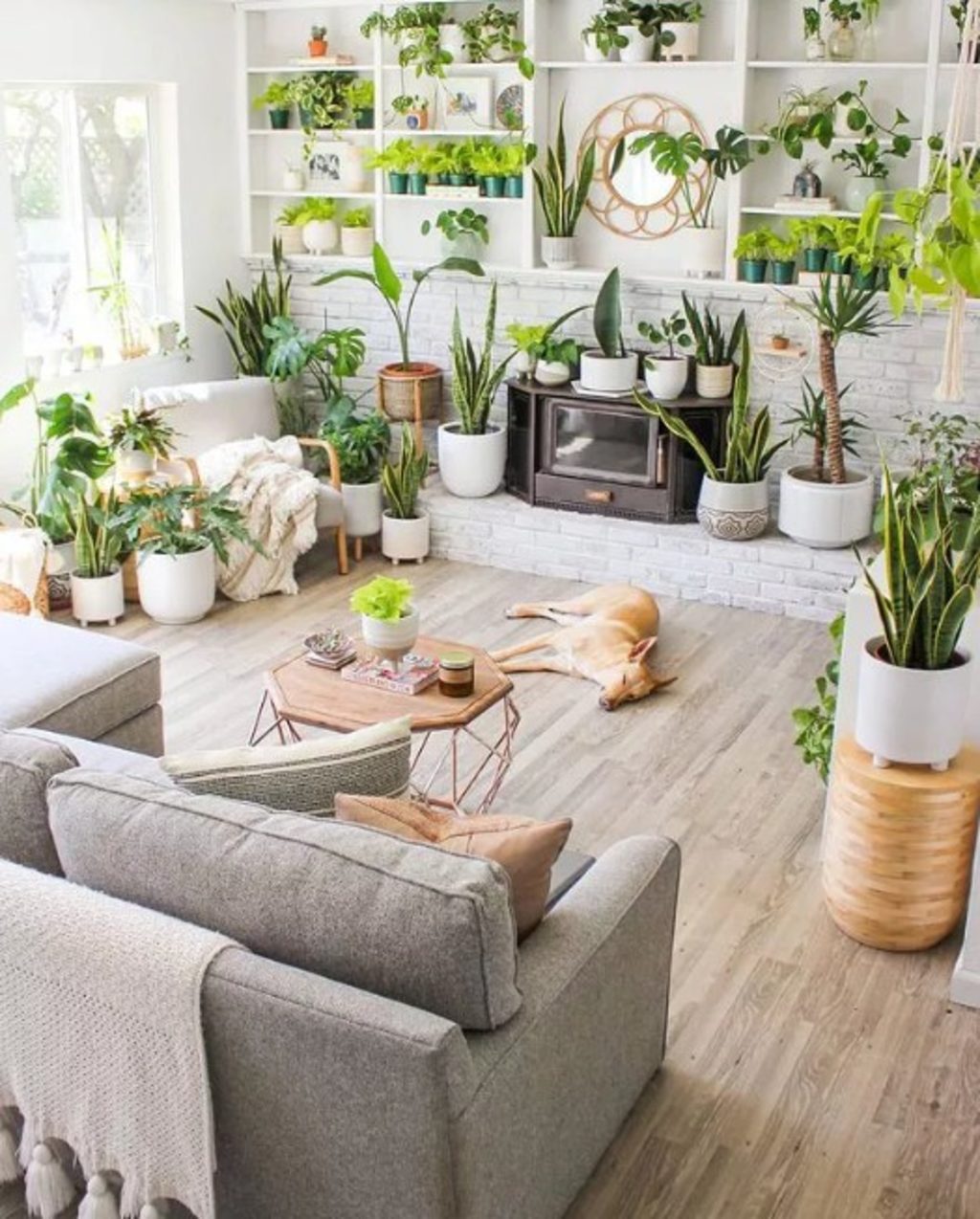
Plants add essential texture and depth to interior design, preventing living rooms from feeling flat. Picture: THESPRUCE
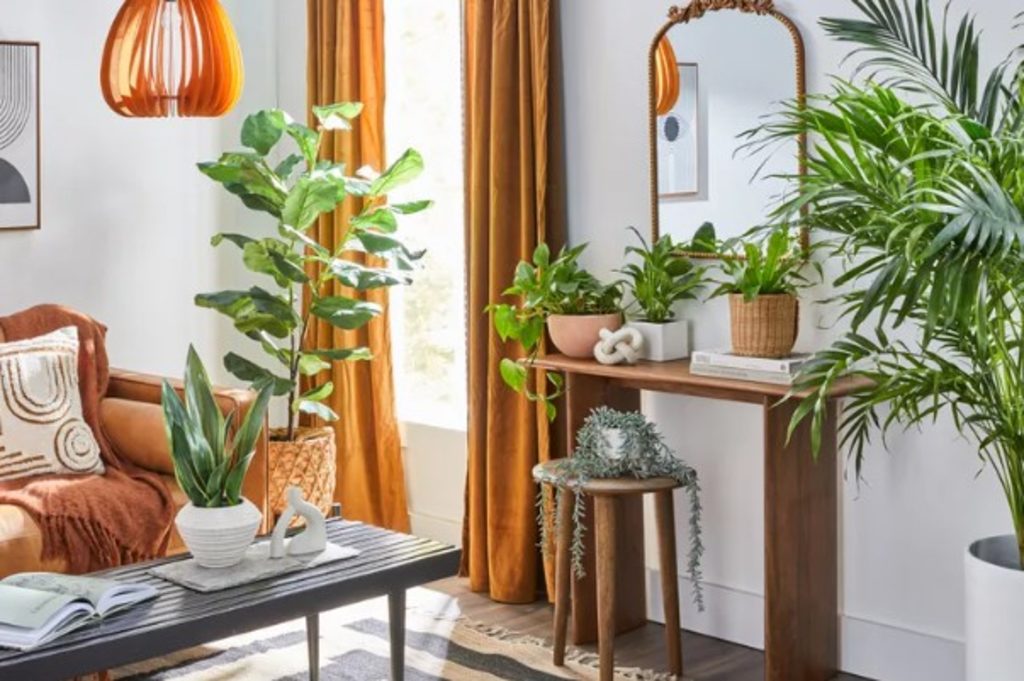
Indoor plant enthusiasts often recommend the “rule of three” when arranging multiple plants. Picture: THESPRUCE

