
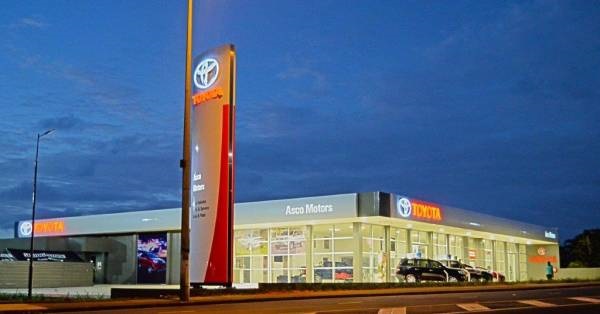
The recent discovery of allegedly stolen Toyota vehicles in Brisbane, Australia, intended for export to overseas markets, underscores the risks of purchasing vehicles from unofficial sources, Asco Motors Fiji has advised.
Asco Motors is listed on the South Pacific Stock Exchange as Toyota Tsusho South Seas Ltd (SPX:TTS) and is the authorised distributor of Toyota vehicles in Fiji.
The company released a statement on Monday on SPX advising consumers of the difference between purchasing from an authorised dealership and purchasing from elsewhere, or what the industry calls “parallel-import channels”.
The advisory comes as Toyota Australia announced enhanced security measures across several vehicle models following the uncovering last week by Australian Police of a sophisticated international theft operation that saw 60 LandCruisers and Prados worth $A9 million ($F13.74m) stolen from Brisbane driveways in just six weeks.
“The recent discovery of allegedly stolen Toyota vehicles in Brisbane, Australia, intended for export to overseas markets, underscores the risks of purchasing vehicles from unofficial sources,” Asco Motors advised.
“This example illustrates that vehicles sourced through certain parallel-import channels may bypass critical verification processes, increasing risks related to:
- authenticity and ownership history;
- safety compliance; and
- association with unlawful activity.
“Purchasing through an authorised distributor significantly reduces these risks by ensuring vehicles are sourced through verified, lawful, and traceable channels.
“Our responsibilities extend beyond commercial interests. As an authorised distributor, we work in alignment with Fiji’s consumer protection framework, vehicle safety requirements, and regulatory standards, supporting outcomes that protect customers, road users and the wider community.
“While vehicle registration is required for lawful road use, registration alone does not confirm manufacturer approval, recall eligibility, or long-term manufacturer support.
“Parallel imports are vehicles brought into Fiji and sold by parties who are not authorised by the vehicle manufacturer or the official local distributor.
“Although such vehicles may appear similar at the point of sale, they are often sourced outside the manufacturer’s approved supply chain and are not supplied through Toyota’s official distribution network in Fiji.
“These vehicles may:
- be manufactured for different overseas markets with different specifications and standards;
- lack alignment with local operating conditions, including tropical climate and fuel quality; or
- in some cases, be sourced through unverified or non-transparent channels, making it difficult to confirm full history, compliance, or legitimacy.”
Stolen quietly and efficiently – by drilling into the side of the vehicles, accessing the wiring and programming in a new key – at all hours of the day, the vehicles were loaded into containers in Brisbane and even Melbourne, hidden behind “a facade of disassembled vehicle parts” and shipped to the United Arab Emirates, according to Australian media reports.
Fijians were among the seven men arrested as part of a special police operation responding to a spike in car thefts in the country.
In response, Toyota Australia immediately announced security improvements implemented to a number of Toyota vehicle models and the development of factory-approved accessories to strengthen theft prevention.
“Organised criminal groups in Australia appear to be importing sophisticated and often costly technologies to facilitate theft, which has resulted in the rise of stolen vehicles being reported across the automotive industry,” it stated.
“Working closely with Victoria and Queensland Police, Toyota has identified these devices and implemented security enhancements to counter their effectiveness.
“Toyota is committed to continuously improving vehicle security and has progressively introduced advanced protective measures across its range.
“In 2025, Toyota took further steps to enhance security on several models, including the New HiLux, LandCruiser 300 and LandCruiser Prado providing owners with even greater peace of mind.
“In addition, Toyota is developing factory-approved genuine accessories, including an additional immobiliser, to combat this issue. Further updates will be announced as soon as possible.
“In the event of vehicle theft, Toyota is developing a prioritisation system to help ensure affected customers receive replacement vehicles as quickly as possible.
Toyota Australia also called for a ban on theft devices and regulation of locksmith devices.
“Toyota Australia strongly supports the banning of devices used for criminal activities and the regulating of legitimate devices used by locksmiths, mechanics and other automotive professionals.
“Toyota remains committed to protecting customers and working with authorities to help reduce vehicle theft across Australia.”
In Fiji, Asco Motors urged consumers to carefully consider that parallel-import vehicles may:
Be built to overseas specifications not designed for Fiji’s climate, road conditions, or fuel standards.• Have limited, third-party, or no manufacturer-backed warranty, with no obligation on the authorised distributor to provide support.
Not be registered in Toyota’s global systems, meaning owners may not receive:
- safety recalls,
- service campaigns, or
- critical software or performance updates.
Face restricted access to:
- Genuine Toyota parts required to maintain safety and structural integrity;
- Toyota-approved diagnostic scan tools;
- Approved Special Service Tools (SSTs) required for complex repairs.
- Be serviced by technicians without Toyota factory certification, and without access to official service manuals, Technical Service Bulletins (TSBs), or current repair standards.
- Present challenges with service history verification, resale value, long-term reliability, and ongoing compliance.
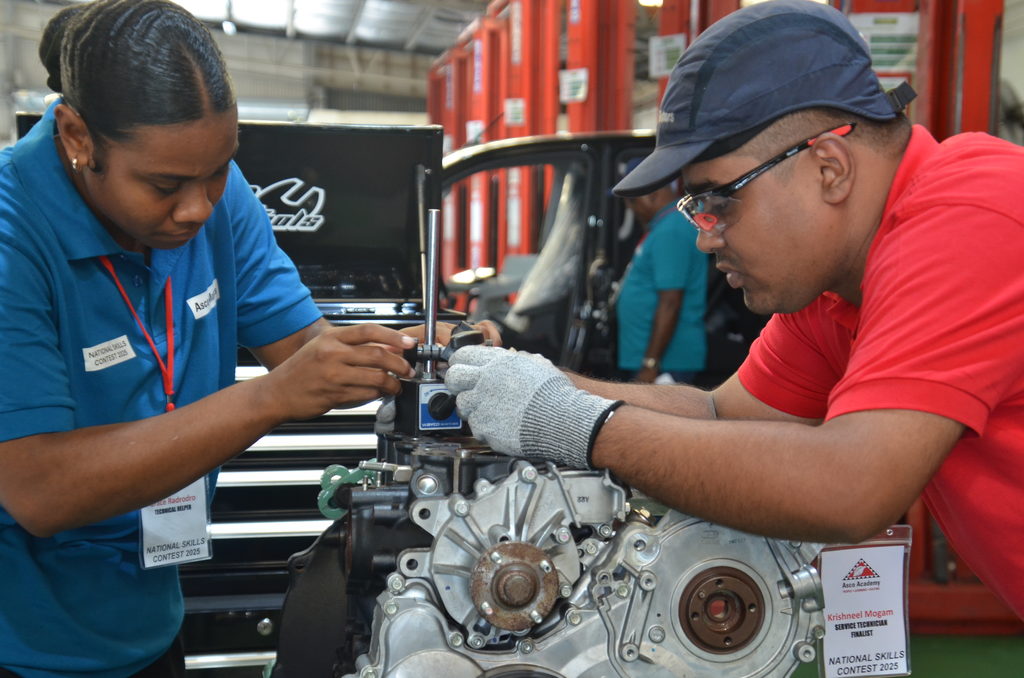
Toyota-certified technicians are part of the the back-up services offered by an authorised Toyota vehicle dealer. Picture: FILE/SUPPLIED
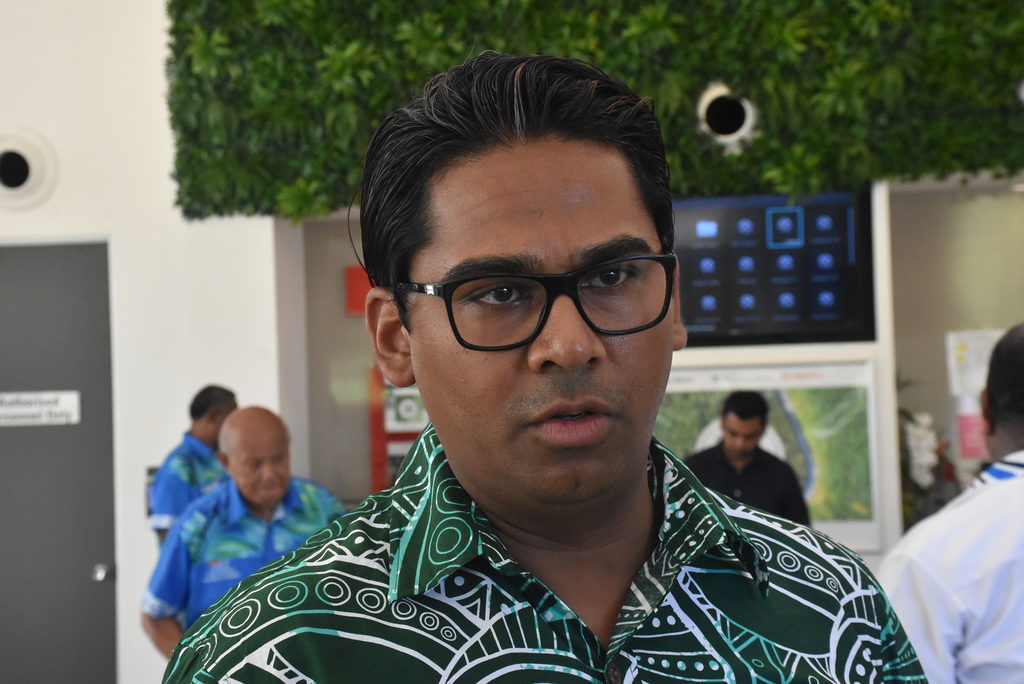
Asco Motors Fiji CEO Ronald Kumar. Picture: Picture: KATA KOLI/FILE

