
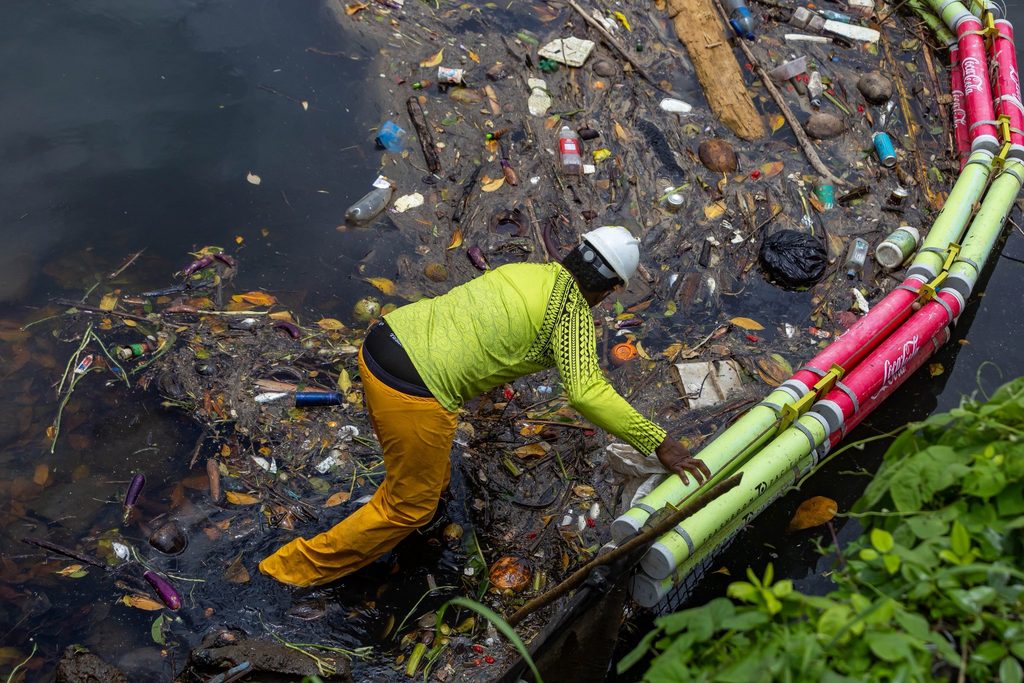
Fiji’s response to marine plastic pollution is increasingly shifting inland, with a government-backed TrashBoom initiative emerging as a practical, data-driven tool aimed at stopping waste before it reaches rivers, reefs and the open ocean.
Supported by the Ministry of Environment and Climate Change, the initiative uses floating barrier systems installed in creeks, rivers and urban drainage channels to intercept plastic and other floating debris.
Once piloted on a small scale, the programme has now entered a nationwide expansion phase, supported by public funding, international partners and private-sector collaboration.
At its core, the TrashBoom approach is based on a simple premise, it is cheaper and more effective to stop plastic upstream than to attempt to clean it from beaches or reefs after the damage has already been done.
Fiji generates an estimated 15,000 tonnes of plastic waste annually, much of which is channelled through urban waterways during heavy rainfall and flooding events.
Pilot sites results
The first pilot installation at Nabukalou Creek in Suva has become a key proof point. Since February 2025, the site has prevented more than 612 kilograms of waste from entering Suva Harbour.
For city authorities, the result is not only a cleaner marine environment but also clearer drains and reduced pressure on urban infrastructure.
Following that early success, a second installation at the Samabula River near Bailey Bridge was established through a partnership with Coca-Cola Europacific Partners Fiji.
The site has allowed both government and industry to better understand waste flows, particularly branded packaging, feeding into broader recycling and recovery strategies.
Scaling up
The national scale-up is now under way. Early this year, eight new TrashBoom installations are being finalised across priority urban waterways, with further expansion planned along the Suva–Nausori corridor and in Nadi.
These locations have been selected through hotspot mapping, hydrological studies and environmental impact assessments, reflecting a move away from ad hoc clean-ups towards more strategic intervention.
Ministry officials have stressed that site selection is critical to long-term success. Each stream, creek or river identified as a pollution hotspot undergoes feasibility checks to ensure that barriers do not disrupt boat traffic, harm marine life or fail during high-flow conditions.
Designed for local conditions
The TrashBoom system relies on floating barriers that harness natural water movement to guide debris into collection points. The technology is designed to capture items ranging from PET bottles to larger floating waste while remaining flexible enough to withstand fluctuating water levels.
According to technical partners, the simplicity of the design allows for easier maintenance and monitoring, while still delivering measurable environmental outcomes.
Health and flood risks
Beyond environmental protection, the initiative is increasingly framed as a public health and climate resilience measure.
Blocked drains are a known contributor to flooding in urban Fiji, damaging road assets and creating stagnant water that can become breeding grounds for diseases such as dengue fever and typhoid.
Agencies including the Fiji Roads Authority and municipal councils have highlighted rubbish interception as a cost-effective way to protect infrastructure while reducing risks to public health, particularly during the wet season.
Policy decisions
A defining feature of the TrashBoom programme is its growing emphasis on data. Operators conduct brand audits on collected waste, identifying the most common products and packaging types entering waterways.
This information is intended to inform national policy discussions around waste management, recycling systems and producer responsibility.
The data-driven approach also strengthens accountability, allowing both government and industry to better understand their role in Fiji’s waste stream.
National recycling reforms
The initiative is closely aligned with broader reforms, including the Return and Earn Fiji scheme, which offers a five-cent refund on PET bottles and aluminium cans.
From this year, waste collected from TrashBoom sites can be integrated into the deposit-refund system, helping to divert recyclable materials away from landfills.
International partners, including the UNDP Pacific Accelerator Lab and the SWAPP II project, have described the programme as a potential regional model, with Fiji now moving beyond pilot projects towards systemic change.
Despite its promise, stakeholders caution that TrashBooms are not a standalone solution.
Recycling advocates have stressed the need to strengthen downstream processing capacity and support grassroots recyclers who handle the collected material.
Without sufficient recycling infrastructure, intercepted waste risks simply being transferred elsewhere.
Even so, the initiative marks a significant evolution in Fiji’s environmental strategy. Rather than relying solely on coastal clean-ups and awareness campaigns, the focus is shifting towards prevention, measurement and integration across government, communities and industry.
As Fiji grapples with urbanisation and climate pressures, the success of the TrashBoom initiative may ultimately be judged not only by the kilograms of waste captured, but by its ability to reshape how waste is managed long before it reaches the sea.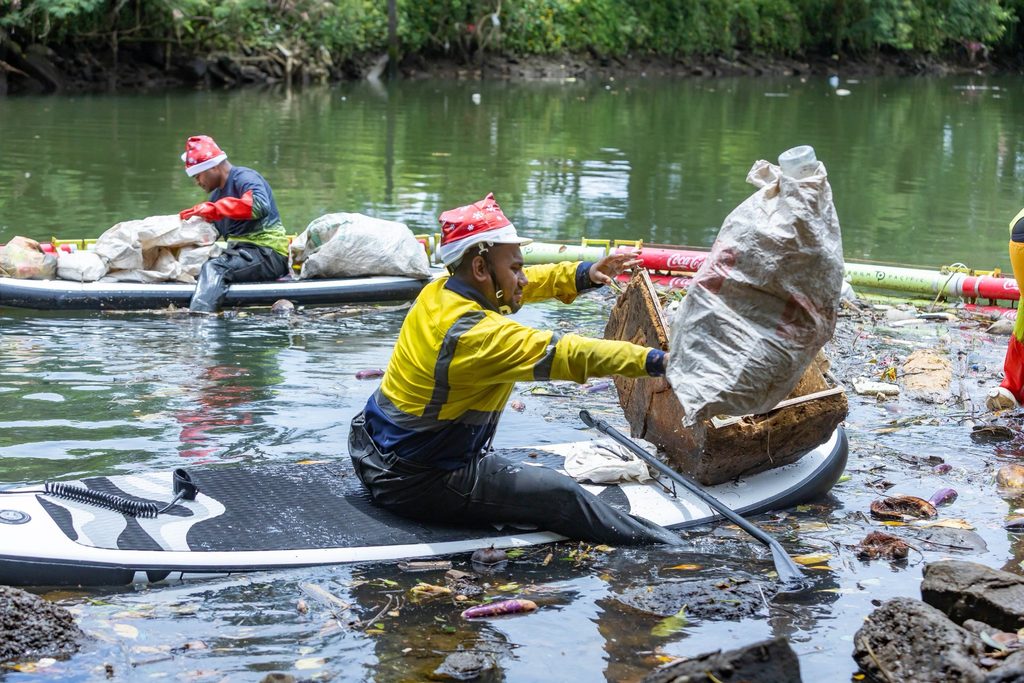
TrashBoom Pacific experts hard at work maintaining cleanliness at a waterway in Suva.
Picture: TRASHBOOM PACIFIC
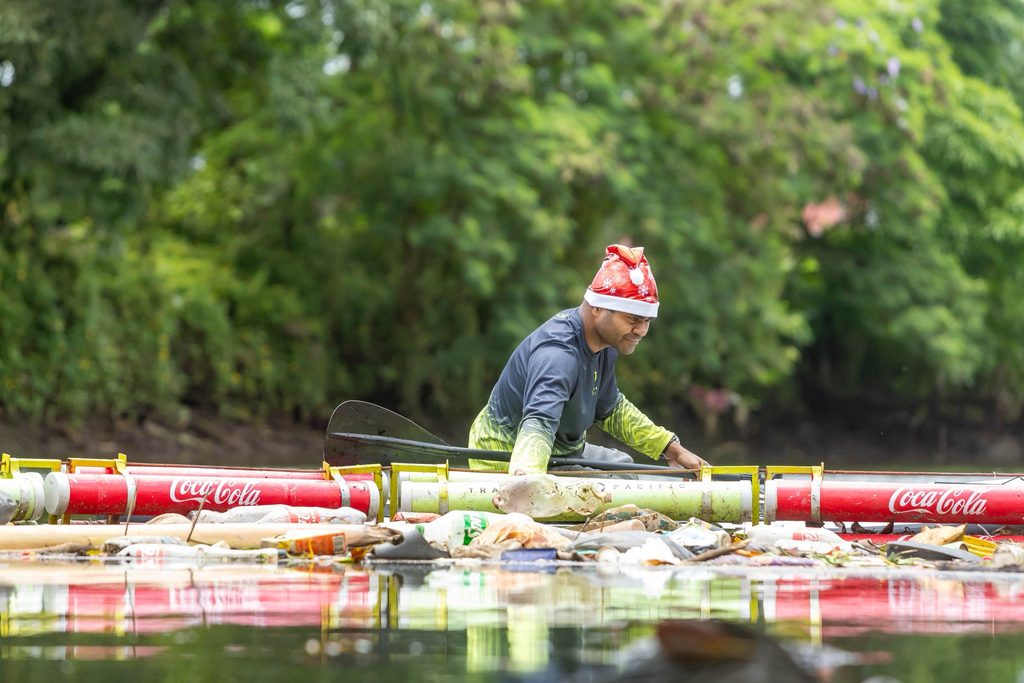
In early 2026, eight new TrashBoom installations are being finalised across priority urban waterways.
Picture: TRASHBOOM PACIFIC
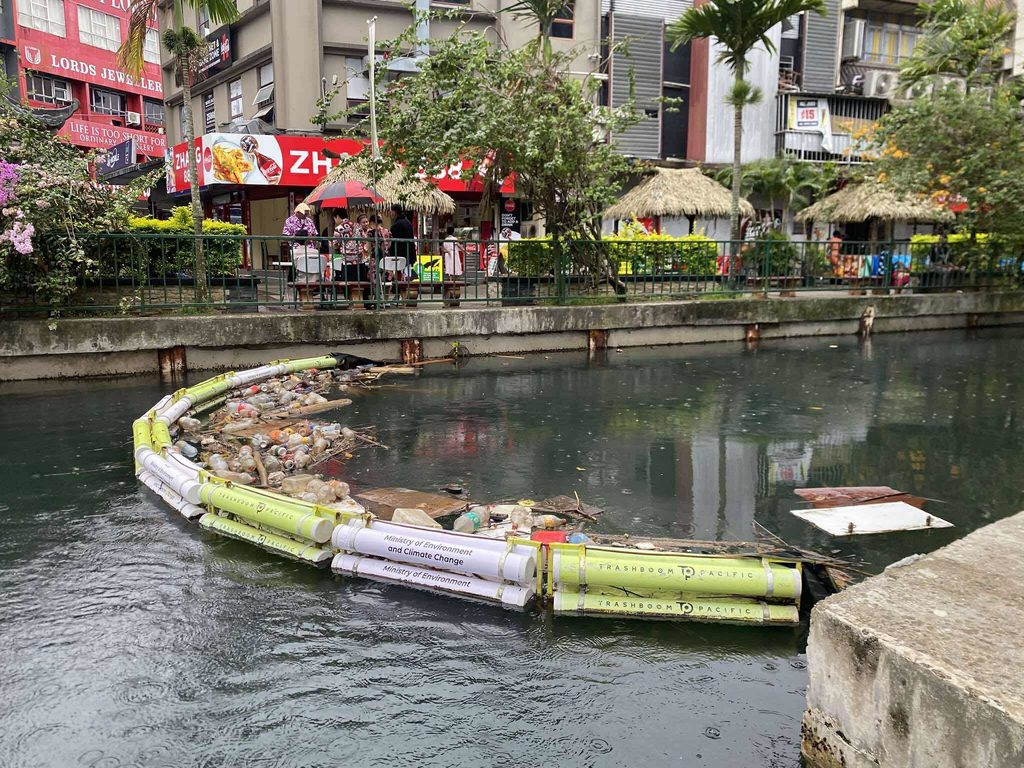
The TrashBoom system relies on floating barriers that harness natural water movement to guide debris into collection points. This one is located at Nabukalou Creek adjacent to MHCC. Picture: TRASHBOOM PACIFIC

