
Lautoka, 2005 — If I look down at my feet today, standing on the pristine pavement of Shinagawa, Tokyo, I see polished leather shoes suitable for a teacher at an international school. But if I close my eyes and travel back twenty years, the leather dissolves into rubber.
I am wearing a pair of black Bata sandals, the strap of which had snapped weeks ago.
My father didn’t replace them; he sat down with a needle and fishing net line and sewed them back together. “It will hold,” he said. And it did.
That was the ethos of our lives in Lautoka: you make do, you repair, you endure.
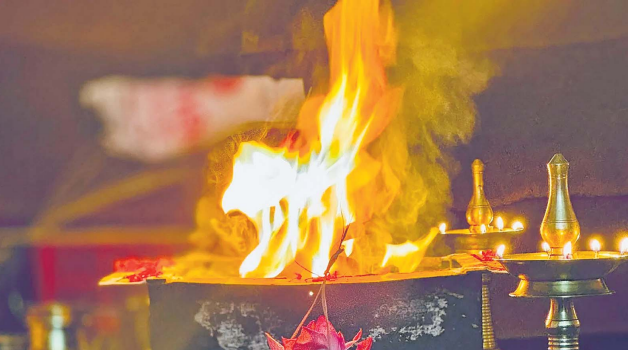
I was 11 years old, sitting cross-legged on the concrete for the morning havan at Arya Samaj Primary School. The smoke from the mango wood fire was thick, stinging my eyes and clinging to my white shirt, but my focus wasn’t on the mantras. It was on the building just over the fence.
Tilak High School was right next door. That was the dream. That was the entire universe. To the boy with the stitched sandals, “making it” meant nothing more than walking those few hundred meters to the high school gate and wearing that uniform.
In 2005, my vision of 2025 was incredibly small, geographically speaking. We didn’t dream of skylines or snow. We dreamed of having enough coins to buy a glass of sweet milk at New World opposite the market. We dreamed of the days when kadu lalli (pumpkin sweets) and mircha lalli (chili sweets) were our Ferrero Rocher — sugar-coated treasures that stained our tongues red and orange.
We weren’t playing soccer on the manicured ovals of the world. We were on the dusty side roads of Lautoka, kicking a stone between two rocks, convinced it was football, screaming like we had just scored in the World Cup.
I imagined that by 2025, I would be a “big man” in the West. I’d be riding the Kader Buksh bus, not as a student squeezed against the window while the driver blasted Hindi remixes at ear-splitting volume, but as a man who owned the road.
I thought I’d be living in a concrete house near my parents, settling into the comfortable rhythm of a life where everyone knew my name.
We were innocent of the sheer scale of the displacement that awaited us. We didn’t know that the fence between Arya Samaj and Tilak was the easiest border we would ever cross.
I made it to Tilak. I finished Form 7. But the script I had written in my head for 2025 was torched in December 2011. The “small town dream” shattered not with a bang, but with the quiet zip of four suitcases. We didn’t just move; we were uprooted.
The raw, ugly truth that the 11-year-old me couldn’t foresee is that migration is a trauma disguised as an opportunity. I watched my parents — kings and queens in their own home—trade their dignity for our future. I watched them shrink into the background of a new country, their qualifications ignored, their status erased, just so their sons could stand tall in places like Kuwait and Japan.
We traded the warmth of the village for the security of a paycheck. We traded the chaotic joy of the Kader Buksh bus for the silent, efficient, lonely trains of Tokyo.
And here we are. 2025 is ending. The flying cars never arrived. The world feels more fractured than ever. I have taught in the desert heat of the Middle East, the greenery of New Zealand, and now the neon glow of Japan. I have ticked off the bucket list — the Great Wall, the Taj Mahal, Petra — places that were just pictures in a social studies textbook at Tilak.
But the view from here is complicated.
There is a pessimism that creeps in when you live across three continents. You realize that “home” is a fluid concept that slips through your fingers.
You realise that 2026 will likely bring more uncertainty, more distance, and more aging parents seen only through the pixels of a Messenger video call. The world is harder, colder, and faster than the slow afternoons in Lautoka ever prepared us for.
Yet, I look at my resilience, and I recognise it. It’s the fishing net line on the Bata sandal.
When the loneliness of Tokyo hits, or when the culture shock of the Middle East was overwhelming, I didn’t break. I held together because I was raised on “making do.” I was raised to find joy in a stone masquerading as a football.
So, to the 11-year-old boy rubbing smoke from his eyes in the havan: I won’t lie to you. The future is going to hurt. You will lose the comfort of the known. You will miss the specific humidity of a Lautoka morning so much it aches. You will wonder if the trade-off was worth it.
But you will be okay. You are going to take that small-town grit and you are going to build a life that is vast, intelligent, and fiercely your own. You won’t be the “big man” in Lautoka you thought you’d be. You’ll be a global citizen who knows that the most expensive meal in Tokyo still doesn’t taste as good as that sweet milk at New World.
The sandal was broken, but it held. And so will you.
ASHNEEL JAYNESH PRASAD is a Fiji-born New Zealand citizen currently working as a teacher in Tokyo, Japan.

