
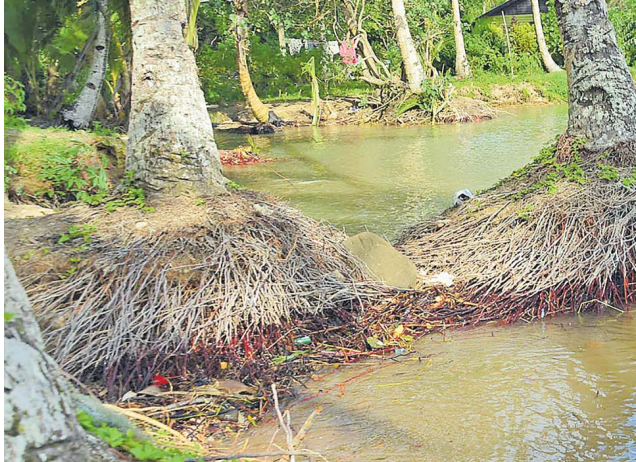
Fiji’s ability to respond decisively to climate change and environmental pressures took a major step forward in 2025 after the Ministry of Environment and Climate Change secured $142.7million in climate and environmental funding.
The funding, mobilised through partnerships with multilateral institutions, development partners and regional mechanisms, represents the largest single year financing achievement for the ministry and marks a shift from planning and advocacy to large-scale delivery.
“Securing this level of finance is a clear signal that Fiji’s climate priorities are recognised internationally,” Minister for Environment and Climate Change Mosese Bulitavu said.
“Our focus now was turning these resources into tangible benefits for communities and ecosystems.”
The funds supported projects across biodiversity protection, climate adaptation and mitigation, waste management, marine governance, technical assistance, and strengthening both national systems and community-level resilience.
Of the total secured, $61.4m was approved under the Climate Investment Fund for a Biodiversity and Nature Project aimed at protecting ecosystems while supporting sustainable livelihoods.
A further $37.5m was approved by the Green Climate Fund for two major initiatives — Advancing Early Warning for All and Adapting Tuna-Dependent Pacific Island Countries — both critical to Fiji’s climate resilience and food security.
In addition, 12 project concept notes, valued at $44.69m, were developed and advanced during the year, expanding Fiji’s pipeline of climate-ready projects.
Budget support from development partners formed a key pillar of the financing package. Australia provided $35.2m for the Fiji Climate Adaptation Programme, supporting resilience-building initiatives in vulnerable communities.
New Zealand contributed $6.5m to support community relocation programs, while the European Union released $7.9m in first-tranche funding to support implementation of the Climate Change Act 2021.
One of the most significant outcomes of this financing was the delivery of Fiji’s first CROC-funded community relocation project in Nabavatu, Vanua Levu.
The project set a national benchmark for how climate finance could be translated into practical, dignified solutions for communities facing the impacts of rising seas and extreme weather.
“This project was more than relocation. It was about protecting homes, culture, and livelihoods for generations to come,” said Dr Sivendra Michael, permanent secretary for Environment and Climate Change.
Further funding gains included $8.8m from the Bezos Earth Fund for marine spatial planning, $604,920 for Fiji’s first approved Loss and Damage project in Macuata province, and $675,000 through the Community Climate Adaptation Facility to support three vulnerable communities.
The ministry also secured multiple grants supporting invasive species control, circular economy initiatives, waste management, ozone protection, and biodiversity conservation, reflecting a broad and integrated approach to environmental challenges.
Observers noted that the scale of financing secured in 2025 was underpinned by strengthened governance and institutional reform. Amendments to the Environment Management Act were completed within nine months, while key components of the Climate Change Act were brought into force. The ministry also achieved its first unqualified audit opinion, reinforcing confidence among international partners in Fiji’s financial management systems.
Beyond national projects, Fiji continued to shape regional climate finance discussions. In 2025, the country played a central role in advancing the Pacific Resilience Facility, a Pacific-led financing mechanism designed to support community-driven resilience projects. Donor pledges were announced in Honiara, and momentum was reinforced at COP30 in Brazil.
“Fiji demonstrated that Small Island Developing States could lead in climate finance, turning ideas into real-world solutions,” Mr Bulitavu said.
As climate impacts intensified, the ministry said the priority is ensuring that funding translates into measurable outcomes — stronger communities, protected ecosystems, and resilient infrastructure.
Fiji continues to expand influence
FIJI expanded its influence over global and regional climate finance architecture in 2025 through leadership roles and strategic advocacy.
The country played a central role in advancing the Pacific Resilience Facility, designed to channel finance directly to communitylevel resilience initiatives.
Donor pledges announced in Honiara signalled growing international support for Pacific-led solutions.
Fiji also achieved historic firsts, becoming the first Pacific Small Island Developing State on the NDC Partnership Steering Committee and the first PSIDS member and co-chair of the Climate
Investment Fund’s Strategic Climate Fund Trust Fund Committee.
“Pacific countries had a right to a say in how climate finance was allocated.
Fiji ensured that voice was heard,” said Minister for Environment and Climate Change, Mosese Bulitavu.
These positions gave Pacific nations a stronger voice in shaping how climate finance was allocated globally.
Strong systems support service delivery
OPERATIONAL efficiency was a key enabler of Fiji’s climate finance success in 2025.
The Ministry of Environment and Climate Change processed more than 1100 permits and licences while maintaining zero backlog for Environmental Impact Assessments and regulated permits.
Digital integration of EIA processing and the establishment of a dedicated GIS Unit improved transparency and evidence-based decisionmaking.
At the same time, more than 114,000 tonnes of waste were managed at the Naboro Landfill, and international climate reporting obligations were met on time.
“Good systems behind the scenes ensured that the funding we secured delivered results where it mattered — in communities and ecosystems,” said Dr Sivendra Michael, permanent secretary for Environment and Climate Change.
These operational achievements ensured that funding secured could be translated into timely, accountable action.
Ministry: Reforms unlock confidence, funding
REFORMS to Fiji’s environmental governance framework played a critical role in unlocking record climate and environmental financing in 2025.
Key legislative milestones included amendments to the Environment Management Act 2005 and the phased commencement of the Climate Change Act 2021, bringing climate governance firmly into operational systems.
The reconvening of the National Environment Council after a five-year hiatus restored coordinated oversight of environmental decision-making.
Strategic planning advances — including the Ministry of Environment’s Strategic Development Plan, draft Mangrove Management Regulations, and sector-specific Environmental Impact Assessment guidelines —
strengthened policy clarity and implementation readiness.
“Strong laws and clear institutional arrangements gave both communities and partners confidence that funds were being used effectively,” Dr Sivendra Michael said.
These reforms enhanced Fiji’s credibility with development partners, signalling that climate finance would be managed through disciplined, accountable systems.
The ministry’s first unqualified audit opinion further reinforced confidence.
Planned relocation became a defining feature of Fiji’s climate response in 2025 as funding and safeguards aligned to protect vulnerable communities.
Standard Operating Procedures on Planned Relocation were operationalised, providing clear national guidance to ensure relocations upheld dignity, culture, and livelihoods.
These protocols were applied in Nabavatu, Vanua Levu, where Fiji delivered its first CROCfunded community relocation project.
Additional support from New Zealand strengthened relocation planning for climate affected communities, while nationwide consultations ensured policies reflected lived realities.
“Relocation was never just moving homes. It was about ensuring families, traditions and livelihoods were preserved,” Minister for Environment and Climate Change Mosese Bulitavu said in a report.
The report said relocation remained one of the most complex climate responses, requiring coordination across housing, land, livelihoods, and social services.
Progress made in 2025 positioned Fiji as a regional leader in managing climate displacement responsibly.

