
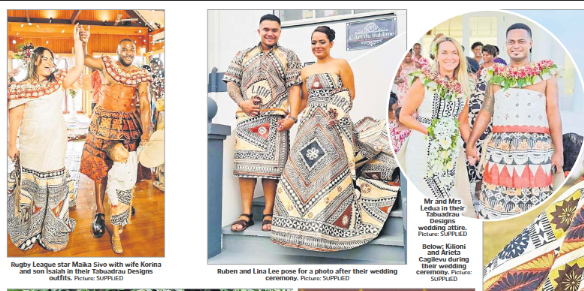
Silk, lace and imported tulle still dominate glossy bridal magazines, but quietly, a different kind of wedding dress is stealing the spotlight – one shaped by bark, hand-inked motifs and stories older than any fashion house runway.
At the centre of that movement in Fiji is Vuya Ratabua, the woman behind Tabuadrau Designs, a label that has been refining contemporary tapa wedding wear for nearly three decades.
Tabuadrau Designs is 28 years old, but Ratabua says the brand is still learning, still pushing to be set apart. That restless edge shows in gowns that blur the line between art, culture and couture – bridal pieces that feel as deliberate as a Chanel atelier creation, yet unmistakably rooted in the Pacific.
Each tapa garment is not simply made; it is orchestrated. From the first conversation with a bride to securing bark cloth, inks and specialist craftsmen, the process can take months. Orders are confirmed six months to a year in advance, not as a luxury, but a necessity. Timing and consistency, Ratabua says, are everything. One gown relies on many hands, many schedules and an unbroken chain of trust between designer, supplier and client.
What elevates Tabuadrau’s work is authenticity. Some tapa motifs come from Nayau, Namuka and Somosomo in Cakaudrove, printed by provincial craftsmen themselves. Others are signature Tabuadrau prints; a careful fusion of Fijian and Polynesian designs. Every pattern carries a lineage, a place, a meaning that cannot be mass-produced.
Like global fashion houses now turning to hand-loomed silks and organic fibres, brides are seeking something more personal. Natural textures photograph differently. They soften light. They age beautifully. More importantly, they carry emotion. In an era of identical gowns and viral trends, tapa offers individuality – a story woven into fabric.
Originally focused on weddings, Tabuadrau Designs has expanded into birthdays, graduations and formal events. Its audience has grown alongside a new generation that values heritage as much as aesthetics.
For Ratabua, the real reward comes later. When former clients look back at their wedding photos, she hopes gratitude is the dominant feeling – gratitude for the experience, for wearing something meaningful. For future brides, the reaction is simpler: determination. One day, they want to wear Tabuadrau.
Seeing her work worn locally, and potentially beyond Fiji, is humbling. Pride is there, but so is vigilance. Ratabua is always scanning for what can be improved, refined, perfected.
In the world of wedding fashion, where trends fade quickly, Tabuadrau Designs offers something enduring – proof that beauty, business and culture can coexist, stitched together by patience, skill and bark cloth.

