
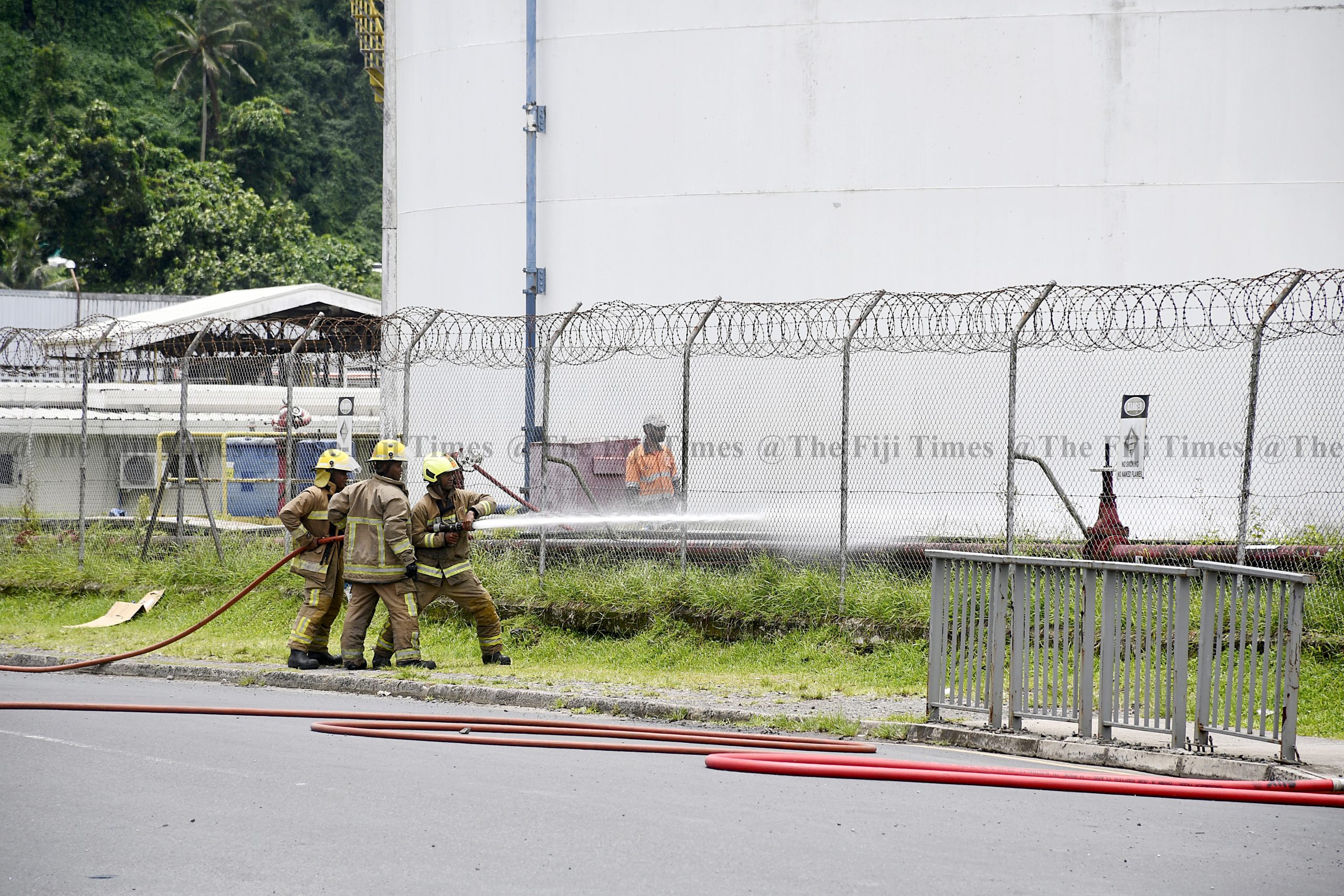
It is reassuring to know that a full investigation is underway to determine the cause of the fuel leak at the Petro Oceania Fuels Terminal in Walu Bay, Suva, and to ensure such an incident does not happen again.
The fuel tank side leak, detected at about 5am yesterday, triggered the immediate activation of Petro Oceania’s emergency response procedures. Those measures were aimed at containing the spill, protecting public safety and minimising environmental impact. It is also reassuring to learn that swift action was taken to reduce the danger posed to both people and the environment.
Yet reassurance alone is not enough.
Incidents of this nature inevitably raise difficult but necessary questions. How did we get to this point in the first place? What failed, and why? And were all safeguards working as they should have been?
We accept that accidents can happen. We also accept that above-ground fuel storage tanks have a finite lifespan and are subject to wear and tear over time. But acceptance should never be confused with complacency. The real issue is whether the right questions are being asked before, not after, an incident happens.
Questions about the age, condition and maintenance schedules of these tanks are unavoidable. So too are concerns about inspections, monitoring systems and regulatory oversight. These are matters of public safety.
Yesterday, many people understandably worried about the immediate danger posed by the fuel leak. The terminal is located beside a heavily used main road linking Suva to Lami and onward to the Western Division. Any escalation of the situation could have had serious consequences for commuters, nearby businesses and residents.
Environmental concerns were also front of mind. Fuel leaks, even when contained, carry the risk of soil and water contamination. The long-term impacts of such incidents can be significant, especially in coastal and industrial zones like Walu Bay.
There were also questions about preparedness. Was there a clearly defined emergency response plan? Were nearby businesses and residents aware of it? How quickly could an evacuation have been carried out if the situation had worsened? These are reasonable concerns for a community living and working in close proximity to fuel storage facilities. The National Fire Authority confirmed that at 8.30am yesterday, the fuel height in the leaking terminal was recorded at eight metres, with an estimated volume of 1,160,000 litres. By 11.40am, the fuel height had reduced to 7.5 metres, with a volume of approximately 980,000 litres, confirming a measurable loss of product.
Petro Oceania said the leak was quickly isolated and contained within the terminal by its onsite team, with the Fiji Police Force and the NFA notified immediately and assisting in managing the incident.
Chief executive James Marryatt confirmed that there were no injuries and no environmental damage. He said all fuel was being safely transferred to alternate storage and praised the professionalism and training of staff who followed emergency procedures in close coordination with authorities. He also confirmed that a full review was underway to determine the cause and prevent a recurrence.
As we await the findings of that investigation, it is a relief that no one was injured and that no environmental harm has been reported. But relief should not dull our vigilance. This incident must serve as a reminder that maintenance, transparent oversight and clear communication are non-negotiable when dealing with hazardous materials. The public deserves not only assurances after the fact, but confidence that every reasonable step is being taken to prevent such risks in the first place.

