
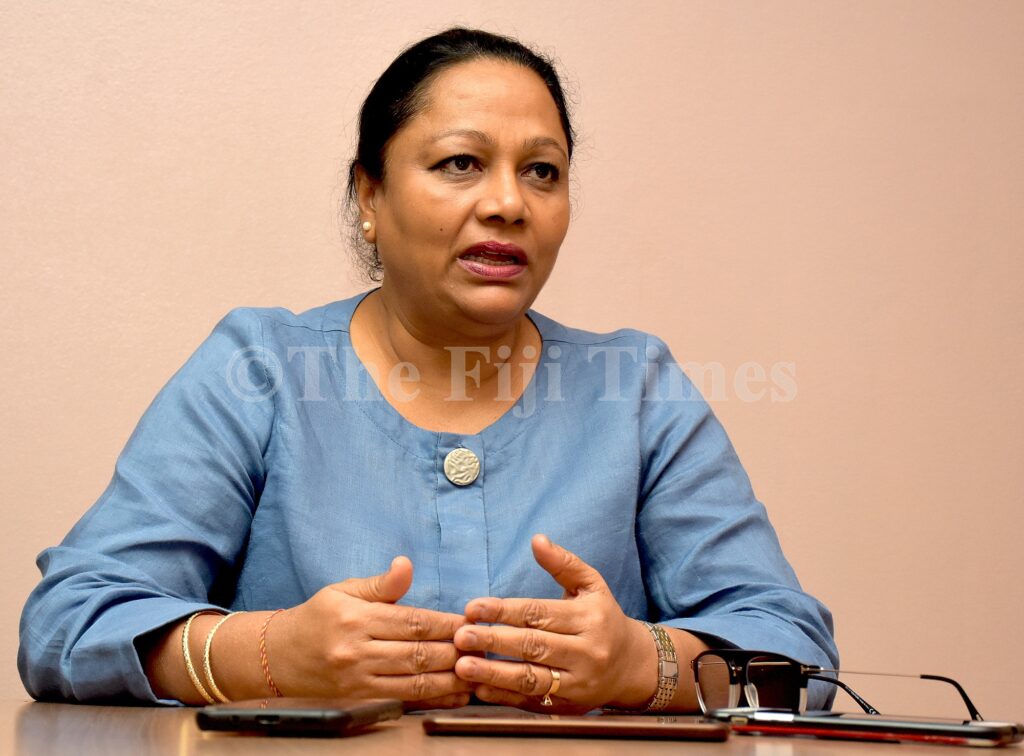
Opposition MP Premila Kumar has accused Prime Minister Sitiveni Rabuka of pursuing political motives rather than national interest in the Government’s proposal to review Fiji’s fiscal year.
In a statement, Kumar described the move as “fixing what isn’t broken” and a “costly distraction” from what she says are the country’s more pressing challenges — including poverty, unemployment, rising crime, drug issues and climate risks.
“This review reeks of desperation to erase the legacy of the previous government rather than advance the nation’s interests,” Kumar said.
“The August–July fiscal year worked. It helped us manage our vulnerabilities — especially natural disasters.”
Kumar argued that the fiscal year adjustment introduced in 2016 was deliberately aligned to Fiji’s cyclone season, allowing the Government to better account for disaster damage and allocate rebuilding funds before the start of a new budget cycle.
“This wasn’t politics — it was smart governance tailored to our climate reality,” she said. “Reversing it now is pure politics, blind to the storms that batter our islands.”
She also warned that shifting the fiscal year closer to the November–January period would clash with school holidays, festive events and slower public service operations.
“Those are already our least productive months. Adding budget launches and implementation demands will only cause delays and weaken fiscal discipline,” Kumar said.
Questioning the Government’s justification, Kumar said claims about improved cash flow and coordination lacked evidence.
“Where is the proof this will lower the cost of living, create jobs or strengthen disaster resilience?” she asked. “Instead, we risk transition chaos, mini-budgets and more bureaucracy.”
Kumar said many countries align their fiscal cycles to economic realities rather than calendar years — and argued Fiji was “ahead of the curve” before the proposed changes.
Describing the move as “regression,” she said the opposition would continue to hold the Government accountable.
“Fijians deserve real solutions, not symbolic reversals,” she said. “This isn’t leadership — it’s politics over people.”

