
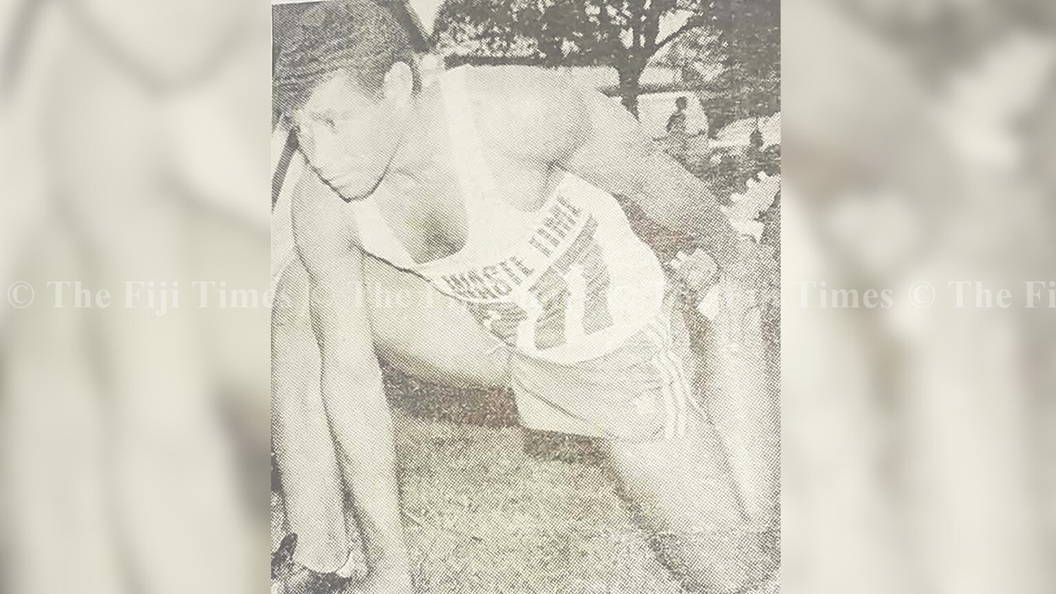
Why did it have to be rugby and not football or any other sport?
In an article published in The Fiji Times on Saturday, April 4, 1992, Waisale Serevi responded like a man who had been asked an ignorant question.
He said the world should know rugby was a national passion and there was no escape from it for any young Fijian.
That was understood, The Fiji Times probed further to discover the precise reason.
Was it a childhood dream of emulating a hero? Or did rugby flow in the family blood.
“I really had no choice,” he said.
“Back during my primary school days when I was 10, there was no other sport but rugby. So, whether I liked it or not, I just had to play it or remain in the class and become a bookworm.”
Just as well, Serevi, a meter reader with the Public Water Rates Department then, chose not to be an academic.
The chunky yet swift-footed fly-half had given the Hong Kong 7s some magical moments since his first appearance in 1989.
Standing 1.59 metres in socks, Serevi was a dwarf among his 1.8 and 1.9-metre teammates.
That was probably the reason he didn’t appear often in the frequent scenes of his giant colleagues thundering to the goal line.
Then, Serevi was not a foot soldier but a battlefield commander.
He was a brilliant thinker with supple limbs that reacted to his every thought. His job was that of a tactician and initiator, after that it was more a matter of waiting for the explosions and what lovely detonations they were.
The best of them came in the 1990 final between Fiji and New Zealand. Serevi was served a slightly erratic pass as a horde of All Black jerseys closed in on him. Attempting to gather that ill-directed pass would have been futile.
So, Serevi, with all the deftness of a table tennis player, merely patted the ball back to the feet of the unmarked (Noa) Nadruku, who, in a moment of brilliant innovation, flung a pass between his legs to send (Tomasi) Cama on his way to another try.
It all started with Serevi’s coolness amid the turmoil of a knife-edge final.
Obviously, it was one of the moments that earned him the Best and Fairest Player award for a second time.
He was the only player at the time to have achieved that distinction. Personal glory ran a poor second to country honour.
When he first won the award in 1989 and Fiji lost the final, he said: “Being named Best and Fairest Player (in ’89) was enough.
“I feel I have to bring back Hong Kong Sevens glory for the people of Fiji.”
He did just that in 1990 and again in 1991. That desire still ran strong on his fourth visit to Hong Kong.
“There were many people who came to the airport to see us off and they all pleaded with us to bring back the cup,” Serevi said.
“We promised we would try, but I know how disappointed they will be if we don’t, I just want to make my people happy.”
Fame and travel had done little to change Serevi. The third son in a family of five was staying in a luxury hotel with his teammates, but he still missed home.
“I miss my mum’s cooking of palusami, I’m sure she will make it for my first meal when I return,” said Serevi.
As if speaking from a distant childhood memory and not as a person who had left home only a few days ago, Serevi revealed how his favorite dish was prepared.
It was basically a mixture of yam, coconut milk and corned mutton, all rolled in large leaves and baked in earth ovens for three hours.
Interestingly, the ovens were holes in the ground containing smoldering coal and the rolled leaves were buried with sand until they were baked properly.
Well, the closest we got to palusami was Serevi — and having had a taste of him for three Hong Kong Sevens, he was a rugby dish worth waiting for.

