
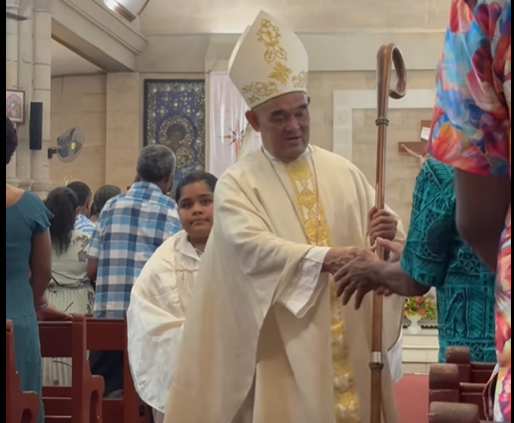
Dear friends, have a graced new year!
As the clock ticked towards midnight, the world got loud – fireworks, countdowns, parties. But what if, before the noise, you gave yourself one priceless gift: ten quiet minutes to review your year with honesty, gratitude, and hope?
In the Christian tradition, there’s a simple practice called the Ignatian Examen. It’s usually a daily reflection, but it becomes especially powerful at the end of a year. Think of it as a spiritual and emotional “year-end review”; a way to reflect on 2025 through God’s eyes.
1. Start with presence, not pressure
Before you think about resolutions or regrets, pause and recognise this:
You made it through another year.
Whether you’re a person of faith, secular person or just spiritually curious, take a breath and admit: you’ve been carried through days you thought you couldn’t handle. You weren’t as alone as you felt. That shift – from “I’m on my own” to “I’ve been accompanied” – changes everything. You don’t have to power your way into the new year by willpower alone.
2. Count concrete blessings
Next, practice gratitude. Ingratitude is the mother of all sins because it forgets that we are loved. The fact that you are reading this, is that you are created by God’s love. Be grateful!
Look back and name specific gifts from this year:
• A person who stood by you
• A job that sustained you, or a change that stretched you
• A conversation that lifted you
• A moment of beauty: a sunrise, a song, a simple meal
• A healing moment.
Don’t just say, “I’m grateful for my family.” Say, “I’m grateful for my daughter’s hug when I came home exhausted,” or “I’m grateful my friend called on the day I needed it most”. Specific gratitude rewrites the story of your year from “It was all hard” to “Even in the hard, I was blessed.”
3. Learn from your heart’s movements
Now go deeper. Don’t just recall events; recall how they shaped your heart.
Ask yourself:
• When did I feel most alive, most aligned with who I want to be?
• When did I feel myself drifting—into bitterness, burnout, or numbness?
• What choices moved me toward generosity, courage, and love?
• What choices pulled me toward selfishness, fear, or regret?
You’re not doing this to see the right and wrong of your life. You’re doing it to learn. Your year holds data about your soul: what helps you flourish, and what holds you back.
4. Name your failures without quitting on yourself
Be brave enough to admit where you fell short:
• Relationships you neglected
• Words you wish you could take back
• Habits that quietly took control
But here’s the key: acknowledge your failures as places to grow, not reasons to give up. Admitting our vulnerabilities allows for growth and transformation.
In Christian faith, no mistake is the final word — God’s mercy is. Even if you don’t use religious language, you can still decide: “This is not where my story ends.”
5. Step into the new year with a clear, simple intention
Finally, don’t drown in a dozen resolutions. Ask one focused question:
“Who, Where and How is God calling me to become this year?”
Then choose one or two concrete changes:
• To be more present at home
• To pray or reflect daily, even for five minutes
• To seek help for a habit that’s hurting you
• To repair one relationship, or forgive one person
You don’t walk into the new year alone. When you embrace your short-comings and vulnerabilities you will encounter something bigger than yourself; you will meet the transformative power of the Creator, the Divine, God with us.
This year, don’t just move on alone. Move with God.

