
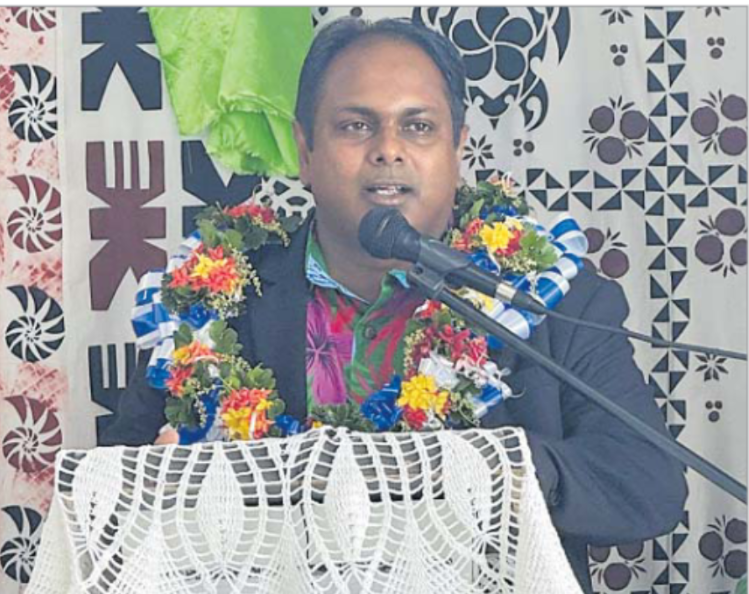
THE Oceania Institute of Technology (OIT) will officially open on January 24 next year, introducing an industry-inclusive training model designed to eliminate the need for employee retraining.
CEO Hasmukh Lal said the institute was moving toward a “German model” where the private sector is deeply embedded in the educational process.
”The theory will be done here, the practical will be done at the site of the employer,” Mr Lal explained.
“The employer will have input in the learning and teaching, and also in the assessment.”
Mr Lal said this approach aims to solve the current mismatch between graduate skills and industry needs.
”The industry will also have the input, so that once the students, you know, they graduate, they don’t have to retrain them. And that is going to mitigate the issue of quality and relevance, which we face in Fiji at the moment.”
A number of industry partnerships are expected to be signed during the official opening in January to facilitate direct work placements for graduates.
OIT achieves 99pc completion rate
THE Oceania Institute of Technology (OIT) has recorded a 99 per cent completion rate for its inaugural cohort of 242 students, who graduated on December 19.
OIT chief executive Officer Hasmukh Lal confirmed the milestone following the conclusion of a four-week course funded through government macro-qualifications.
“For the first cohort, the completion rate is almost 99 per cent, should I say,” Mr Lal said.
“We had about six or seven students who didn’t come to the training because of their prior commitments.
Apart from those who successfully completed the four-week course.”
Mr Lal attributed the high retention rate to the nature of the curriculum, which moved away from traditional classroom styles.
“Instead of being a theory-based class, it has been highly practical classes, which were quite engaging and interactive, which kept the attention of the students to come to classes every day.
The institute adopted a community-based recruitment strategy, working closely with the Tui Nadi to identify unemployed youths and adults.
Mr Lal said as a result, the majority of the graduating students are from Narewa Village.

