
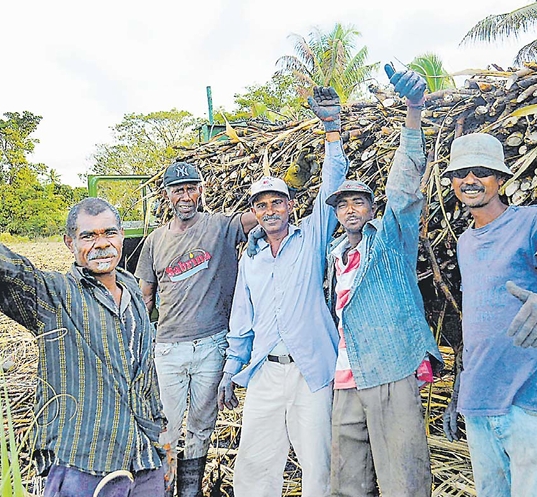
Fiji’s sugar industry, historically the backbone of the nation’s economy, was built on the sweat and resilience of generations of Indo–Fijian farmers. Since the arrival of indentured labourers, or “Girmitiyas,” in the late 19th century, this industry provided livelihoods, shaped rural communities, and anchored thousands of families across generations. For decades, sugar contributed substantially to national export revenue, rural employment, and communal cohesion.
At its peak, cane production exceeded three to four million tonnes annually. By the 1970s, the industry had been fully localised under the Fiji Sugar Corporation (FSC), and for much of the post–colonial period the cane belt remained vibrant. The rhythm of planting, harvesting, rail–car cane trains, and mill seasons structured the lives of families, villages, and entire districts.
Yet over decades, political interference, legislative manipulation, neglect of infrastructure, and shifting national priorities gradually weakened the sector. Smallholders — many descendants of Girmitiyas — became vulnerable to market fluctuations, rising costs, transport inefficiencies, and land lease insecurity. Despite these challenges, farming communities held on, often under conditions that left little room for innovation or profit.
Beyond economics, sugar farming was deeply woven into Fiji’s social fabric. It shaped communities, identity, and a shared cultural heritage. The gradual erosion of the industry therefore threatens not only livelihoods but the continuity of traditions, intergenerational bonds, and a heritage grounded in resilience and labour.
Land ownership and lease issues
LAND tenure remains a foundational concern. With most agricultural land under the custody of the iTaukei Lands Trust Board (TLTB), non–indigenous farmers, predominantly Indo–Fijians, operate under lease arrangements rather than ownership. These leases, once renewable and relatively stable, have in recent decades become fraught with uncertainty, bureaucracy, and political interference.
Registered farmer data underline the depth of the crisis. In 1994 there were 22,807 registered sugarcane farmers; by 2018, only 11,902 remained active. Land under cane cultivation fell from more than 74,000 hectares in the early 1990s to around 38,000 hectares by 2013.
Lease insecurity forced farmers into defensive strategies: reducing investment in soil fertility, irrigation, and mechanisation, or abandoning marginal plots entirely. Some family farms — handed down over generations — were left idle or sold under pressure. Eviction threats, compounded interest burdens, and unpredictable renewals undermined not just productivity but the survival of multigenerational farming traditions.
The legislative framework meant to guarantee fairness — including the Sugar Industry Act and related land leasing regulations — has been inconsistently enforced, often under political and economic pressures. During politically charged periods, lease renewals became discretionary, favouring urban or tourism–related land demands over agriculture. For smallholders, this meant that decades of labour could be erased overnight, with minimal institutional recourse.
Legislative and governance challenges
The governance structure of Fiji’s sugar industry — designed to balance the interests of farmers, management, and government — has fractured. Originally, growers were represented through the Cane Growers Council (CGC), mills were managed by FSC, and legislation protected both production and growers’ rights. Over decades, political centralisation, coups, and administrative decrees dismantled this balance.
Elected grower representatives were removed, board seats replaced with government appointees, and decisions on cane pricing, lease arrangements, milling operations, and transport logistics became opaque. Institutional accountability eroded. FSC management, operating under government directives, increasingly prioritised mill survival, debt servicing, and political expedience over farm–level livelihood sustainability.
Levies collected from farmers — originally meant for research, infrastructure, and support — were repurposed to cover FSC deficits. Transparency vanished. Growers, paying into a system that no longer represented them, faced price fluctuations, lease uncertainty, and delivery inefficiencies with no meaningful platform to advocate for reform.
The dismantling of governance protections transformed the industry: growers became marginalised labourers, excluded from the decisions that directly affected their farms, communities, and futures.
Production and yield dynamics
Declining yields in Fiji’s sugar industry reflect not environmental limitations but decades of structural mismanagement, political interference, and lease insecurity. Peak productivity in the 1970s–1980s saw yields of over 60 tonnes per hectare (t/ha), whereas by the late 2010s, averages fell to 42–47 t/ha. Secure land tenure historically incentivised investment in soil fertility, irrigation, and farm mechanisation; its erosion, coupled with arbitrary lease adjustments and rising land rents, reduced capital expenditure at farm level.
Operational challenges magnified these impacts. Frequent mill breakdowns in Lautoka, Labasa, and Rarawai meant cane remained in the field, fermenting and losing sugar content. Cane delivery, increasingly reliant on high–cost lorry transport rather than cost–effective rail, imposed additional burdens. Growers reported transport costs up to 10 times higher than the former portable rail gangs and tractor-trailer gangs, which used the railway system, and efficiently carried hundreds of cane carts by just one locomotive. Delayed payments from FSC, further strained farmer liquidity, forcing reduced fertiliser application, crop neglect and poverty amongst farming families.
These combined pressures and the coup culture in the nation with one coup on average every decade since independence, brought politics into the industry and lease cancellations, which prompted a generational exodus. Between 1994 and 2018, registered farmers fell from 22,807 to 11,902 active growers. Land under cultivation halved from 74,000 hectares to 38,000 hectares, with young families abandoning farming entirely. Productivity decline is inseparable from systemic governance failures, cost–shifting by FSC, and political indifference to core operational needs.
Political and industry interventions
Government interventions have oscillated between support and disruption. Subsidies, price guarantees, and infrastructure promise often fail to reach farm–level impact due to FSC mismanagement and political interference. During the Bainimarama era, board restructures insulated FSC management from accountability, while farmers absorbed rising costs of fertilisers, machinery, and lorry transport. Ministers’ refusal to reinstate rail transport forced growers to pay for expensive haulage, eroding profitability and discouraging investment.
Between 2000 and 2015, operational inefficiencies in mills reduced sugar recovery rates from 10.5 per cent to 8.7 per cent, directly impacting grower income. Levy funds intended for irrigation, farm support, and research were diverted to cover FSC deficits, leaving farmers to shoulder financial and operational burdens. Political rhetoric praising “support for sugar farmers” contrasts sharply with outcomes, as bureaucracy and short–term fiscal priorities undermined long–term sustainability.
Neglect of rail transport exemplified systemic mismanagement. Previously, rail carried hundreds of cane trucks efficiently, ensuring timely mill delivery and reduced costs. Reverting to lorry transport increased farmer expenses, delayed harvests, lowered sugar quality, and eroded morale. The cumulative effect of political inaction, FSC mismanagement, and transport inefficiency underscores the urgent need for structural reforms.
Economic implications
The decline of Fiji’s sugar industry has deep economic consequences — not only for individual growers but for entire rural communities and the national economy. According to FSC and government statistics, the sector now contributes just over 1 per cent of GDP, down from 4 per cent in the 1970s. Cane crushed fell from 3.2 million tonnes in the early 1980s to approximately 1.5 million tonnes in 2022.
These macroeconomic declines translate into real hardship. Families cope with shrinking incomes, mounting debts, and uncertain futures. Farmers must diversify into casual labour, remittances, or small–scale crop production. In my own experience, despite achieving a personal production peak of 325 tonnes, period 2010-2020, the combined costs of farming, lorry transport, manual and mechanical harvesting, and inducements to have the cane harvested, outweighed potential revenue. Families like mine barely survive, but at the expense of financial security and generational continuity.
Costs for lorry transport have risen by 400 per cent since rail was abandoned, while delayed payments and input price inflation continue to erode margins. These trends discourage youth participation and new entrants to the industry, and reinforce rural poverty. Revitalisation efforts require targeted subsidies, reinstatement of rail transport, secure land tenure, and transparent pricing mechanisms with price controls on lorry transport and manual and mechanical harvesting. Without addressing these systemic issues, economic marginalisation of Fiji’s sugar communities will continue, imperilling livelihoods, culture, and the survival of the cane belt and more than 200,000 lives that depend on it.
Social and cultural consequences
The erosion of the sugar industry has profound social and cultural consequences for Fiji’s rural communities. Cane farming was never merely an economic activity; it shaped family structures, community networks, and cultural identity. Generations of Girmitiya descendants have lived through cycles of exploitation, working leased land under uncertain tenure, yet their labour sustained the nation’s economy and rural culture.
With declining yields, rising costs, and limited institutional support, families face social stress, educational sacrifices, and fractured community bonds. Young adults leave rural areas, reducing intergenerational knowledge transfer and weakening the social fabric that once defined the cane belt. Community events, religious gatherings, and cooperative farming practices are increasingly difficult to sustain under economic strain.
Moreover, cultural heritage linked to cane cultivation — songs, stories, and rituals associated with planting, harvesting, and the train system — is threatened. The lived experiences of families who carried food for early–morning tasks, loaded cane onto cane carts and trucks, and harvested manually cannot be replaced by policy statements. These traditions embodied resilience and solidarity, and their erosion signals not just economic decline but cultural loss.
The decline also undermines rural identity. For many families, cane farming was a marker of belonging and continuity, a way to honour ancestors who endured Girmitiya hardship. As farms are abandoned, younger generations lose not only livelihoods but a sense of heritage. The weakening of this cultural fabric is as dangerous as the economic collapse, because it erodes the collective memory and dignity of communities who built Fiji’s sugar belt.
Policy reform & institutional recommendations
Addressing Fiji’s sugar decline requires bold reforms. Secure land tenure, transparent lease practices, and farmer–centred governance structures must be prioritised. FSC management needs accountability mechanisms, and levy funds should directly support production, research, and infrastructure.
Restoration of rail transport, investment in mill upgrades, and targeted subsidies for smallholders would mitigate cost pressures. Long–term planning must be insulated from political expediency, emphasising sustainability over short–term appearances. Policies should also incentivise youth engagement, ensuring generational continuity in cane farming.
Equally important is the recognition of farmers as full partners in decision–making. Current structures treat them as labourers, despite their majority shareholding in the industry. Reform must restore their voice in governance, pricing, and infrastructure planning. Without this, technical fixes will fail to address the deeper inequities. Reforms must integrate cultural and social dimensions. Support for community initiatives, education, and cultural preservation should accompany economic measures. Revitalisation is not only about tonnage and GDP; it is about sustaining the dignity, heritage, and resilience of the cane belt.
The unspoken wound: Intergenerational trauma and cultural memory
The crisis in Fiji’s sugar industry is often narrated through the lenses of economics, land tenure, governance, and demographic change. Yet beneath these visible fractures lies a quieter, more insidious wound—one that is rarely acknowledged in policy debates or public commemorations. This is the wound of intergenerational trauma and cultural memory among the descendants of the Girmitiyas, the indentured labourers whose sweat and sacrifice built the very foundations of Fiji’s sugar economy.
For over a century, Girmitiya families have carried the weight of displacement, exploitation, and cultural rupture. The original Girmitiyas endured unimaginable hardships: torn from their homelands, subjected to violence and humiliation on the plantations, and forced to forge new identities in a land that was never truly theirs. Their stories—of loss, resilience, and survival—were often silenced by shame, fear, or the relentless demands of daily survival. Yet these stories did not vanish; they became embedded in family lore, in the rituals of remembrance, and in the unspoken anxieties that haunt subsequent generations.
Today, as the sugar industry falters, the descendants of the Girmitiyas face a double burden. On one hand, they grapple with the tangible consequences of economic decline: land insecurity, dwindling livelihoods, and the erosion of community institutions.
On the other, they inherit a legacy of unresolved grief and identity fracture. The trauma of dispossession—of never truly belonging, of always being at the mercy of indigenous landlords or shifting political winds—echoes in the lives of young Indo-Fijians who watch their community’s fragment and their cultural heritage slip away.
This intergenerational trauma is not merely psychological; it is lived in the body and the land. It manifests in the anxiety of lease renewal, in the reluctance to invest in soil or home, in the quiet despair that shadows families forced to migrate or abandon ancestral farms. It is present in the rituals of Girmit Day, where pride and mourning intermingle, and in the silences that persist around the darkest chapters of Fiji’s history with many coups using them as a pretext, suggesting that the Fiji Indian will take the land away from the indigenous population. Nothing could be further from the truth and Indo-Fijians were never colonisers but brought like slaves and coolies open up the land in the nation and start the industry from scratch, with bare hands, with their own self-sacrifices, blood, sweat and tears —without ever complaining loudly. To this day they mourn their fate, in silence.
To confront the sugar crisis solely as an economic or political problem is to overlook this deeper wound. True renewal demands that we listen to the stories carried in the bones and bloodlines of Girmitiya descendants. It requires spaces for truth-telling, for honouring pain as well as resilience, and for reclaiming the cultural memory that has so often been marginalised or commodified. Only by acknowledging and tending to this intergenerational trauma can Fiji hope to build a future in which the descendants of the Girmitiyas are not merely survivors of history, but active authors of their own destiny — rooted, whole, and at last, truly at home.
From legacy to justice: Survival, betrayal, and the healing of a nation
Fiji’s sugar industry is more than an economic sector — it is the living legacy of Girmitiya descendants, forged through toil, resilience, and systemic neglect. While the indenture system officially ended, its logic persists: insecure leases, rising costs, and political tokenism continue to marginalise those who sustain the industry.
I know this firsthand. Despite earning a PhD, I laboured in the cane fields — harvesting hundreds of tonnes, managing costs, and navigating a system stacked against growers. Families like mine survived on leased land we would never own, burdened by exorbitant production and transport costs, and forced to wait 18 months for full payments.
Government bailouts have too often propped up institutions like FSC while growers remain voiceless. Political parties rooted in the sugar belt appear every five years, promising reform, then vanish. Guaranteed prices are offset by doubled harvesting costs. Cane farming has become uneconomic — sustained only by family sacrifice and silent endurance.
This is not just poor policy; it is a moral failure. Revival must begin with restoring dignity: secure land tenure, fair pricing, modern infrastructure, and genuine farmer representation. Today, executives enjoy perks while growers — the 70% shareholders — are treated as relics of a colonial past.
The survival of Fiji’s cane belt demands more than nostalgia. It demands justice. And justice begins by listening to those who have bled on the sugar cane farms with lived experiences — not just in history books, but in every harvest. For too long, the Girmitiya struggle has been treated as a relic, its trauma confined to archives and anniversaries. Yet the crisis of today’s sugar industry is inseparable from that unfinished reckoning. To deny their voice is to repeat the betrayal. To honour it is to finally confront the truth: survival without justice is hollow, but survival with justice can heal a nation.
Dr Sushil K Sharma BA MA MEng (RMIT) PhD (Melbourne) is a World Meteorological Organisation (WMO) accredited Class 1 Professional Meteorologist and former Aviation Meteorologist for the British Aerospace and the Royal Saudi Air Force. He is former Associate Professor of Meteorology Fiji National University and Manager Climate, Research and Services Division of Fiji Meteorological Services. A fourth-generation descendant of the indenture system Girmitiyas, he has been an active sugar cane farmer till 2020. He manually harvested sugar cane in his Drasa Gang 68, armed with a PhD degree from the University of Melbourne. The views expressed are that of the author and not necessarily shared by this newspaper.

