
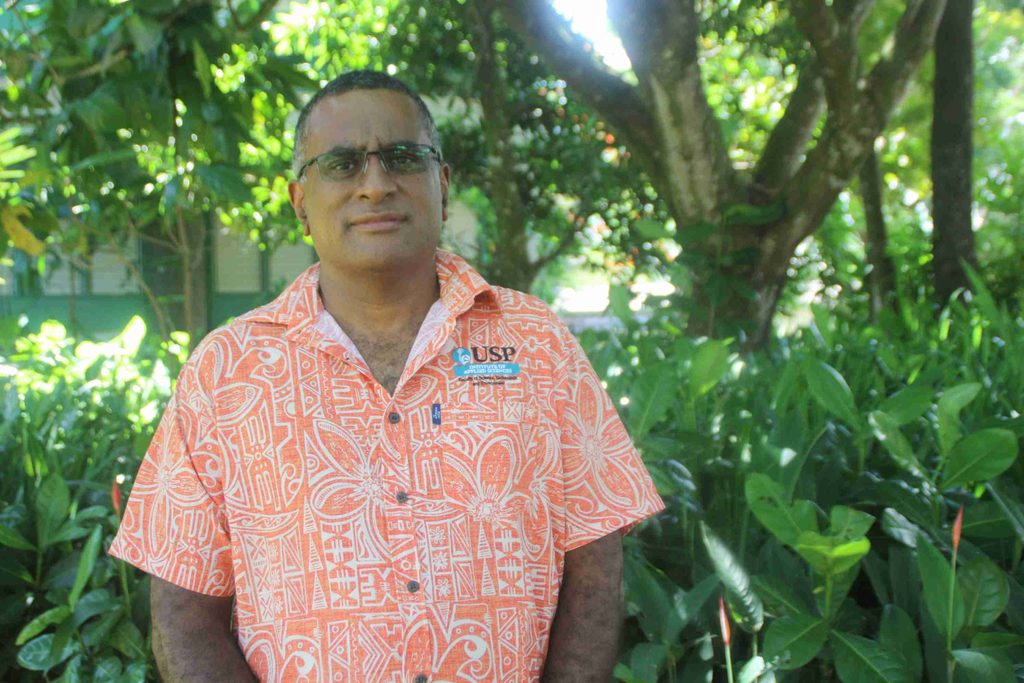
UNIVERSITY of the South Pacific’s Centre of Sustainable Futures’ (CSF) project Halo lead Dr Isoa Korovulavula has been appointed to two pivotal roles in regional and national governance.
He has been chosen as the official representative of the Academic Community to the National Environment Council (NEC) and also elected member of the International Union for Conservation of Nature (IUCN) Regional Oceania Council.
In his role with NEC, Dr Korovulavula has assured his commitment to leveraging USP’s research as the primary evidence base for national policy; and noted the importance of translating academic findings directly into actionable policy advice.
“Using researchers’ published work as a key part of the evidence base for the advice provided to the council demonstrates the scientific validity of the advice and, at the same time, highlights the importance of the researchers’ efforts,” Dr Korovulavula said in a statement. “My substantive work covers all the thematic areas in these NEC meetings, including biodiversity conservation, environmental management, and climate change.
“If a researcher has findings on the impact of a specific policy, this data can be presented to the council as critical evidence for their decision-making. Moreover, one way to champion the specific needs and concerns of researchers and students is by ensuring their input is a regular part of the advisory process.”
He said with the appointment, he planned to formalise the feedback loop between NEC and universities. “I can achieve this by establishing a clear communication channel, formalising institutional partnerships, and creating a variety engagement mechanism.
“I have been involved for many years in transdisciplinary research, I see this will help me in capturing the gist of the various academic disciplines technical information that is relevant policy discussion in NEC.”
As a member of the IUCN council, which provides strategic direction for global conservation, Dr Korovulavula said the focus would be on ensuring the unique challenges of the Pacific islands were prioritised internationally. “My top priorities for the Oceania region include strengthening local conservation capacity, promoting sustainable marine resource management, and deploying nature-based solutions for climate resilience.
“These priorities address the specific needs of Pacific Island countries by supporting community-based and indigenous-led conservation, managing threats like overfishing, and building resilience against climate change impacts like rising sea levels and extreme weather events. This include strengthening local conservation capacity, promoting sustainable marine resource management, and deploying nature-based solutions for climate resilience.”
Dr Korovulavula said he intended to enhance NGO capacity across the region by focusing on applied research findings, stakeholder networking, and addressing the root causes of conservation failures to develop long-term, effective solutions. He holds a PhD and master’s in science from the University of Queensland, Australia, supplementing his Bachelor of Arts from USP, and brings significant technical and leadership capacity to his new governance roles. He has held leadership roles at USP’s Institute of Applied Sciences (IAS), including acting director in 2019 and manager of the Environment Unit since 2015. His core expertise spans socio-economic assessment of biodiversity, economic valuation, community development, and community-based integrated water management, the USP stated.

