
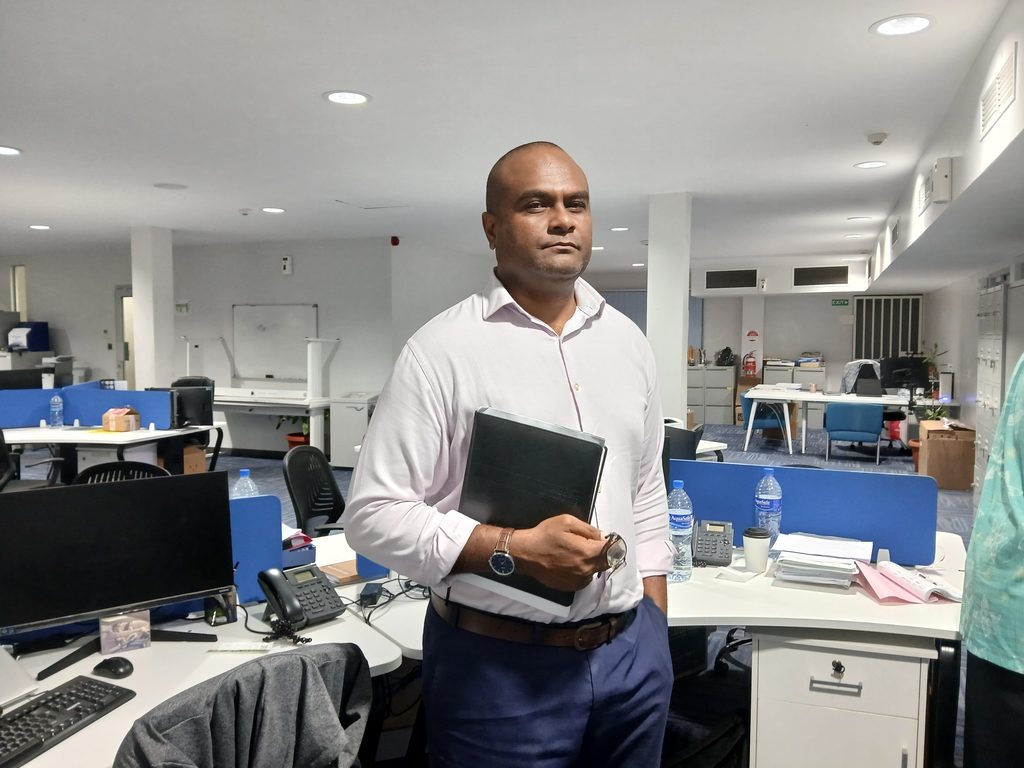
Fiji’s outsourcing industry has grown substantially over the past five years but the lack of skilled talent in the market has become “absolutely very real”.
These were the sentiments of Outsourcer Fiji executive director Josefa Wivou who said the outsourcing industry had moved “a little bit faster than we can keep hands on”.
He said recent conversations being had was outsourcing had also moved faster than tourism in a shorter span of time than tourism had done in the last 20-30 years, but skills shortage presented real challenges. “Skill shortages is a topic that I know expands a lot. Sometimes I joke around with the team that it’s based on the flip of a coin of what it means today, what it means tomorrow. When I say this, I mean this respectfully for outsourcing, knowing full well other industries and sectors are facing the absoluter same brunt of skill shortages,” Mr Wivou said. While he acknowledged that skills shortage was not mutually exclusive to Fiji’s outsourcing sector, said the very nature of the job meant there was room to be flexible.
“The churn or the percentage of churn within outsourcing is completely normal when we segment it or we augment it all around globally – Philippines, India, the US, Australia and New Zealand. And for the Pacific, the challenge we have is we have a very scarce market of pool of developed skills from candidates,” he said in an interview. Sometimes what these means is if we have a 1000 staff altogether within outsourcing and we have three or four new operators that want to stand into the market next year, what then do we do about the ones that are currently in place.” He said a strategy for retention for outsourcing meant that they had to look outside of just salary, which was also happening in key source markets.
“A lot of our members and our operators now, they bring home to work and work to home, which means if you walk into some of our members and operators, you wouldn’t feel the need to rush back home. You have everything there. They’ve got a chain of food outlets, pool tables, volleyball courts, and things like that, incentives outside of your normal remuneration package, means that for our demographic in the Pacific Islands and the wider Pacific Islands, we have this attachment with looking after family, looking after home.
“This means that we offer them a fair grade. And if you look across for outsourcing, we’re above minimum wage. Incentives and benefits outside of that, we see, is one of the key things that retains them within outsourcing.” Mr Wivou said the recent announcement of the partnership between Datec Fiji and the Market Development Facility (MDF) was moving the outsourcing space forward.
“By that I mean they’ve identified the niche areas which need a little bit more attention, which is the knowledge process outsourcing (KPO) and the ITO outsourcing. These two spaces are very niche in its nature of work and the partnership means we can progress this sector or this vertical within outsourcing a little bit further than where it is today. “In many realms, it means we have the potential to train and develop talent, human capital within these spaces, which is an absolute need in the market for us right now within outsourcing.”

