
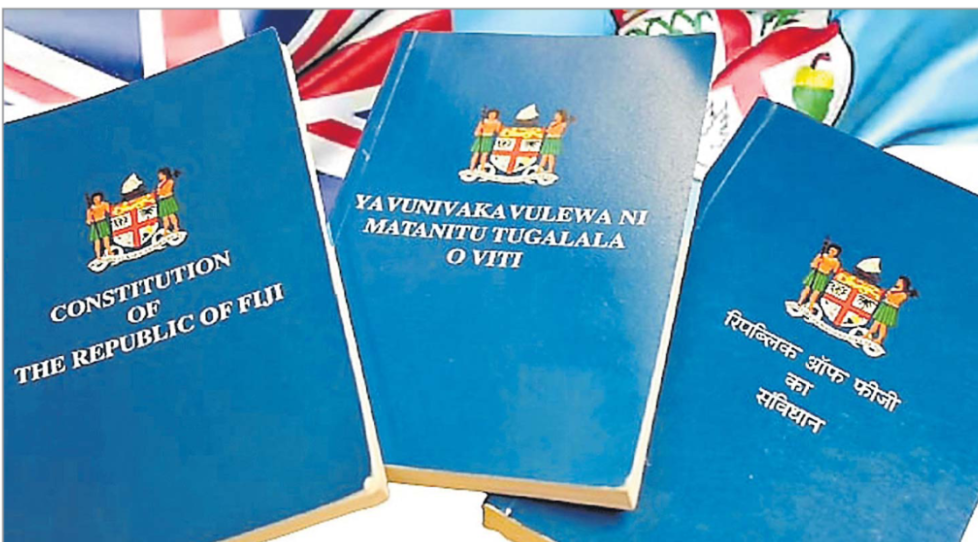
Fiji is debating political representation, but the deeper question is this: What kind of nation are we trying to build? Constitutional reform may adjust the rules of the game, but without a shared national vision, it cannot change the outcome.
A country can rewrite constitutions many times and still go nowhere if it has no agreed direction.
As Proverbs warns: “Where there is no vision, the people perish.”
Before we reshape our political system, we must first define the future we want it to serve. A nation cannot design its structures before deciding its destination.
Fiji must choose its purpose first and allow every reform to follow from that purpose.
What a national vision must actually answer
A GENUINE national vision is more than a slogan or a GDP target, it must answer three foundational questions.
1. What kind of society do we want to build?
A healthy, skilled, united, sovereign Fiji anchored by strong villages and strong cities.
2. What kind of economy will get us there?
One built on sovereignty rather than dependency – food-secure, energy-independent, financially resilient, and powered by knowledge, innovation, and local value creation.
An economy protected by strong digital systems, diversified industries, and modern climate-resilient infrastructure connecting every village, town, and island.
3. What kind of governance will sustain it?
A system led by merit-based chiefs, visionary leaders, accountable MPs, empowered villages, and robust institutions aligned with long-term development.
The National Development Plan touches on aspects of society, economy, and governance through its pillars and strategic priorities. But at the level of its vision statement, it does not fully answer these foundational questions or describe the nation Fiji seeks to become. Its headline commitments focus on unity and a high-income target, but do not articulate a future blueprint grounded in sovereignty, resilience, or village-centred development. In that sense, the NDP offers broad objectives, but not a clear, destination-defining national vision.
Why the current “vision” fails: A high-income target is not a vision
The NDP vision states: “Empowering the people of Fiji through unity.”
But this is not a national vision, it is a slogan. It does not define the kind of society we are building, the type of economy that will sustain it, or the governance required to protect it. At the level of the vision itself, it does not squarely confront Fiji’s most urgent vulnerabilities – food and fuel dependence, reliance on remittances, fragile supply chains, dependence on foreign banks, rural decline, climate exposure, and weak local industries.
A nation cannot secure its future while outsourcing food, fuel, labour, and ideas.
A sovereign Fiji cannot be built on the economic decisions of other countries.
A real vision must define a destination; this one merely expresses a sentiment. Fiji cannot build sovereignty, resilience, or long-term prosperity on a statement that contains no clear economic content, no strategic clarity, and no pathway for national transformation.
This weakness is sharpened by the NDP’s second ambition – that Fiji should become “high-income by 2050.” But this is not a vision either; it is a World Bank income category. It tells us nothing about who will prosper, how villages will revive, how Fiji will feed itself, how youth will find opportunity, or how the nation will withstand global shocks.
A number – no matter how inspiringly packaged – cannot define a nation’s destiny.
A real vision must lead into a mission that clarifies national purpose, a strategy that charts the pathway, a structure that enables delivery, and a stability framework that protects the long-term plan. Yes, the NDP lists a mission, pillars, outcomes and an implementation framework, but it fails to transform its short vision line into a coherent mission, to connect that mission to a sovereignty-building strategy, to embed structures around it, and to show how the plan will be protected across decades and political cycles. A nation cannot govern its future with a sentence that fails to guide even the first step of national design.
The illusion of high income: Rich on paper, fragile in reality
Several countries have achieved high-income status while remaining structurally fragile.
Trinidad & Tobago is classified as high-income yet struggles with over-reliance on oil and gas and under-investment in human development (World Bank 2023).
Equatorial Guinea reached high-income levels despite extreme inequality, weak institutions, and persistent poverty (CESR Report).
Oman is also high-income, but remains vulnerable to oil-price shocks, rising public debt, and limited diversification (IMF 2024).
Fiji shows similar warning signs. GDP numbers rise, yet underlying vulnerabilities persist:
-villages continue to depopulate through steady rural-to-urban migration;
-informal settlements expand;
-youth unemployment remains high;
-living costs outpace incomes;
High-income status without structural reform is not progress, it is illusion.
And illusion creates political instability. When growth figures rise, but real prosperity does not public trust collapses, interests harden, and politics becomes a scramble for short-term advantage.
The vision vacuum: Fiji’s real crisis
Fiji’s real crisis is not the electoral system, the voting formula, or the number of seats in Parliament, it is the absence of a shared national vision.
For decades, Fiji has fought over constitutions, electoral rules, and representation, yet many structural conditions have barely improved. Agriculture declined. Food and fuel dependence deepened. Villages continue to depopulate through steady rural-to-urban migration. Youth drifted overseas. Informal settlements expanded.
Without vision, politics replaces purpose:
-Parliament becomes a marketplace of micro-interests;
-MPs act as brokers instead of nation-builders;
-Ministries operate in silos;
-Chiefs inherit titles instead of earning them;
-Policies react to crises rather than shape the future;
-Elections recycle old promises with new faces;
Representation without vision does not empower, it fragments.
Fiji is not stuck because it lacks talent.
Fiji is stuck because it lacks a north star.
Vision is the compass.
Representation is the vehicle.
And no vehicle, no matter how often redesigned, can move a nation forward without a compass.
A clear national direction
A true vision provides what politics alone cannot: A unifying national agenda that transcends ethnicity, party lines, personalities, and vote-bank arithmetic;
It defines the destination before we debate the path;
A real national vision must be:
-long-term;
-non-partisan;
-practical and measurable;
-sovereignty-building;
-village-centred;
Only then can constitutional reform and representation serve a purpose larger than the politics that created the need for reform.
A nation that builds what it consumes
A Fiji 2.0 future is one where Fiji:
-is food-secure;
-is energy-independent;
-keeps wealth circulating locally;
-is financially resilient;
-has healthy, knowledgeable and skilled citizens;
-empowers villages as engines of enterprise;
-builds infrastructure that drives growth;
-is governed by accountability and service;
This is the future political reform must deliver and the vision that must guide every constitutional conversation.
A human story: The real cost of no vision
The absence of national vision is not an abstract problem. It shapes the daily lives of ordinary people:
-Food insecurity persists:
A family in Ba buys expensive imported rice because local production, milling and storage systems were never rebuilt.
-Energy dependence drains households:
A teacher in Taveuni spends a large share of her salary on fuel and electricity because Fiji still lacks a streamlined, fully operational national rollout system for rooftop solar and EV adoption at household scale.
-Wealth leaks out of communities:
A shop owner in Nausori relies on imported vegetables because surrounding villages lack the infrastructure and financing to supply them.
-Families remain financially fragile:
A security guard in Lautoka lives loan-to-loan because high food and fuel costs leave no room to save.
-Skills don’t translate into opportunity:
A young woman in Navua with an IT diploma ends up in casual labour because no national strategy links skills to industries or enterprise.
-Villages cannot sustain their youth:
A village in Serua loses its young people to Suva and Australia because no village enterprise model exists to keep income and talent local.
-Infrastructure slows growth:
Farmers in Bua lose produce every rainy season because feeder roads are neglected and investment follows politics, not need.
-Governance lacks accountability:
A community in Ra waits years for a basic water project because appointments are based on loyalty, not competence.
These are not individual failures, they are symptoms of a nation without shared direction.
How Fiji can avoid paralysis and build sovereignty
Fiji can escape paralysis only by restoring the correct order of national design:
Vision › Mission › Strategy › Structure › Stability
• Vision defines the destination
• Mission clarifies national purpose
• Strategy charts the path
• Structure enables delivery
• Stability protects the plan
Vision must come first, built on food and energy security, financial independence, health and wellbeing, knowledge and innovation, and security from the individual to the Exclusive Economic Zone (EEZ). It must drive modern infrastructure development, good governance, village revival, leadership reform, and the emergence of a resilient, knowledge-powered economy.
When this sequence is respected, representation strengthens unity instead of undermining it.
Two futures for Fiji
Fiji now stands between two futures.
Future A — Representation without vision
› Fragmented Parliament
› Vote-bank politics
› Weak villages
› Rising imports
› Youth exodus
› National vulnerability
Future B — Vision First,
Representation Aligned
› Food and energy independence
› Strong villages and strong cities
› Youth anchored in opportunity
› A sovereign, resilient economy
A unified national direction
Fiji must choose.
A Fiji 2.0 Vision proposition
Fiji 2.0 envisions a sovereign nation that is food-secure, energy-independent, financially resilient, healthy, skilled, and protected – where knowledge drives opportunity, governance is accountable, infrastructure is modern, villages thrive, youth prosper, and value is created locally rather than imported, borrowed, or extracted.
This is the compass Fiji must adopt before reshaping its political system.
Compare this with what we currently have:
“Empowering the people of Fiji through unity.”
One is a destination.
The other is a sentiment.
One tells us where we are going.
The other tells us how we hope to feel.
A real vision shows the way forward.
A slogan simply signals good intentions.
The way forward – vision first, reform second
Fiji has reached a critical juncture, not because our constitutional arrangements are broken, but because our national direction is unclear. We are rearranging the architecture of government while ignoring the foundation on which it must stand.
A nation without vision becomes a nation of arguments.
A nation with vision becomes a nation of purpose.
As Proverbs reminds us: “Where there is no vision, the people perish.”
Without a shared destination, every reform becomes a contest; every issue becomes ethnic; every debate becomes personal; every crisis becomes inevitable.
Fiji does not need more, less, or specially reserved political representation.
It needs a unifying vision because without vision, representation has nothing to serve.
A Fiji 2.0 Vision offers that compass — sovereign, resilient, village-powered, and future-ready because no reform can succeed without vision.
Vision decides the destination. Reform organises the journey.
And if Fiji chooses the right vision, the journey ahead can finally lead us to the nation we were always meant to become, the jewel of the Pacific, the way the world should be.

