
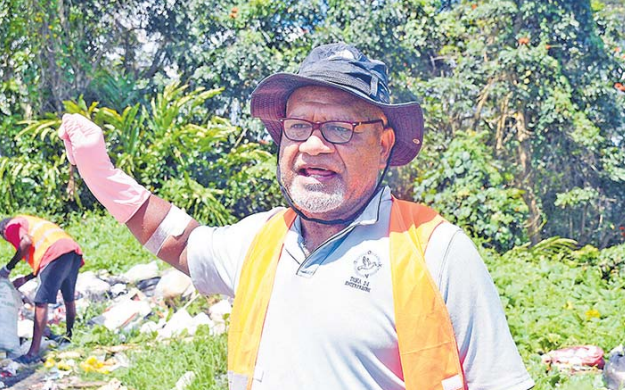
‘Fiji, The Way the World Should Be,’ is a promise sold to the world. Yet this mantra rings hollow against the chorus of garbage bags in the ditches of our highways, and the silent, stubborn plastic on mangrove roots. There exists a profound, painful dissonance between the paradise we market and the neglect we tolerate. It is a fracture in our national character, and it is here, in this gap between ideal and reality, that we find a fable for our times —the story of Laite.
Laite, a girl from a village where the postcard image met the sobering tide. Her toolkit was simple: a sack and a stubborn, unwavering will. Each dawn, she walked the shoreline as an archaeologist of our apathy. She retrieved what the sea offered back — a damning catalogue of our consumption.
Foreign chip bags spoke of global currents and local juice bottles testified to carelessness closer to home.
Her genius lay not just in collection, but in confrontation. When she found a popular beach ravaged by a party’s aftermath—a confetti of broken bottles and styrofoam—she did not just clean. As the sun rose, she lined the retrieved debris along the path to the main road. It was a curated exhibit of excess.
Later, she would hang filled sacks in her village rara, creating stark sculptures of collective failure. People paused. They saw a wrapper they might have dropped, a bottle they’d left behind.
Laite ensured the invisible became visible, mending the broken connection between individual action and communal consequence.
She forced a mirror upon her community, and in that reflection, shame transformed into responsibility.
Laite has since moved on, but her final lesson remained. She left her sack hanging from a Baka tree.
Inside were not scraps of waste, but seedlings of native Dilo and Vesi. Her note read: “True beauty is not a slogan. It is a practice. Plant. Protect. Pick up.”
Yet, on our highways and in our settlements, the practice is devastatingly absent. The rubbish bags tossed in the dark of night pose a corrosive question that strikes at the heart of our society: What has happened to our integrity? Integrity is the act of doing right when no one is watching. It is the internal compass that builds self-respect and foster trust. Its erosion is not merely an aesthetic crisis; it is a spiritual one. We cannot credibly claim to be “the way the world should be” while quietly accepting the way we too often are — a society where convenience trumps care, and where “somebody else’s problem” becomes everyone’s eyesore.
The scale of this challenge reveals that our current approach is fragmented and insufficient. Ad-hoc clean-up campaigns, while well-intentioned, are mere bandaids.
Blaming a single ministry or expecting volunteers to shoulder the burden of a national mindset is a failure of collective imagination. The solution demands the entire “village of Fiji” to awaken and act in concert. This is where our fable must collide with decisive, systemic action.
We need a National Covenant for Cleanliness, a pact that transcends politics and profit.
Imagine the President of our nation convening not just government, but the true pillars of our economy: the Heads of multinationals, the diplomatic corp, heads of local conglomerates like Tappoo and Jack’s, the leaders of tourism associations, and the principals of our major schools.
The agenda at State House would be a frank, Fijian talanoa about legacy.
Corporate Social Responsibility must be radically redefined. It cannot be a sidebar of charity but must become an operational pillar.
Companies like Grace Road, with its vast network, could formally “adopt” the villages and waterways within a radius of every outlet, providing not just bins, but ensuring their regular collection and managing the waste stream.
Tourism operators, whose livelihood depends on the pristine image, must ensure their environmental stewardship extends beyond their resort fences, partnering with adjacent communities for coastal and riverine upkeep.
But this covenant must go deeper. It must involve our education system integrating environmental integrity into its core curriculum. It should inspire a national “Adopt-a-Highway Km” program, not just for businesses, but for churches, sports clubs, and youth groups. Municipal councils and turaganikoro must be empowered and funded to enforce anti-littering bylaws with consistency, moving from warning to meaningful deterrence.
This is not merely about cleaning ditches. It is about restoring pride and rebuilding integrity.
It is the hard, daily work of aligning our outsold image with our lived reality. The difficulty lies in the shift required — from passive blame to active ownership, from sporadic effort to ingrained habit.
Laite’s sack is a metaphor now passed to us all. The seedlings inside represent our clear choice: to let the roots of neglect deepen, or to plant something new, something enduring.
The stitch that will mend Fiji is not made of thread, but of collective will — a will manifested in boardroom pledges, in classroom lessons, in parental guidance, and in the simple, courageous act of every citizen taking their own piece of rubbish home.
The world is watching, judging the gap between our slogan and our streets. But more importantly, our children are watching. They see what we deem acceptable. They inherit the landscape we leave.
What story will our actions write for them?
The story of Laite tells us it is not too late to change the ending, but the jury is out, Fiji.
RO NAULU MATAITINI is a concerned citizen flabbergasted by our innate inability to dispose of rubbish properly. The views expressed herein are his and not of this newspaper.

