
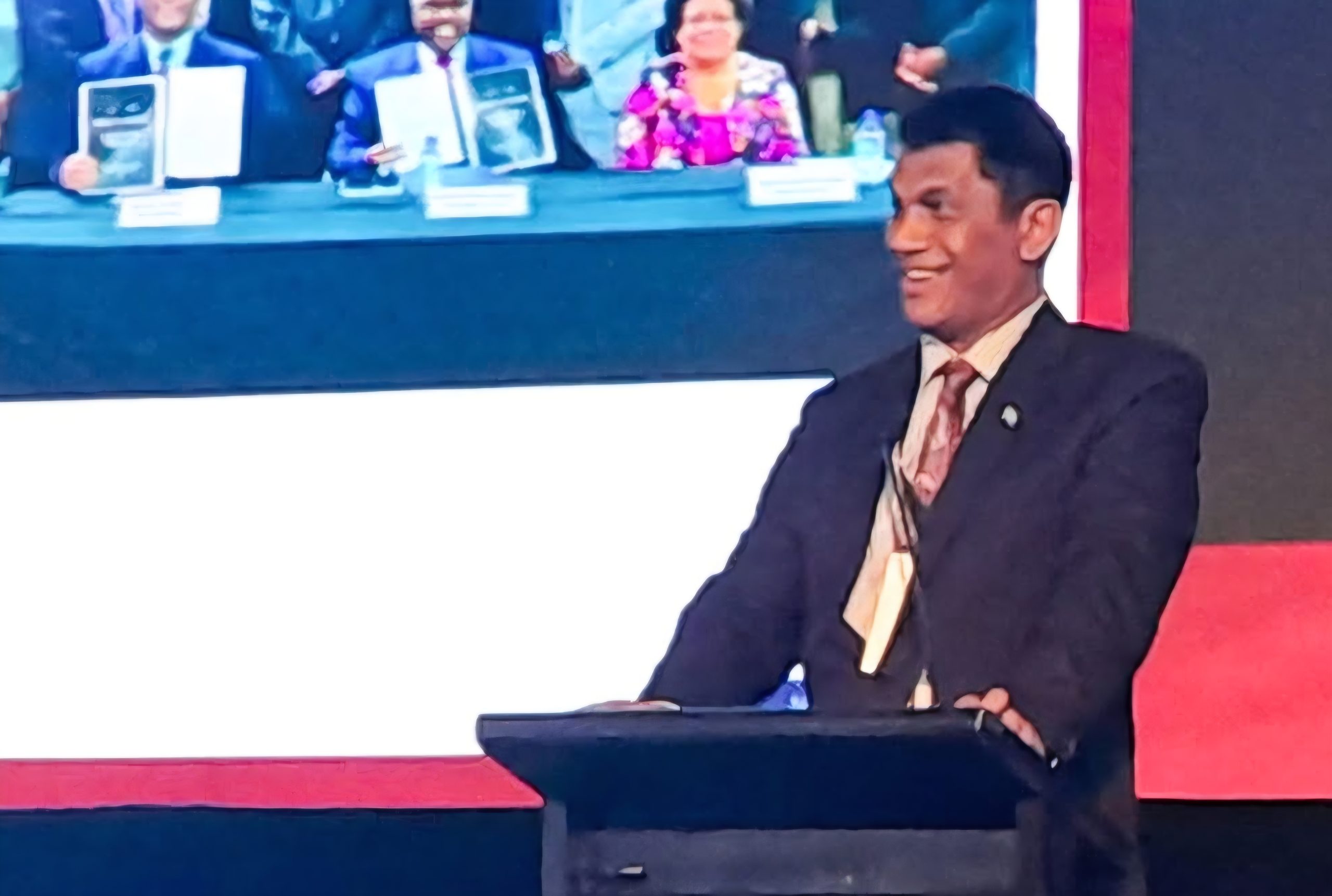
Minister for Education Aseri Radroro has called for a national, evidence-based discussion on corporal punishment (CP), telling delegates at the 27th Attorney-General’s Conference that Fiji must confront a complex mix of legal, cultural and behavioural challenges.
Delivering his keynote address on “Corporal Punishment and Policy Balance: The Role of Law, Culture & Safeguards”, Radroro acknowledged that public pressure to reinstate CP was growing, but said the nation must take into account both data and legal realities.
“While the public calls for its return, the data reminds us of the risks involved,” he said, noting that CP cases recorded by the Ministry peaked at 84 in 2022 and dropped to seven in 2020.
He confirmed that Cabinet had expressed interest in discussing CP and that he would table a paper on possible amendments under the Education Bill.
Radroro highlighted the difficulties teachers face under current law.
“When a teacher is charged, they face immediate suspension or termination. With the repeal of the Juveniles Act defence, any teacher administering CP would face assault charges without a statutory defence.”
He said he empathised with teachers who felt unsupported, noting that during visits to more than 600 schools, he heard frequent accounts of teachers being sworn at, ridiculed, physically assaulted and even threatened.
“I understand why some are calling for CP, and I sympathise with their concerns,” he said. “But the Ministry must be consistent with the law.”
Radroro stressed that the Ministry’s long-term approach is anchored in positive, non-punitive discipline.
He highlighted research showing CP can undermine academic performance and increase absenteeism, saying the focus must shift to counselling, restorative justice and behaviour-support systems.
The Ministry has established four divisional counselling hubs, alongside reintroduced school chaplains. Between January and October 2025, counselling hubs recorded 11 CP-related cases, mostly involving students being hit with hands or canes.
Radroro pointed to wider social issues—drug use in schools, rising youth HIV cases and poor parenting—as drivers of behavioural problems.
“If children are disciplined at home, we would not be facing these challenges in the classroom.”
He urged stakeholders to provide submissions to the upcoming public consultations on the draft Education Bill.
“Fiji stands at a critical crossroad,” he said. “We must honour our traditions while protecting our children and supporting our teachers.”

