
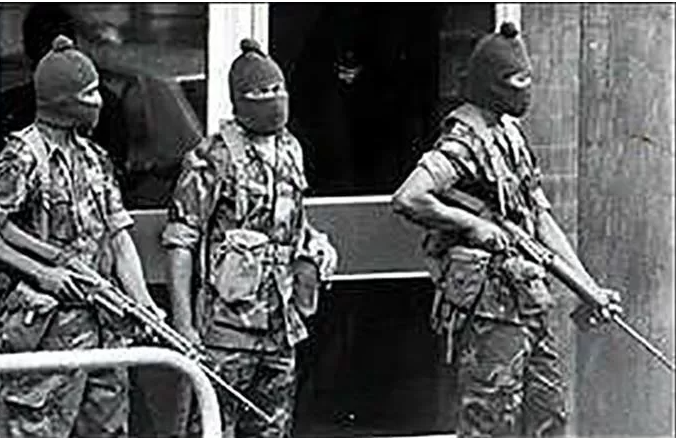
THE Republic of Fiji Military Forces has acknowledged that the Indo-Fijian community experienced substantial and lasting consequences arising from the events of 1987 and 2000, and it has also accepted that any credible reconciliation process must engage these realities directly.
Minister for Defence and Veteran Affairs Pio Tikoduadua said this while telling Parliament the RFMF had accepted that its actions in past decades contributed to instability.
“It also understands that approaching the Indo-Fijian community requires a method that is practical, respectful, and sustained,” he said.
“The RFMF is aware that the circumstances surrounding 1987 and 2000 were complex.
“They involved political forces, social tensions, historical grievances, and institutional decisions that intersected in ways that cannot be reduced to a single narrative.
“This complexity means that no single gesture — whether symbolic or administrative — can address the full range of experiences carried by Indo-Fijian families.”
He said work was still in its early stages and the RFMF was collecting information, developing a clearer picture of what occurred, and identifying the methods through which it could approach the Indo-Fijian community in a way that was proportionate to the scale of the harm experienced.
“The institution’s aim is to establish a path that recognises past actions with honesty and that provides families with an opportunity to receive acknowledgment in a manner that supports long-term national cohesion.”
Mr Tikoduadua also told Parliament that fairness to all communities would remain a key pillar of the Republic of Fiji Military Forces’ ongoing reconciliation efforts.
Speaking in Parliament yesterday while delivering his ministerial statement, he said Fiji’s past conflicts had not affected communities in the same way, and this reality must guide how they approach reconciliation.
“The effects of Fiji’s previous conflicts were not uniform,” Mr Tikoduadua said.
“Different groups experienced different forms of harm. The Indo-Fijian community experienced long-term consequences following the events of 1987.
“iTaukei communities and others faced their own pressures during later periods.
“The Government’s role is to ensure that no community is overlooked in the RFMF’s internal reconciliation process, that engagements are grounded in accuracy, and that any steps taken towards acknowledgment or forgiveness are guided by fairness rather than selective emphasis.
He said many Indo-Fijian families faced prolonged uncertainty about their safety, their livelihoods, and their long-term place in the country.
“Some relocated overseas. Others remained but carried an ongoing sense of insecurity that influenced family decisions, employment choices, and community relationships.”
He said the RFMF recognised that these impacts did not conclude with the passing of time.
“They form part of the lived history of the Indo-Fijian community and remain embedded in Fiji’s collective memory.”
Mr Tikoduadua said the institution had accepted that any credible reconciliation process must engage these realities directly.

