
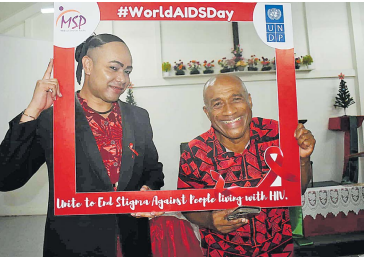
FIJI is losing the battle against misinformation on HIV, according to the Northern Divisional Reproductive Health Clinic, senior medical officer-in-charge Dr Waisale Turuva.
Dr Turuva said there was widespread misunderstanding about HIV and AIDS and that confusion continued to fuel stigma, late testing, and preventable deaths.
“Ask people what HIV is, and many will automatically say, ‘it’s AIDS’. That is wrong,” he said.
“We need to correct that misunderstanding if we want to win the fight.”
Speaking at a vigil commemorating World AIDs Day at the Salvation Army in Labasa, Dr Turuva said, HIV was a virus, and a person only knew they were infected when they got tested.
“HIV is diagnosed through a blood test. If the test finds the virus in your blood, you are HIV-positive.”
He said HIV is not AIDS, but without treatment, a person may develop it, the final and most dangerous stage.
“When HIV enters your body, you become infected. The virus begins attacking the soldiers of your body,” Dr Turuva said, adding that over time, usually about 10 to 15 years without treatment, those soldiers grew weak.
“As the immune system collapses, the body begins showing warning signs.
“You will start losing weight and hair, and you will experience frequent coughs and recurring boils.
“Your body is basically telling you something is very wrong, that your immune system is very low, and anything can make you sick.”
He said many of the frightening images seen online, such as skeletal bodies and severe infections, were actually AIDS, not HIV.
“People die because of AIDS, not HIV.
“By then, the immune system is so low that anything can kill them, even a boil, a simple cough, or a fever.”
He said to break the stigma against the disease, there was a need to start with the basics.
Advocate warns of unknown cases
THE greatest danger in Fiji’s HIV epidemic is not the cases we know, but those that remain hidden, a leading HIV advocate has warned.
Temo Sasau urged people to get tested and know their status, saying many are living with HIV without realising it.
“Do not focus only on the known cases,” Mr Sasau said.
“Be worried about those who have not come forward and do not know their status. Fifty per cent of people who got tested never returned to get their results.”
Speaking from experience, he said stigma and fear often prevented people from seeking help.
“I stand here not just as someone living with HIV, but as proof that we can overcome the barriers stigma creates.
“Those who once discriminated against me have learned, they’ve changed, and they’ve seen that HIV does not define a person, our courage and unity do.”
He urged anyone who tests positive not to panic.
“This is not the end of the world. It’s a new beginning.
“Early detection is a must, know your status. The sooner you know, the better equipped you are to live a full, healthy life.”
Mr Sasau said testing and medications were free.
“The unknown cases are the ones that can spread HIV. Don’t wait. Know your status. Protect yourself and your community.”

