
FOLLOWING the landmark advice of the Supreme Court of Fiji in August, that clears the pathway for the 2013 Constitution’s amendment and the revelations by Prime Minister Sitiveni Rabuka and Acting Attorney General Siromi Turaga that work on the relevant pieces of legislation is nearing completion, a pressing question lingers: how will the review process be shielded from political manipulation and ensure it truly reflects the will of the people.
This was among the many issues of concern raised at a recent panel discussion, ‘Fiji’s Constitution Review – Building Trust and Legitimacy’, organised by Dialogue Fiji.
Contributing to the discussions, Executive Director of Dialogue Fiji Nilesh Lal, presented a sobering analysis, identifying two fundamental vulnerabilities within the Fijian system.
“Well, I think everything is more susceptible to political capture in Fiji due to two reasons,” Mr Lal stated.
“The first one, of course, is that we have a very unaccountable political culture. And then the second reason is the fact that the 2013 Constitution accords too much power in the executive arm of the state.”
He argued that this concentration of power, “essentially empowered the executive to sort of subdue all other institutions in the state apparatus.”
When combined with a culture of unaccountability, he warned, it created a “particularly problematic mix” that threatened the integrity of any constitutional review.
Legislative wall
While acknowledging that no safeguard could be “foolproof,” Mr Lal proposed that a robust, detailed piece of legislation could nevertheless, serve as a primary defence.
This law would explicitly dictate the formation, powers, and resources of the entity conducting the review – likely a Constitution Review Committee.
“And then there has to be a very clear process that has to be stipulated in that act,” he emphasised.
“So I think that can possibly become a safeguard, although, as I mentioned, it cannot be a 100 per cent safeguard.”
Transparency
Beyond legislation, Mr Lal stressed that stringent adherence to the principle of transparency was non-negotiable.
He pointed to the 2012 Ghai Commission as a positive historical example.
That commission, appointed during the Bainimarama interim government to formulate a new constitution, publicly released all of the more than 7000 submissions it received for scrutiny.
In a pointed contrast, he referenced the recent work of the Electoral Law Reform Commission, chaired by Justice Fatiaki, which he noted saw “very little participation.”
“But one of the things that I was hoping that the commission would be doing was that they were going to be publishing all the submissions that were received, but that has not happened,” Mr Lal said.
He illustrated the problem stating: “When the commission then says, okay, a vast majority of people wanted a constituency-based system, there’s nothing at all there for an ordinary Fijian to go and verify whether this was actually true. So if there was a central depository, then, you know, we could verify that claim.”
The case for a constituent assembly
Looking beyond the current constitutional framework, Mr Lal advocated for the establishment of a constituent assembly. This body, which could be instituted by the same Constitution Review Act, would operate as an additional deliberative layer.
“Such a body could be instituted by the Constitution Review Act, and it can actually consider, it can deliberate on the submission that is made by the Constitution Review Commission before it passes on to the parliamentary committee to work on,” he explained.
This, he argued, would provide a broader and more inclusive forum for examining proposals, further diluting the potential for narrow political control.
The fundamental point essentially is that building trust and legitimacy in Fiji’s constitutional review would require more than just good intentions. It would also demands legally enshrined processes, radical transparency, and innovative structures which placed the people’s voice at the centre of the nation’s most important exercise.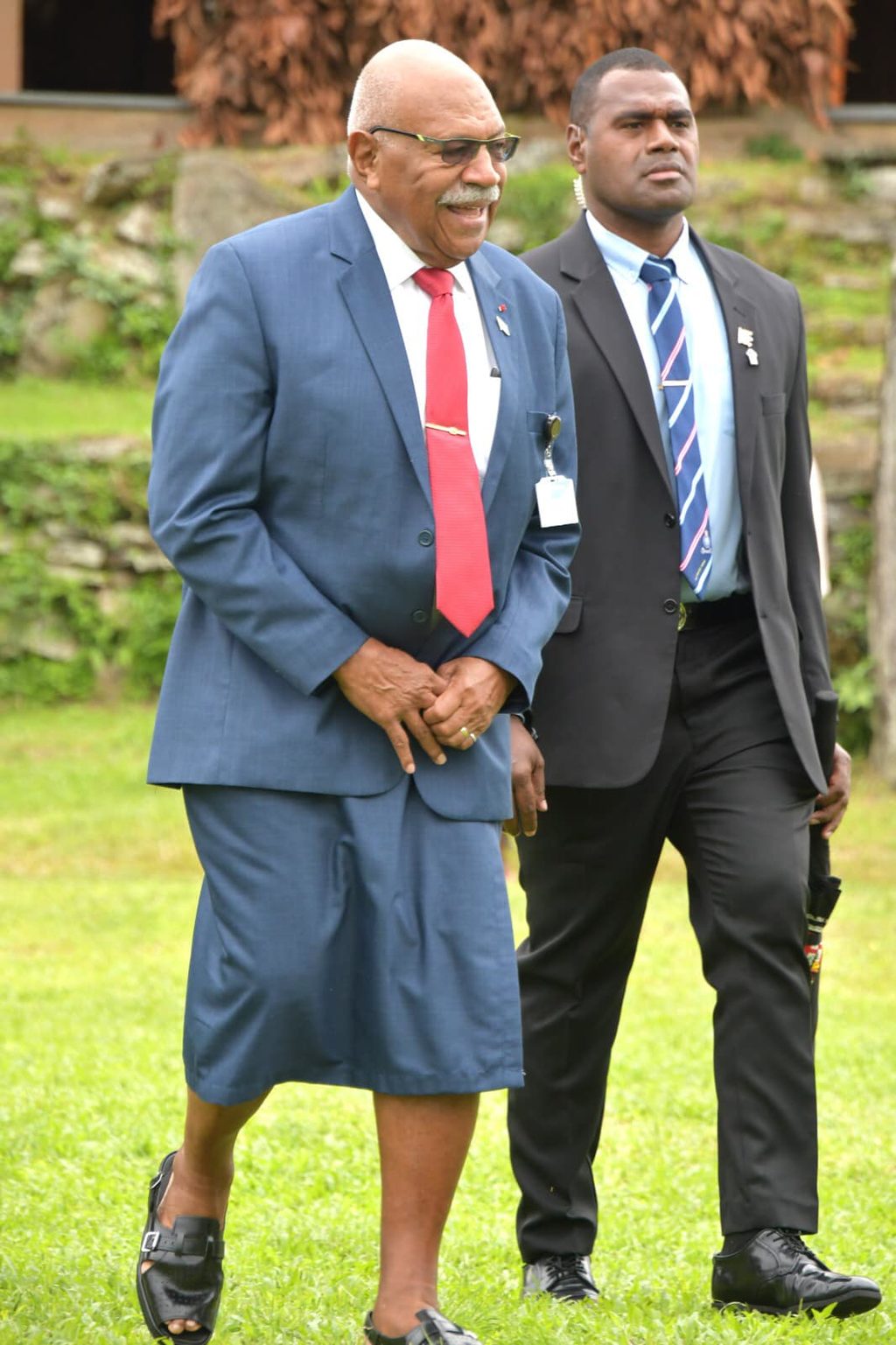
Prime Minister Sitiveni Rabuka. Picture: FIJI GOVERNMENT
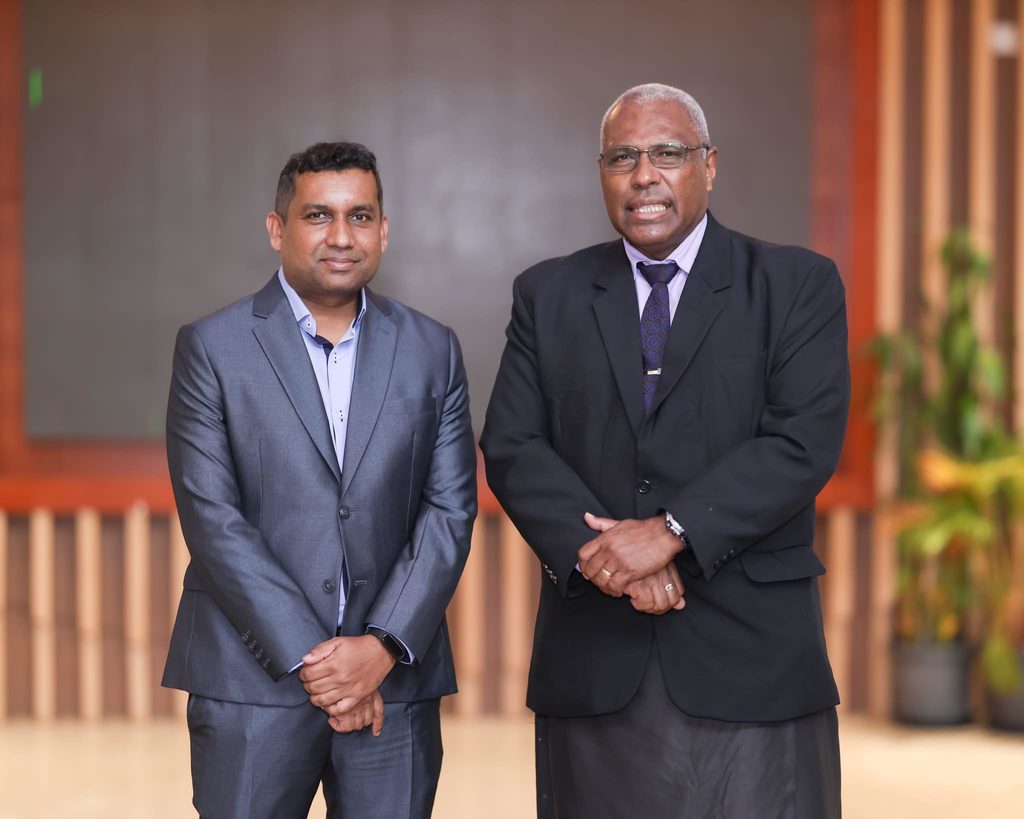
Nilesh Lal of Dialogue Fiji and Minister for Justice Siromi Turaga. Picture: DIALOGUE FIJI

