
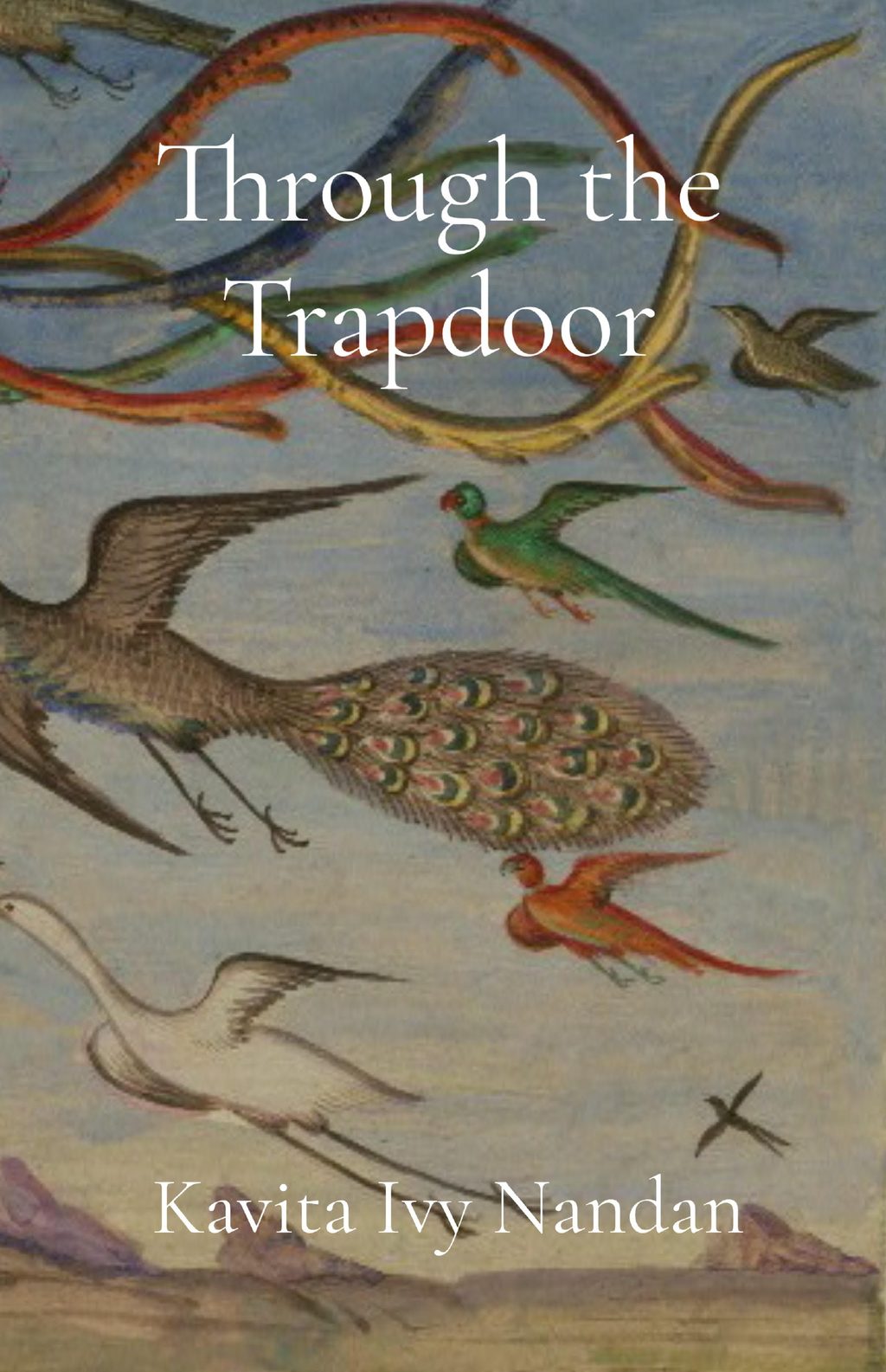
We have been telling stories from time immemorial. What do we do when we gather for a reunion, family or with friends? We catch up on what has been happening in our lives. There is much joy in narrating recent events since the time you last met. But if you had to change these events into writing, how would you go about it? Would it be as compelling as the oral accounts? When someone has decided to go beyond the conventions of speaking to writing, this implies the person is ready to accept discussions of their work in the public domain. One such writer is Kavita Ivy Nandan who is definitely not new to writing having published previously. Her recent book Through the Trapdoor is a powerful creative work knit together through various journeys taken by characters we have encountered in some way.
NANDAN, as an author excels on all accounts — keeping the readers engaged, telling stories by carefully crafting characters, and bringing real life themes to the forefront without hesitating to write freely. The book is a collection of 11 valuable short stories published in Australia by Papel Publishing. In A for an Apple, we are acquainted with the relationship between siblings with different lifestyles to reflect on. A childhood recollection of living in Fiji to new cultural encounters of moving and adapting to the Australian lifestyle are captured in this story. One that leaves a footprint is showing up unannounced. In Fiji, it is quite normal to turn up any day to a relative or at friends’ place, but this is not the norm in other countries. It is courtesy, being polite to provide ample notice for the host to be prepared for the visit. The author has done justice by describing inner thoughts of the characters in working through changes in bonds due to migration.
For anyone interested in exploring feminism by a South Pacific-Australian author’s outlook, I recommend reading The Magic Slate. This short story binds the mother-daughter relationship from two different perspectives, but holds the reader to how knowing our origins play a role in our upbringing. Fiji’s history paves the way as the centre and highlights struggles of women during the indenture period. How were they treated when they worked on the sugarcane farms? What was life like for these women, who had been brought from their homeland to another home? Kavita’s skilful narration leaves one to ponder how our ancestors’ survived ordeals and if what we had been told would be the full truth or washed away through generational memories.
The Orchid Lovers has underlining themes such as greed, loneliness, mistrust, along with hobbies that can generate income. The narrators’ cousin is the main character in this story, but her involvement with the neighbour Mr Singh adds to the mystery created by the writer. One aspect of this story is the description Nandan provides not only to the characters but the surroundings, a chicken disturbing pot plants to every detail that portrays vivid images of the scenes. With The Family Circle, the readers get to experience what family reunions after every 10 years can entail. It’s interesting how real the story has been illustrated through conflicts within conflicts. The phrase “we should not wash dirty linen in public” is applicable in this context although one is ought to ask what the boundaries are if the public is actually family. The twist and turns make the story come alive with surreal exchanges and drama between family members.
We often have attachment to different things, people or places for reasons best known to us. Similarly, Pili Kothi – The Yellow Bungalow conveys the sentimental values and feelings for a house that has been in the family for generations, but buried within the walls is an unsolved mystery. The girmit era in Fiji is pivotal in the country’s history. We have grown up listening to our grandparents narrate the hardships faced by the first generation of girmitiyas. The Red Sari puts these adversities in the limelight when two friends make the journey to an unknown land, Phiji. Their experiences echo the stories passed down through generations in the Indo-Fijian community. Were they escaping family conflicts in India to travel to a foreign land for a better life? Did they have regrets after moving? The writer leaves you thinking if there was a gain or a loss through this story.
Before I proceed with the book, I must add that being a linguist, I am always interested in how language is used in various contexts. Swami Vivekananda had pointed out that one can write volumes, but not be understood by the audience, yet if plain language is used, it conveys themes concisely to the readers. Kavita Nandan needs to be commended for employing a language that is simple yet has a lasting impact on the reader. Her writing style has avoided empty rhetorics and complex ways of getting messages across. Emerging writers can benefit from Through the Trapdoor as they pursue the writing path. We need more writers to produce books to build and maintain an educated society. Without reading, we are a lost cause as Subramani echoes in Moveable Magic: Re-making the World (2025) “But we don’t have to burn books, or assassinate writers, to destroy book culture; people can just stop reading books of their own accord, and fill up the world with non-readers, non-learners and non-knowers.”
Can we overcome past traumas? Are we able to conceal these heinous memories from our lives? And most importantly can we forget them? In Hot Water tries to link Fiji’s 1987 coup to what occurred in Maya’s life. A hot water bottle is used as a metaphor in the main character’s life, but is it an attachment or a way to heal? The writer’s art of gripping the reader’s attention makes this a unique chapter of the book with finer details depicted eloquently. Nandan knows how to bring emotions into writing while allowing the themes to flow through such is the story The Funeral Director. If you have lost someone you can easily relate to the aftermath of the departed. Reading this chapter will make it clear that everything is transactional. Even sensitive matters have little place in the business world because the art of making money has no boundaries. Who needs to look better at a funeral, is that even a thing you ask? The funeral company, the grieving family, or the departed? Who keeps track of reputations on such occasions?
After the loss of a loved one, regardless of the notion that they were quite distant to you, some of the first thoughts that come into our mind are the memories we had with them. A few tears later, we start to reflect on how they came into our lives, we think of their backgrounds and find ways to take some lessons from their lives. In The Valentine’s Card, we find ourselves making sense of the life of a relative. The story of the narrator’s grandmother’s sister is what warrants how we value others in our lives. Not an unusual thought, but as the story depicts we do have scenarios where we are relieved at the passing of someone, if they were in pain due to an acute illness or if they led a lonely life. The theme of migration is encountered commonly in developing countries. Jumping in Muddy Puddles is a story of a couple persuaded to pursue the path of greener pastures in Australia. It brings us closer to understanding what individuals go through in a foreign land they have to call home. Misunderstandings can easily lead to forbidden pathways that ultimately end with regrets as we learn in this convincing work of fiction.
To add a final thought to the pearls strung together in this book, the last story in this collection paints a vivid picture of a multi-cultural society. Heart of Whiteness dives into particulars of interracial relationships that is common in many countries. This story adds richness to the festive season, while keeping valuable features of Australia weaved effortlessly. In a world where writers like Salman Rushdie are attacked in broad daylight, publicly, Kavita Nandan taps into writing fearlessly as an established writer who knows how to tell compelling stories. Through the Trapdoor is available for purchase by contacting the author nandan.kavita@gmail.com.
3301521

