
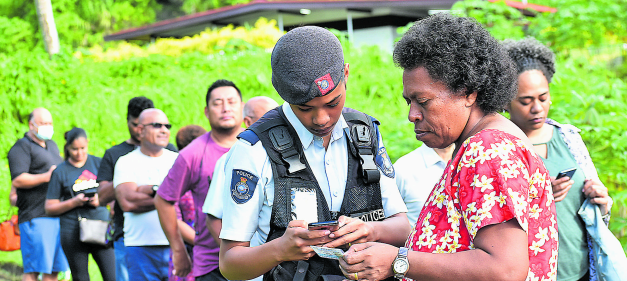
Fiji and the Coalition Government are on the cusp of a truly democratic electoral revolution, but will the politicians grasp the historical opportunity or will they serve their own political interests?
Fiji’s current unpopular electoral system was imposed on Fiji by the Bainimarama/Sayed-Khaiyum government, without any approval by any parliament (which the Big Two controlled from 2014 to 2022) or any referendum (which the Big Two could have implemented during the elections of 2014, 2018 and 2022).
In early 2025, the Fiji Law Reform Commission called for expressions of interest from consultants interested in conducting a complete review of the three sets of electoral laws and system of Fiji.
In February 2025, Daniel Fatiaki and Professor Wadan Narsey were accepted in their joint application, along with two others: Deidre Brookes (a NZ consultant working on electoral laws in the Pacific) and Seini Nabou (a political activist and former NFP candidate in the Fiji elections). The ethnic and gender balanced Electoral Review Team was chaired by former Chief Justice Daniel Fatiaki.
The review was commissioned by the Attorney-General (then Graham Leung), the Minister Responsible for Elections (Siromi Turaga), the Fiji Law Reform Commission (FLRC) and the Electoral Commission of Fiji (ECF).
After four months of intense work and Fiji wide consultation by the review team, the final report (An Electoral System For The People From The People) was delivered on July 7, 2025.
Disappointingly, more than four months on, the report has not been tabled in Parliament nor made public despite its immense significance to all political parties and potential independents, and good governance in Fiji – sorely missing currently.
Why my article?
I WRITE this article as an individual member of the review team because of the following five reasons, and one additional personal historical reason I give at the end:
1. Throughout Fiji, we pleaded with the public to honestly and openly give their views to us on what they did not like about the current electoral system and what they would prefer. The public took us at our word and honestly gave us their views, hence the title of our Report (An Electoral System For The People From The People). I therefore personally feel it is incumbent on me at least (I do not speak for the others on the team) to reciprocate and give them our findings and recommendations.
2. The costs of our review have been borne by the taxpayers of Fiji, not civil servants or politicians of the day who received our report. I owe it to the taxpayers of Fiji to ensure that our report (in which I have contributed heavily) is made available them and not kept under wrap (as some other tax-payer funded reports recently have been, causing great unpleasant controversy).
3. Five weeks ago when I inquired about the delay in releasing the report to the public, the PS Justice Selina Kuruleca replied (Oct 30, 2025) that they would facilitate our report within Ggovernment’s existing policies. That response is fine. But Ms Kuruleca also stated that “the report and all documents have been shared to the (three) Deputy Prime Ministers a few months ago as well for their comments and socialising to their own political parties, (my emphasis) whilst we await the legal response from OSG”. This latter comment indicates that the political parties who are not in parliament currently (for instance Unity Party and Fiji Labour Party) and potential independents are not being treated fairly as the parties already in Cabinet.
4. A few days ago a Fiji Parliament Standing Committee on the 2022 General Elections Joint Report by the Electoral Commission and the Supervisor of Elections proposed the introduction of a gender quota for political party candidates. Surely this Parliamentary Sub-committee should have been made aware of the far more powerful and effective gender recommendations of our report (at least 25 reserved seats for women)?
5. When our final report was handed in, the Chair and two members of the review team thought that our recommendations could be easily implemented in the time frame to the next elections, which could be as late as February 2027 i.e. 1 year and 8 months from 7 July 2025 when the report was handed in. Four of these months have now been wasted, but one year and four months still remain. I believe that the Fiji voting public can still be easily educated about our far simpler electoral system if the next elections were conducted under our new recommended system (which I reveal in this article).
My sixth and personal reason I give at the end of the article.
I first explain below the provenance of our report and recommendations and why it should be made public.
The knowledgeable Fiji Law Reform Commission (FLRC)
It is to the great credit of the FLRC that the terms of reference (TORs they set for us clearly indicated they were aware of the current weaknesses which must be addressed to have an Electoral System more suitable for Fiji’s current and future needs. According to the TORs, our report had to:
i. uphold the principles of democracy and good governance, equality, inclusion, and fairness;
ii. promote the representation of women by the inclusion of Special Measures; which comply with Fiji’s obligations under international law, including CEDAW
iii. strengthen the accountability of elected representatives to voters;
iv. review the restrictions placed on civil society actors review the powers of the Supervisor of Elections, electoral offences and penalties.
v. carry out community-wide consultations.
With the excellent assistance of FLRC staff (Leighton Fatiaki and Leah Duru) and two staff from the Fiji Elections Office (Anaseini Senimoli and Mesake Dawai), the Review Team went all over Fiji, twice, seeking the views of the people.
What the people told us
Throughout the country there were numerous complaints about the existing one constituency electoral system with its “sudoku” style ballot paper with just hundreds of numbers, not names or photos or party symbols. The people also told us what they wanted from their MPs and Parliament. These views are fully recorded in the annexes to our final report.
The salient criticisms were:
1) they did not know who was their local area MP who they could go to with their problems;
2) effectively no sitting MP could be rejected at the next election for not serving their “constituency”;
3) the “Big Man” effect allowed MPs into parliament with minimal votes while far more popular candidates could not enter parliament because of the 5 per cent threshold;
4) local candidates could not get enough votes because they were effectively competing with every other candidate throughout Fiji (thank you Sukha Singh for this acute observation);
5) effectively thousands of voters were disenfranchised by the 5 per cent threshold, representing more than 4 MPs in Parliament (the current PM was elected by a margin of 1);
6) they was a general desire for more women MPs;
7) the public wanted simple voting and transparent counting visible to them; currently the results came from a “black box” in Suva, with unexplained “glitches”.
8) they wanted the complete removal of the climate of fear at election time;
9) all forcefully said that if the 2013 Constitution was a barrier to change, to throw it into the dustbin of history, given its dictatorial and anti-democratic origins.
Following considerable discussion within the review team (and firm mediation by the Chairman), there was consensus reached on a new electoral system (POLCS) whose details I confirm here.
(Someone in the official channels leaked a physical copy of the Executive Summary to Fijileaks which erroneously alleged that the report was designed to favour our NFP friends. Not so).
The Proportional Open List Constituency System (POLCS)
The POLCS delivers on the central requirement of people all over Fiji: they wanted local constituencies and local accountable MPs.We proposed 25 constituencies (including 5 Maritime), but the number could be a lower (even 20), while the current system only has one.
Our recommendation on having multiple constituencies rested on an extremely acute observation by Professor Jon Fraenkel of Victoria University that the 2013 Constitution only stipulated one “electoral roll” not “one constituency”. We could have many constituencies and still remain within the 2013 Constitution. :Of course, all voters are still treated equally i.e. there are no ethnic constituencies with differential weighting, as existed in the 1997 Constitution.
The name POLCS indicates that the key components were:
(a) 25 local constituencies (anyone could stand and all vote);
(b) 25 Reserved seats for women candidates only in the same 25 constituencies (both men and women would vote for them) – this would allow Fiji to satisfy the CEDAW requirement.
(c) The ballot paper for all constituencies would be absolutely simple with a limited number (probably less than a dozen) of candidates (with names, photos and party symbols).
(d) Voters would be required to only place one tick on each ballot paper to elect an MP, with the winner being declared by the First Past the Post System. There would be no complicated preferences to write down or count. Hence there would be easy transparent counting at local constituency centres, with the local winners clear to all- party agents, the media, and the public.
(e) An Open List would elect 21 MPs from the political party losers in the 25 constituencies (not the RSW losers) to ensure “proportionality” between the political parties, a benefit which exists in the current system (except for small parties eliminated by the 5 per cent Threshold). This would take place at the National Elections Office after all the results from the Local Constituencies came in.
One important benefit of “proportionality” is that all major ethnic groups will be fairly represented in parliament according to their numbers of voters (currently iTaukei are about 63 per cent of all voters, Indo-Fijians about 33 per cent and others 4 per cent.). Hopefully, coups will be a thing of the past.
There would be 71 MPs altogether. Should the 2013 Constitution restriction on parliamentary size need to be followed, there could be 55 MPs, with 20 constituencies (electing 20 Open MPs and 20 RSW MPs), and 11 MPs coming from the “list” of highest losers (with standardised votes) to ensure proportionality. The Electoral Commission could have the discretion to change the numbers slightly.
The review team saw the possibility that each local constituency can be easily defined by the Elections Office allocating “polling venues” which are stated in all the Voter ID Cards. So there will be no need to re-register voters. This exercise has been already conducted by the Fiji Elections Office technical staff with the assistance of FELR Commissioners Daniel Faitiaki and Seini Nabou. The resulting constituency maps are appended to the final report.
Successful simulation/validation exercise and presentation to PM Rabuka
A simulation/validation exercise was conducted by Professor Wadan Narsey and the review team on June 20 at the Fiji Elections Office Seminar Room using mock ballot papers with counting and declaration of results.
Were staff from the FLRC, Ministry of Justice, Fiji Elections Office and political parties. The consensus was that the elections, voting and counting under the proposed POLCS would be far simpler than under the existing system.
A presentation (via Zoom from Melbourne) of the complete POLCS was made by Professor Wadan Narsey and the review team to Prime Minister Sitiveni Rabuka on June 30, 2025, setting out all people’s criticisms of the current system, and the advantages/improvements made by the Review Team’s POLCS.
The Prime Minister acknowledged the protection afforded to the “autochthonous” people of Fiji.
Final report submitted
The final report (An Electoral System For The People From The People) was submitted by Chairman Daniel Fatiaki to the Minister for Justice and Acting Attorney-General on 7 July 2025. The website of the FLRC duly and accurately noted:
“The Report marks a significant milestone in Fiji’s journey toward electoral reform and democratic enhancement. The review was conducted with support from the Ministry of Justice, Electoral Commission, Ministry of Women, Ministry of Rural and Maritime Development, Ministry of iTaukei Affairs, Ministry of Information, and the Fijian Elections Office. It included a four-month nationwide consultation across all four divisions and Rotuma. The process featured simulations with political parties, outreach in places of worship, villages, and universities, and materials translated into Vosa Vakaviti, Hindi, and Rotuman—demonstrating Fiji’s commitment to inclusive and participatory policymaking. The final report will be made publicly available in due course.”
Impact on next Parliament
The review team sincerely believes that the proposed POLCS will create a far more democratic parliament with MPs accountable to the significant numbers of voters who put them there, in contrast to the current one.
The parties in such a freshly elected Parliament will probably comprise the same current ones (perhaps with increased numbers now that FijiFirst party has been deregistered) plus the smaller popular parties (such as Unity Fiji and Fiji Labour Party) previously unfairly excluded by the 5 per cent threshold rule). There may even be a few independents who have no chance under the current system.
I suspect many of the current MPs (and potential ones outside) will be relieved if they can go and campaign with their personal local constituencies for the next election, instead of relying on some “Big Man” who is no longer allowed to stand or simply does not get the hoped for support at the next election.
The regionally distributed constituencies will also ensure that all local communities (even small island groups) will have their local MPs in Parliament to serve and be accountable for their local needs or pay the price at the next election. Again, voters will not have to depend on some distant “Big Man”.
Such a Parliament will then have every democratic authority to propose any amendments to the 2013 Constitution which a recent Supreme Court opinion has kept in place.
I personally hope that one amendment, also called for by the older voters around the country, can be the re-establishment of an Upper House in which the GCC could be properly represented. That would provide a crucial “checks and balance” mechanism for the elected House of Representatives. Why has the Coalition Government not moved on that at all?
Will the 2013 BKC system be used again for next elections?
Given what I have explained above, while the formal legal processes are simultaneously ongoing, why has the report not already been simultaneously tabled in Parliament or released to the public for discussion and modifications (if necessary)?
Is it that some senior staff in the Fiji Elections Office are opposed to introducing the proposed system given that it would require more work from them than required by the Bainimarama/Sayed-Khaiyum system that they have implemented for the last three national elections?
Surely, the Fiji Electoral Commission is the superior authority in the matter and if necessary, could appoint additional new staff more amenable to implementing the democratic changes?
Is it possible that the current Coalition Government is receiving Machiavellian advice that with FFP (Bainimarama and Sayed-Khaiyum) out of the way for the next elections, then the current parties in Parliament will gain by having elections under the current electoral system rather than the POLCS? That advice may or may not be correct.
But it would be tragic for democracy in Fiji, if selfish political self-interest is the reason why the Coalition Government is reluctant to speedily table the Fiji Electoral Law Reform Report in Parliament and release it for discussion by the public, in time for the next election, which is what the voters of Fiji and taxpayers want.
My sixth personal reason for this article
The current situation may be deja vu for Prime Minister Sitiveni Rabuka and me personally. I was an MP in the 1996-1999 Parliament with National Federation Party which supported the SVT Prime Minister Rabuka’s tabling of the 1997 Constitution and its electoral system.
Even then, I had disagreed with the Alternative Vote electoral system being recommended by the Reeves Commission, before the Lower House approved it (Read “The Constitution Review Commission Report: sound principles but weak advice on electoral system”.
The Fiji Times, 1 November, 1996. And “Proportionality, List System and Multi-Party Government” The Fiji Times, 2 November, 1996. These articles are Readings 10 and 11 in my Volume 3 of Community Education articles Our Struggles for Democracy in Fiji, Rule of Law and Media Freedom. The entire book can be downloaded for free from my website NarseyOnFiji.)
In 1996 I had warned that the electoral system had the weakness that it did not have proportionality. So it proved in the 1999 Elections when both Rabuka’s SVT and Jai Ram Reddy’s NFP were unfairly wiped out from Parliament, NFP and me totally, also ending my short political career.
Prime Minister Rabuka today has the opportunity to introduce not just a progressive democratic Parliament with constituencies (as voters all over Fiji want), but also a proportional electoral system which protects the interests of the major ethnic groups- both iTaukei and Indo-Fijian voters.
Will PM Rabuka rise to the challenge again, as he did in 1997, or will he postpone this 2025 opportunity, for political gain?
These are PROF WADAN NARSEY’S personal views and not necessarily of the three other FELRC Members (Chairman Daniel Fatiaki, Seini Nabou and Deidre Brookes).

