
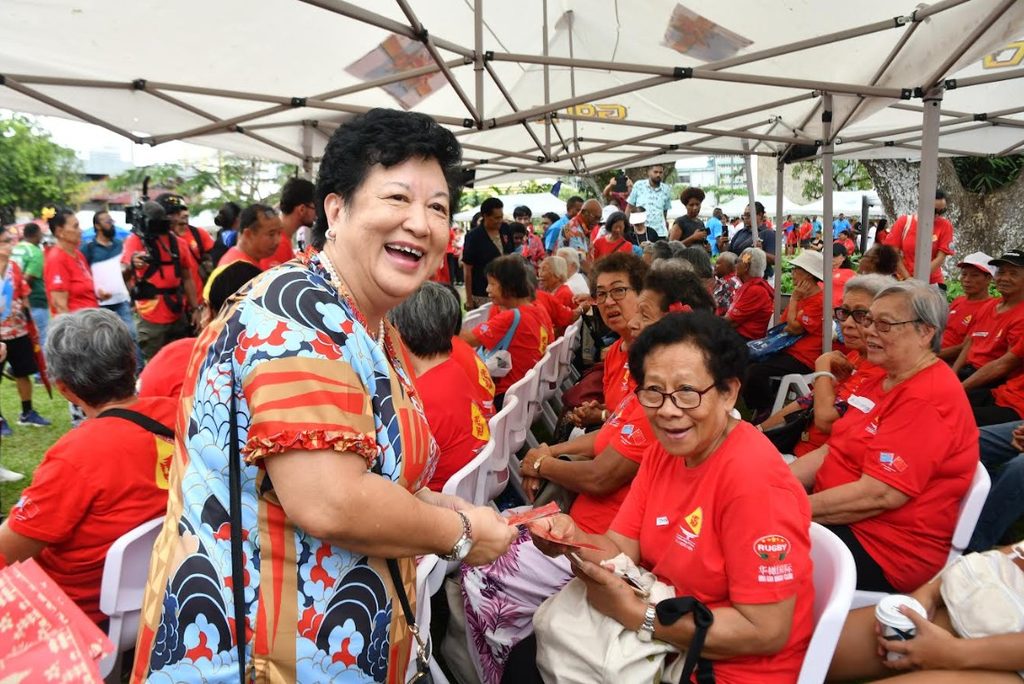
Bula Vinaka, Ni Hao, and warm greetings to you all. My name is Michael Yee Joy.
We gather not only to celebrate 170 years of Chinese settlement in Fiji, but to honour the lives, the journeys, and the sacrifices of those who came before us.
Ours is a story that spans oceans and generations — a story of courage, of perseverance, and of hope.
It is a story written not in history books, but in the lives of our families — in the hands that built shops and farms, in the voices that carried Cantonese words across Fijian hills, and in the hearts that found home in a new land.
The early beginnings
The story of the Chinese in Fiji begins in the mid to late 1800s. During that time, nearly a thousand Chinese men ventured from China and the Australia’s goldfields to Levuka, then the capital of Fiji.
Most hailed from Guangdong Province — once known as Canton — a region famed for its merchants, craftsmen, and dreamers.
They came in search of opportunity, carrying little more than courage, skills, and the will to start anew, bringing with them their work ethic, family values, and deep respect for community
From Levuka, some moved to Suva, others to Kadavu, Lau, Gau, and across Viti Levu — building small shops, farming land, and serving as traders, quietly planting roots that would flourish for generations.
Here are a few short stories of the early settlers:
Moy Bak Ling (Houng Lee) family – The first Chinese settlers in Fiji:
In 1855 Moy Bak Ling who had dug gold in Australia sailed to Fiji and landed in Levuka. While in Australia, he came to know that the Fiji Islands was abounded in sandalwood and sea cucumber. He was a carpenter by profession, and later set up the Moy Houng Lee Store where they retailed furniture, beech de mer, sandlewood, clothing and tea.
They had eight children, six sons and two daughters who were born in Levuka. Most of his sons and grandchildren were electricians and mechanics. Most of his descendants are called the Houng Lee Family and they are scattered in Fiji, Hawaii, Australia, the USA and Canada.
The Ho families
Among them were the five Ho families — Janson Ho, (Ken Janson of the Golden Dragon)
Ho Koy (the Ah Koy family), – whose desendants are Sir James, Mary Ah Koy and Theresa Apted
Luna Ho,
Anthony Ho, and John Ho, from whom the Ho Wai family descends.
John Ho first settled in **Naceva, Kadavu**, where he married a local woman from Muanisolo — forming one of Fiji’s earliest Chinese-Fijian unions. Their son, Vincent “Vuwai” Ho, became a well-known trader who travelled by boat, bringing supplies to villages across Kadavu. His story is one of service, humility, and love that bridged two worlds — Chinese and Fijian.
The Harm Nam family (owners of Wahleys Butchery)
Mr Harm Bing Nam came to Fiji in 1913 as a cook to the then Governor, Sir Henry May. After leaving Government House he founded the firm of Wing On Tiy. A few years later he resigned as MD and in 1939 he founded the Cumming St Wahleys butchery. Business grew to include branches in Lami and Flagstaff and also started the piggery in Wailoku in 1944.
The butchery is now managed by his grand children.
Kwong Tiy connection
Yee Kin Hing came to Fiji in 1913 with many of his clan men and started a laundry business called Sun Sing Laundry. A few years later, he realised there was no potential. In 1918 he ventured into a general merchants store called Kwong Tiy and Company. His eldest son, Hoy Shang, came to Fiji in 1925 and joined the company. Hoy Shang and his colleague Yee Kam Chee ran the company. Kong Tiy business flourished and were into hardware, bakery, groceries, drapery, copra, soft drinks and butchery. They set up branches in Labasa, Wairiki in Taveuni, Wainunu and Lekutu. Today only the meat and farming business of Leylands Ltd are still very much alive. It is now run by one of his sons, Gregory and grandson Steven.
The Young Yet legacy of Levuka
In 1914, a 16-year-old boy named Young Yet left Kwang Tung for Levuka. He worked hard, saved, and opened shops along Beach Street, serving Chinese and island traders across Lomaiviti. He later brought his young wife, Wong Wai Chan, from China — and together they built a family, a business, and a legacy of perseverance in Levuka. Their descendants, who are professionals including, doctors, engineers and lawyers continue to remember them as pioneers of the Levuka Chinese Community – hardworking, humble and deeply respected their neighbours.
Stories of the provinces and villages
The spirit of these pioneers lived on through others who followed:
From Namosi, where Wong Sun** settled in Wainimakutu, to Tailevu, where Chan Lin Chew farmed the fertile lands near Natovi. Both men came from Canton — their descendants now proud Fijians, though ties to their relatives in mainland China have long been lost.
And in Suva, Zhuhao He, originally from **Kaiping, Guangdong**, made Fiji his home in the early 1900s — a story shared by **Mei Fa Lou** and many others whose quiet determination helped shape our community.
The Choy family of Sigatoka
From the western coast came another remarkable journey — **Margaret Caine’s (nee Choy) parents, both from Canton, who worked first in the **Yalava sugar cane fields before owning a shop in Sigatoka town. Their story, like so many, speaks of sacrifice, of finding dignity in labour, and of building opportunity for their children.
The Ho Lin Yee and Ho Cho story
In the west, Ho Lin Yee arrived in the early 1900s, followed later by his son Ho Cho, who settled in the Sabeto area, trading yaqona and goods with villagers.
In the 1930s, Ho Cho returned to China to marry and came back to Fiji with seven other Ho families — including the families of Janson Ho,
Ah Koy and late Dorothy Fong’s father — all part of that enduring wave of pioneers who strengthened the Chinese-Fijian presence across Viti Levu.
Though Ho Cho’s wife and eldest son were stranded in China during the war, the family reunited after World War II — a testament to love that endured across oceans and conflict.
Their descendants, including **Rose**, **Albert**, and **Ellie**, were all born here in Fiji.
A shared legacy
From Kadavu to Levuka, from Namosi to Sabeto, from Sigatoka to Suva — these stories remind us that our ancestors were more than migrants; they were **builders of bridges** — between lands, between cultures, and between hearts.
They brought with them not just their language and traditions, but their values of family, faith, hard work, and humility — values that continue to guide the Chinese-Fijian community today.
Interwoven roots – one community
When we look at these families — the Hos of Kadavu, the Young Yets of Levuka, the Changs of Suva, the Wongs of Namosi, the Chans of Tailevu, the Caines of Sigatoka, and the Sues of Sabeto — we see not separate stories, but one tapestry.
Each thread tells of sacrifice and love, of challenges overcome, and of new beginnings embraced. Together, they form the living story of the Chinese in Fiji — a story that spans more than a century and a half.
From humble shops to modern businesses, from sugarcane fields to schools and churches, the Chinese-Fijian community has contributed quietly yet profoundly to the nation’s social, cultural, and economic life.
Legacy and reflection
Today, as we mark this 170-year milestone, we remember the thousands who came before — many without riches or recognition — but all with courage.
They may have come as strangers, but they became citizens, neighbours, and family.
They built bridges where none existed, and in doing so, they created something uniquely Fijian — a community of shared roots, shared values, and shared destiny.
Their children and grandchildren now serve in every field — from business and education to government, law, art, and culture — standing on the shoulders of those who once arrived with nothing but hope.
Closing tribute
So as we gather today, we do not simply look back — we give thanks.
Thanks to the pioneers who brought dignity to labour. Thanks to the families who preserved our culture while embracing a new home.
And thanks to the younger generation, who continue to carry forward the legacy of unity, humility, and perseverance.
May we always remember — that our ancestors crossed oceans not only to survive, but so that we could belong, so that we could build, and so that we could thrive together.
Vinaka Vakalevu. Xie Xie. Thank you.
May the spirit of the Chinese community in Fiji live on for another 170 years and beyond.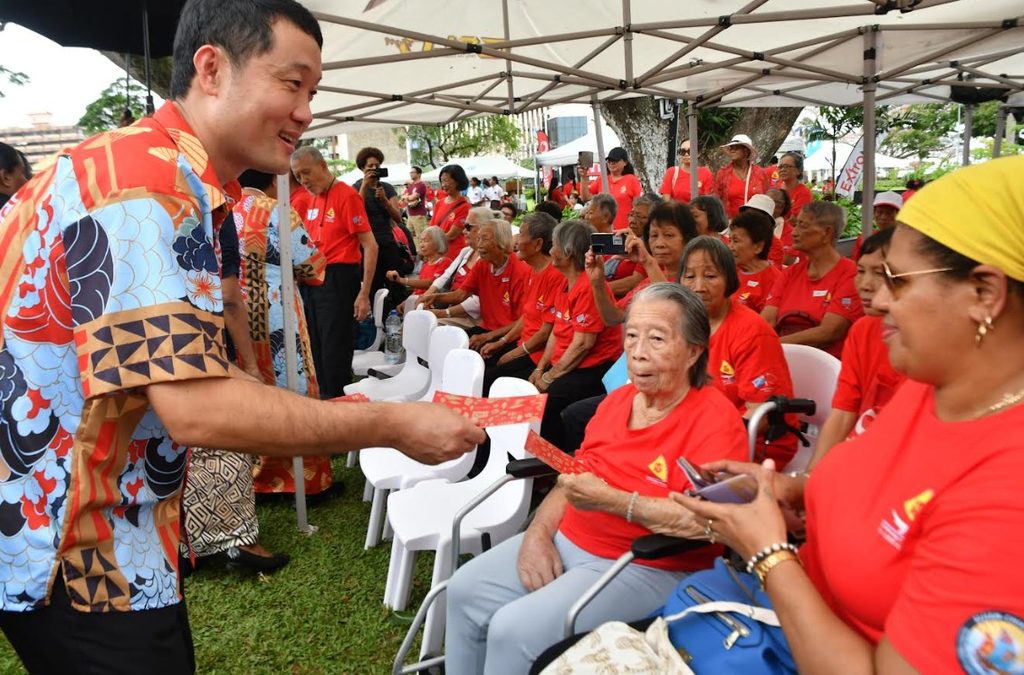
From humble shops to modern businesses, from sugarcane fields to schools and churches, the Chinese-Fijian community has contributed quietly yet profoundly to the nation’s social, cultural, and economic life.

