
THE age-old excuse of stuck in traffic used to justify tardiness, no longer holds water in workplaces or schools, because if one is given leeway, so too must the hundreds who commute the Suva-Nausori corridor daily.
And questions must be asked about why this nightmarish traffic has become so commonplace, and why citizens have no choice, but to contend with it.
Was this not planned for when taking into account the explosion of development along the corridor?
Should there have been a cap introduced on vehicle imports years before this problem got out of hand?
The authorities seem to have taken some notice at last, promising to trial solutions to ease traffic, but whether it will work remains to be seen.
The root cause
Over 150,000 registered vehicles fill our roads.
Fiji has no restrictions on the number of vehicles that can be allowed on the roads, and the Land Transport Authority continues to record more vehicle registrations by the day.
The Suva-Nausori corridor in particular is the most densely populated area in the entire country.
Statistics gathered during an independent evaluation by the Asian Development Bank in 2017 showed the 25-kilometre corridor included Suva and stretched from the western industrial areas of Lami municipality to areas around the Nausori and Nasinu municipalities.
At the time, the ADB found the Suva-Nausori corridor contained about 33 per cent of Fiji’s total population, or about 262,000 people.
This growth has spurred calls for better infrastructure amid growing demand from the public, whether it be utilities or roads.
“Fiji has experienced population growth, particularly in urban areas through rural to urban shifts, leading to a higher concentration of vehicles within specific boundaries,” LTA CEO Irimaia Rokosawa earlier told this newspaper.
“While the existing kilometres of road-to-vehicle ratio may be sufficient in entirety, high vehicle concentration within specific boundaries like Suva and Nadi often lead to the available road infrastructure within these boundaries being insufficient to efficiently handle the increasing volume of vehicles.
“Fiji’s public transportation system, while available, may not be convenient enough to meet the needs of all types of commuters. This leads to people continuing to rely on private vehicles.”
He said the LTA continued to encourage the use of buses, taxis and other forms of public transport through improved services and infrastructure.
“Exploring gaps in public transportation is also vital so that together with availability, the convenience factor in public transport operation is prioritised.
“Moving forward, the LTA is also working towards exploring modern traffic management systems such as automated clear-way enforcement, red-light intersection monitoring using automatic number plate recognition (ANPR) cameras and other innovative options to build towards a sustainable future for land transport in Fiji. This is for the future.
“The authority will also explore innovative regulatory options in collaboration with other key stakeholders for future options such as congestion pricing and heavy vehicle restrictions on specific streets and CBDs.”
In addition, with no set regulation in place to control vehicles being imported in the country, the numbers are likely to increase.
Potholes, accidents and
driver behaviour
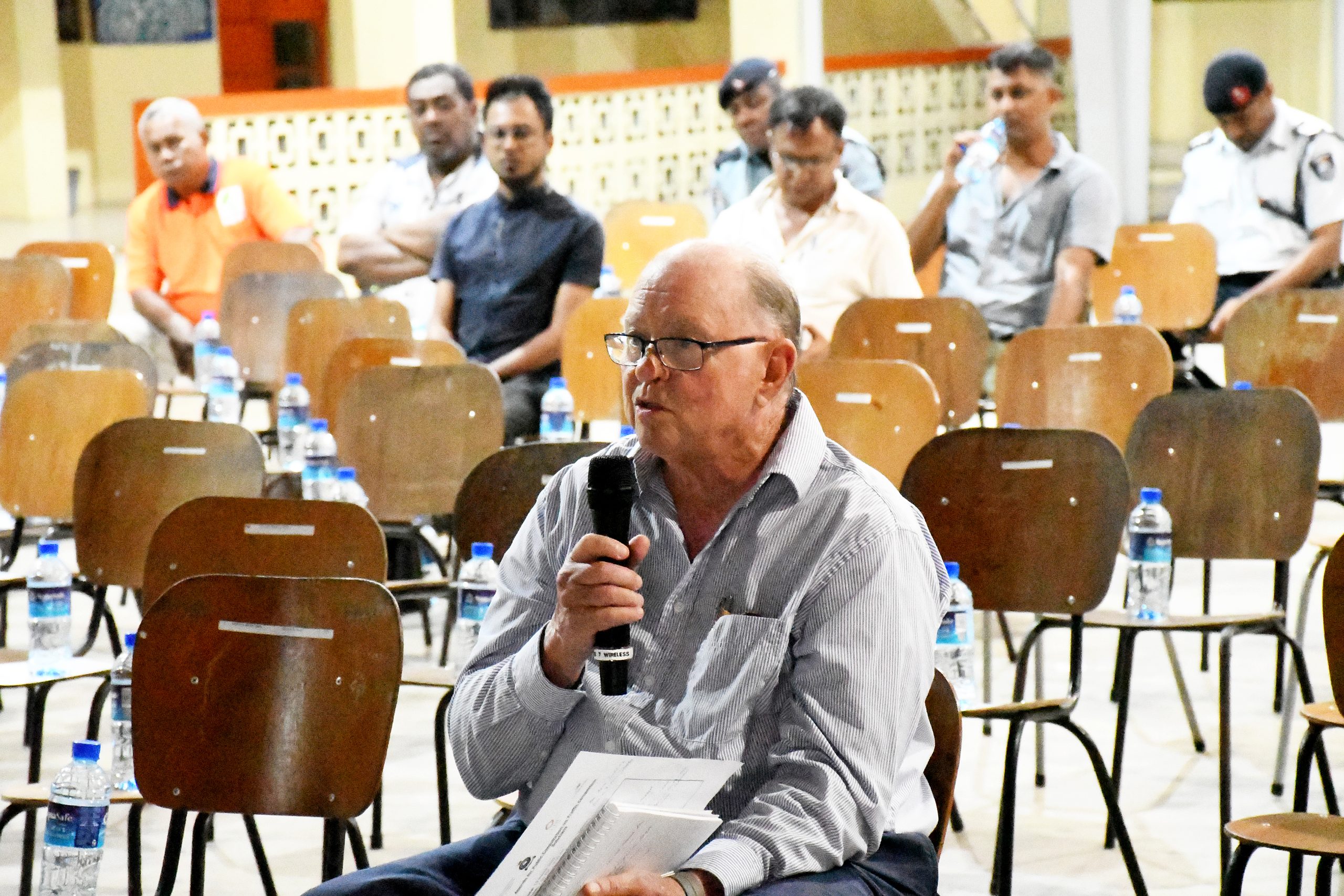
At a recent public consultation to discuss measures to ease traffic congestion, many members of the public raised concerns about other issues that contributed to traffic in the area.
Among them was district advisory councillor Indar Deo Bisun who said any solution the authorities come up with must be sustainable and designed for a couple of decades.
He said a major issue was the number of vehicles coming on the road and households that own more than five or six vehicles.
Mr Bisun raised concerns about trailer trucks occupying big spaces during the 6.30am to 8.30am traffic rush.
In addition, he said potholes were a major cause of backed-up traffic, as well as accidents that occurred.
One of the participants also said this was an “accordion effect”, in which traffic flowed naturally. However, if one vehicle stopped, all vehicles after that vehicle stopped.
Another resident, Harish Chandra, said the Ministry of Education must also be involved in resolving this issue.
“The office workers and family members, they take their children to school to drop off and that’s when all this traffic is piling up,” he said.
“You can see the difference with the two-week school holidays coming in April, just observe that, and you will come up with a simple solution to that. And also all these issues, where we see a lot of potholes everywhere.
“Road maintenance is in a very poor condition. Road markings are also an issue.
“And these things are all serious concerns, but I don’t know how fast they will be implemented. So, all these need to be looked into.”
A learning curve
Mr Rokosawa agreed with sentiments expressed by residents, saying there was a need to do more.
In response to questions by this newspaper on whether this would serve as a learning curve in terms of future developments, he agreed it was.
“Especially in inter agency collaborations and discussions, especially those that (have to be) regulated in terms of importations, to also consider what are the impacts,” he said.
“It’s good to have vehicles, but we shouldn’t be creating other issues.”
For now, the proposed measures will begin next week and members of the public are advised to take note.
They have also been advised to plan their journey and work with the authorities to better manage the flow of traffic.

