
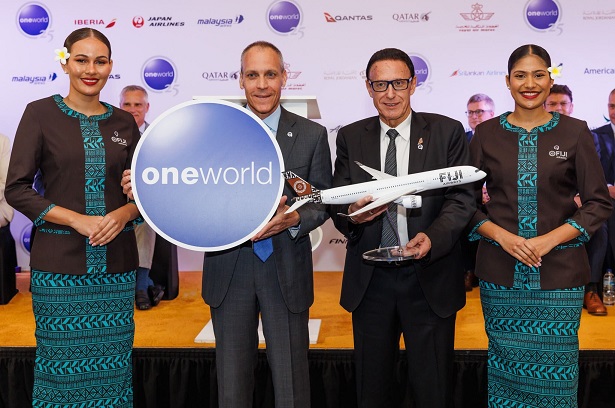
Fiji Airways has set its sights firmly on the lucrative American travel market. In an interview last week with American business magazine Forbes, Fiji Airways chief executive officer Andre Viljoen said while the national airline was a hub-and-spoke carrier, a majority of its customers were inbound leisure travellers which begged the need for the airline to diversify.
“Business travel only makes up about five per cent of the market with 80 per cent focused on inbound leisure traffic. The remaining 15 per cent is local Fijians visiting family and relatives. With inflationary pressures affecting the discretionary income of people around the world, we cannot rely only in inbound traffic,” Mr Viljoen told Forbes.
“That’s why the Nadi and Suva hubs are key because they serve as a filler part of our business, connecting traffic to all points near and far through Fiji.”
He said 50 per cent of traffic coming into Nadi and Suva is dedicated to connecting passengers with a strong passenger flow between North America and Australia or New Zealand.
“Australia and New Zealand make up 65 per cent of the business in terms of revenue and traffic, but the United States makes up the vast majority of our profitability. It remains very important.
“There is great potential, especially for markets that are not served directly, to carry connecting passengers through Fiji. This is why secondary markets can play a huge role. It is also why we want to fly to other North American destinations and develop joint ventures with our partners there. North America is our future, and we see the possibility to bring many more Americans to and through Fiji,” Mr Viljoen said.
Fiji Airways, he said is banking on an open skies agreement between the US and Fiji, currently on the table for bilateral discussions, to open up more market possibilities for Fiji Airways, especially to partner hubs like Dallas/Ft. Worth and Seattle.
“We’re hoping to add a new long-haul destination within the next year. Network growth in North America in 2023 was up 17 per cent in comparison to 2022. We want this to continue.”

